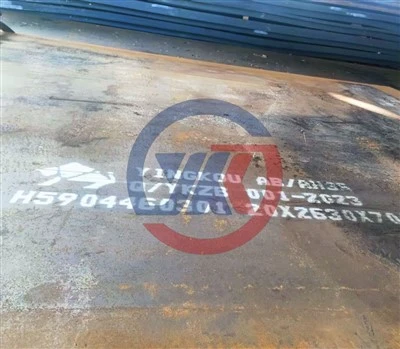
YUXIN STEEL GROUP is a steel mill. The main business of our company is: stainless steel plate and stainless steel coil, etc. We can customize boards and building materials of various specifications, sizes and materials for customers.
Professional Solution
We work very closely with you to gain a clear understanding of your individualized needs. Our dedicated sales team is trained to assist you in meeting all of your requirements.
Rich Experience
With over three decades of experience in the industry, we are exceptionally suited to service your steel requirements and to establish ourselves as the go-to supplier for all your steel needs.
Quality Assurance
Our production line is capable of manufacturing stainless steel plates and steel coils of various sizes.
Wide Range of Applications
Our products and specialist solutions are used for everything from consumer goods and commercial kitchen equipment to laser-cutting, metal fabrication, construction, mining and public utilities.
-
![410 Stainless Steel Plate]() 410 Stainless Steel PlateMade from a combination of chromium and carbon, 410 stainless steel is known for its superior strength, durability, and heat and corrosion resistance. Whether you work in construction, manufacturing or other industries, our 410 stainlessread more
410 Stainless Steel PlateMade from a combination of chromium and carbon, 410 stainless steel is known for its superior strength, durability, and heat and corrosion resistance. Whether you work in construction, manufacturing or other industries, our 410 stainlessread more -
![Sale Of ASTM A240-304 Stainless Steel Plate At Low Price]() Sale Of ASTM A240-304 Stainless Steel Plate At Low PriceWhat Is ASTM A240-304 stainless steel plate 304 stainless steel is a common material in stainless steel, with a density of 7.93g/cm³, also known as 18/8 stainless steel in the industry, meaning that it contains more than 18% chromiumread more
Sale Of ASTM A240-304 Stainless Steel Plate At Low PriceWhat Is ASTM A240-304 stainless steel plate 304 stainless steel is a common material in stainless steel, with a density of 7.93g/cm³, also known as 18/8 stainless steel in the industry, meaning that it contains more than 18% chromiumread more -
![4J36- Invar Alloy Large Inventory]() 4J36- Invar Alloy Large InventoryProducts Description 4J36 is a special low-expansion iron-nickel alloy with ultra-low expansion coefficient. The control of carbon and manganese components is very important. Cold deformation can reduce the coefficient of thermalread more
4J36- Invar Alloy Large InventoryProducts Description 4J36 is a special low-expansion iron-nickel alloy with ultra-low expansion coefficient. The control of carbon and manganese components is very important. Cold deformation can reduce the coefficient of thermalread more -
![440 Stainless Steel]() 440 Stainless SteelWhat is 440 stainless steel 440,440 C is a high carbon and high chromium martensitic stainless steel, 440 has high strength, good hardness, corrosion resistance, wear resistance and high temperature dimensional stability. 440 stainlessread more
440 Stainless SteelWhat is 440 stainless steel 440,440 C is a high carbon and high chromium martensitic stainless steel, 440 has high strength, good hardness, corrosion resistance, wear resistance and high temperature dimensional stability. 440 stainlessread more -
![SUS 312L Stainless Steel]() SUS 312L Stainless SteelProducts Description SUS 312L Stainless steel is an extremely low carbon high-key nitrogen austenitic stainless steel, because the PRE value (pitting resistance value) of this steel is as high as 43, it can also be called super austeniticread more
SUS 312L Stainless SteelProducts Description SUS 312L Stainless steel is an extremely low carbon high-key nitrogen austenitic stainless steel, because the PRE value (pitting resistance value) of this steel is as high as 43, it can also be called super austeniticread more -
![904L Stainless Steel in Stock]() 904L Stainless Steel in StockGrade 904L is low-carbon high-alloy stainless steel with Ni, Mo & Cu, superior resistance to dilute acid, organic acid and chloride corrosion, better anti-corrosion performance than 316L & 317L.read more
904L Stainless Steel in StockGrade 904L is low-carbon high-alloy stainless steel with Ni, Mo & Cu, superior resistance to dilute acid, organic acid and chloride corrosion, better anti-corrosion performance than 316L & 317L.read more -
![310S Stainless Steel]() 310S Stainless Steel310S stainless steel is a 25Cr20Ni series of high alloy stainless steel, high temperature oxidation resistance is excellent, suitable for the production of various furnace components, the limit temperature of 1200℃, continuous useread more
310S Stainless Steel310S stainless steel is a 25Cr20Ni series of high alloy stainless steel, high temperature oxidation resistance is excellent, suitable for the production of various furnace components, the limit temperature of 1200℃, continuous useread more -
![SUS 630 Stainless Steel]() SUS 630 Stainless SteelProducts Description SUS630 is martensitic precipitation-hardened stainless steel, Chinese grade 0Cr17Ni4Cu4Nb. It has high strength, high hardness, good weldability and corrosion resistance. Parameterread more
SUS 630 Stainless SteelProducts Description SUS630 is martensitic precipitation-hardened stainless steel, Chinese grade 0Cr17Ni4Cu4Nb. It has high strength, high hardness, good weldability and corrosion resistance. Parameterread more -
![UNS S32050 Stainless Steel]() UNS S32050 Stainless SteelProducts Description UNS S32050 is a highly corrosion-resistant rust steel with high chromium and molybdenum content, and also has superior corrosion resistance in harsh environments such as seawater. In some environments, it has corrosionread more
UNS S32050 Stainless SteelProducts Description UNS S32050 is a highly corrosion-resistant rust steel with high chromium and molybdenum content, and also has superior corrosion resistance in harsh environments such as seawater. In some environments, it has corrosionread more -
![SUS329J4L Stainless Steel]() SUS329J4L Stainless SteelProducts Description SUS329J4L belongs to high hardness and high strength austenitic stainless steel imported from Japan, with good plasticity, toughness, weldability and corrosion resistance, corrosion resistance in oxidizing and reducingread more
SUS329J4L Stainless SteelProducts Description SUS329J4L belongs to high hardness and high strength austenitic stainless steel imported from Japan, with good plasticity, toughness, weldability and corrosion resistance, corrosion resistance in oxidizing and reducingread more -
![304 Stainless Steel Coil]() 304 Stainless Steel Coil304 stainless steel coil is a low carbon, molybdenum bearing, austenitic stainless steel coil. Its chemistry features a minimum of 18% chromium and 8% nickel.read more
304 Stainless Steel Coil304 stainless steel coil is a low carbon, molybdenum bearing, austenitic stainless steel coil. Its chemistry features a minimum of 18% chromium and 8% nickel.read more -
![UNS630 Stainless Steel Plate]() UNS630 Stainless Steel PlateProducts Description 630 stainless steel is martensitic precipitation hardening stainless steel. Parameterread more
UNS630 Stainless Steel PlateProducts Description 630 stainless steel is martensitic precipitation hardening stainless steel. Parameterread more


Stainless steel, also known as inox, corrosion-resistant steel (CRES) and rustless steel, is an alloy of iron that is resistant to rusting and corrosion. It contains at least 10.5% chromium and usually nickel, as well as 0.2 to 2.11% carbon. Stainless steel's resistance to corrosion results from the chromium, which forms a passive film that can protect the material and self-heal in the presence of oxygen.
The alloy's properties, such as luster and resistance to corrosion, are useful in many applications. Stainless steel can be rolled into sheets, plates, bars, wire, and tubing. These can be used in cookware, cutlery, surgical instruments, major appliances, vehicles, construction material in large buildings, industrial equipment (e.g., in paper mills, chemical plants, water treatment), and storage tanks and tankers for chemicals and food products.
The biological cleanability of stainless steel is superior to both aluminium and copper, and comparable to glass. Its cleanability, strength, and corrosion resistance have prompted the use of stainless steel in pharmaceutical and food processing plants.
Different types of stainless steel are labeled with an AISI three-digit number. The ISO 15510 standard lists the chemical compositions of stainless steels of the specifications in existing ISO, ASTM, EN, JIS, and GB standards in a useful interchange table.
Types of Stainless Steel
There are two main characteristics of this type of stainless steel. First, there is a lot of chromium included during the production of austenitic stainless steel. Items produced with this material are more corrosion-resistant. Second, these items tend to be non-magnetic, although they can become magnetic with a cold forming process. These are the most common types of stainless steel alloys.
This type of stainless steel is the second most common type of alloy and is also magnetic. Items produced with this alloy can be hardened through cold forming and also tend to be less expensive than other types due to the lower nickel content.
This material is the least common type of stainless steel alloy. Martensitic stainless steel is used in applications where high tensile strength is needed or a lot of impact resistance. In many cases, this material is also combined with a protective polymer coating to improve corrosion-resistance.
This category of stainless steel derives its name “duplex” from its composition; it is made of half austenite and half delta-ferrite. These stainless steel alloys have better corrosion resistance, especially against chloride pitting, and higher tensile strength than standard austenitic stainless steels. Due to their physical properties and chemical resistance, duplex stainless steels are used widely in the oil and gas industry for pipework systems or as pipelines and pressure vessels in the petrochemicals industry.
This category of stainless steel is comprised of durable, corrosion-resistant alloys with exceptional strength. They can be treated to yield strengths three to four times that of standard austenitic stainless steel. They are most commonly used in the aerospace, nuclear, and oil and gas industries.
Stainless Steel Grades
Within families, you’ll find various grades that help to describe specific properties of the alloy such as toughness, magnetism, corrosion resistance and alloy composition.
Older grades often feature a three-digit identifier established by the Society of Automotive Engineers (SAE).
However, you might also see grades in North America identified using a six-character identifier set by the and American Society for Testing and Materials (ASTM).
These are known as Unified Number System (UNS) identifiers. You can find a full list of common identifiers here.
In many cases, UNS identifiers share the same first three numbers as their AISI equivalent.
- British Standards (BS)
- International Organization for Standardization (ISO)
- Japanese Industrial Standards (JIS)
- European Standard (EN)
- German Standard (DIN)
- Chinese Standard (GB)
Due to the sheer number of different standards and grading systems, it can be difficult to obtain much information about a given alloys unique composition from it’s grade.
EN number: 1.4305
EN name: X8CrNiN18-9
UNS: S30400
DIN: X5CrNi18-9, X5CrNi18-10, X5CrNi19-9
BS: 304S 15, 304S 16, 304S 18, 304S 25, En58E
JIS: SUS 304, SUS 304-CSP
However, to receive a given grade designation, the alloy must adhere to a strict set of requirements set forth by the organization maintaining the standard.
- 18% to 20% Chromium
- 8% to 10.5% Nickel
- 0.08% Carbon
- 2% Manganese
- 0.75% Silicon
- 0.045% Phosphorus
- 0.03% Sulfur
- 0.1% Nitrogen
Corrosion Resistance
One of the best and most well-known characteristics of stainless steel is that it is extremely corrosion resistant. The addition of chromium content was the key component that gave stainless steel this quality and was seen as the major breakthrough in its development. Stainless steel has evolved a great deal since then with many different types/grades available. We typically use 316-grade stainless steel which also contains 3% molybdenum. This further strengthens its resistance to corrosion against industrial acids, alkaline solutions and makes it particularly resilient in high saline environments (i.e. those by the sea). This founding characteristic has made it highly applicable all over the world.
Fire and Heat Resistance
The resilience of stainless steel as a material is a common theme throughout this blog and its resistance to fire and heat is an integral part of that. Stainless steel has this attribute because of its oxidation resistance, even at high temperatures. This enables it to retain its strength under harsh and extreme temperature conditions very effectively. Chromium again plays an important role in this respect and makes stainless steel a great choice with fire resistance and fire prevention in mind. It’s a material that outperforms the likes of galvanised steel and aluminium in this regard.
Hygiene
A benefit of stainless steel that might not immediately come to mind, but is particularly true and important, relates to hygiene. Stainless steel is an extremely hygienic material due to the fact that it is extremely easy to clean and sanitise. Its smooth, sheen-like and non-porous surface means that the likes of dirt, grime and bacteria struggle to establish themselves on its exterior. When they do, they can very easily be wiped away. The ease of this cleaning and maintenance makes stainless steel an excellent choice in environments where strong hygiene is vital. This is why professional kitchens are made almost exclusively of stainless steel and why you’ll see it relied on heavily in hospitals, laboratories, factories etc.
Impact Resistance and Strength
Stainless steel is an extremely tough and highly durable material with high impact resistance. Part of the reason for this is that stainless steel has low susceptibility to brittleness at high and low temperatures. Not only does this mean that the material will retain its shape, but it means at its melting point it can be more easily welded, cut, fabricated etc as we do in the manufacture of balustrades for example. Interestingly, it’s also a material that’s commonly used in cryogenic applications given its strength in cold working conditions showing again just how strong a material it is.
Aesthetic Appearance
Another reason why many turn to stainless steel is somewhat superficial but not less valid and that’s to do with its aesthetic appearance. Ever since its creation, stainless steel has been seen as an elegant, attractive and modern material. Many see it as a material that has a brightness that resonates with a sense of purity. It is also a material that has stood the test of time and if anything, has become more and more popular as a functional and ornamental choice in residences and commercial properties around the world. It is also a material that complements and works well with most other materials, styles and colours.
Sustainability
Another benefit that doesn’t get a lot of attention when it comes to stainless steel but one that is very important as a global issue is the fact that it’s a highly sustainable choice. Stainless steel is typically created from about 70% scrap metal meaning its foundations come from that which isn’t being used. Furthermore, it’s 100% recyclable in its original form which means it can be repurposed should it cease to serve its original function. It won’t leach toxic chemicals like some other materials during the recycling process and doing so, reduces the need for mining the rarer elements that play an important role in the creation of stainless steel.
Long Term Value
When you consider the longevity of stainless steel as well as all the other factors mentioned above, the total life cycle cost of the material stacks up well. Its increasing prevalence in our society has increased competition from suppliers meaning pricing has been as competitive as it’s ever been. This, coupled with the fact that the maintenance cost for stainless steel is extremely low, means you’ll get great returns when choosing it as your material of choice. Given we’ve also just mentioned that it’s 100% recyclable means that it is really hard to lose out on stainless steel as a solution.
Applications and Uses of Stainless Steel


Construction
Strength, resistance and flexibility, together with ‘green credentials’ make stainless steel a vital material in the building trade and wider construction industry. It features in both residential and commercial construction due to its weldability, easy maintenance and attractive finish. Stainless steel is used internally on items as diverse as sinks and handrails. Externally, it’s very popular from a structural point of view, including as cladding on high impact buildings.
Aerospace & MoD
The aerospace and defence industries value stainless steel for its strength, durability and ability to withstand extreme temperatures. It’s the ideal material for diverse applications, from parts to actual structure and frame-work.
Medical Technology
Stainless steel is the preferred material in sterile environments because it is easy to clean and resistant to corrosion. It’s used in the production of a wide range of medical equipment, including surgical and dental instruments. It’s also a key component in theatre furniture, MRI scanners, cannulas, and steam sterilisers. Most surgical implants (eg replacement joints and artificial hips) are made from stainless steel, as are pins and plates to repair broken bones.
Food & Catering
Because it doesn’t affect the flavour of food, stainless steel is ideal for food production and kitchen accessories, such as cookware and cutlery. Its resistance to corrosion makes it idea for use with acidic food stuffs while its sterile properties keep bacteria at bay.
Architectural Design
Stainless steel’s aesthetic qualities combined with its weldability, strength and durability make it a highly valuable material in modern architecture. A variety of finishes can be specified, such as brushed, polished and matt. It can be engraved and tinted, and its easy maintenance means it continues to look good.
Storage Tanks
Stainless steel tanks are regularly used to hold corrosive substances such as chemicals, gases, and many other bulk materials, including food and water. It doesn’t add any flavor or smell to foods and water, which is another advantage.
Civil Engineering
Stainless steel possesses similar desired properties of usual steel but eliminates disadvantages like corrosion. As a result, stainless steel has become increasingly popular as a construction material.
Power Plants
A power generation plant requires materials that endure high temperatures and extreme pressure. That’s why stainless steel is an obvious choice in heat exchangers, reactor tanks, pressure tubes, transformer enclosures, and more.
Shipbuilding Industry
Duplex stainless steel is used to construct the cargo tanks while the austenitic grade is used for inland navigation tankers. Duplex stainless steel is being used in shipbuilding increasingly thanks to its mechanical efficiency.
Chemical Industry
Chemical plants expose metals and equipment to an extremely harsh environment. Stainless steel offers the best solution to withstand corrosion elements.
The Manufacturing Process: How to Make Stainless Steel
Melting the Raw Materials
The different stainless steel materials are placed in a furnace (typically an electric furnace for modern stainless steel manufacturing applications) and heated to their melting point, this process can take anywhere between 8 and 12 hours. Once the metal is molten, stainless steel manufacturing can proceed to the next step.
Removal of Excess Carbon
The molten material placed into a vacuum oxygen decarburization (VOD) or argon oxygen decarburization (AOD) system to remove excess carbon. Depending on how much carbon is removed, this process could result in a standard or a low-carbon variant of the alloy—for example, 304 versus 304L stainless steel. This can affect the tensile strength and hardness of the final product.
Tuning or Stirring
To help fine-tune the quality of the final product, the molten steel may be stirred to help distribute and/or remove specific stainless steel components from the mixture. This helps to ensure that the stainless steel is of uniform quality and will meet the specifications required by end users (like Marlin Steel).
Forming the Metal
As the stainless steel begins to cool, it is put through a variety of forming processes - starting with hot rolling while the steel is still above its crystallization temperature. Hot rolling helps get the steel into a rough shape, and is often used to create billets or blooms of metal. To create metal blooms or billets of precise dimensions, the stainless steel may be cold rolled.
Heat Treatment/Annealing
To relieve internal stresses and alter the stainless steel’s mechanical properties, it may be annealed (heated and cooled under controlled conditions). If annealed, the steel may need to be descaled so the protective oxide layer isn’t compromised.
Cutting and Shaping
After the annealing process, stainless steel is put through a variety of cutting and shaping processes to create an ideal final product for the application. The specific operations used to cut the stainless steel will vary depending on the size and shape of the billet/bloom and the desired final product. For example, the steel may be cut mechanically with large metal shears if making thick metal plates. Meanwhile, CNC punch or laser cutting machines may be used to cut shapes out of thinner metal sheets.
Applying Surface Finishes
The stainless steel manufacturer may apply different surface finishes to their stainless steel billets, blooms, or wires before shipping them to other manufacturers. The specific finish applied will vary depending on the steel’s intended use—but one of the most common surface finishes is simply grinding down the surface to remove impurities and make it smoother.
Company Honor

Common Problem of Carbon Steel Plate
We're professional stainless steel suppliers in China, specialized in providing high quality customized service. If you're going to wholesale stainless steel in stock, welcome to get quotation from our factory. Good service and low price are available.
stainless steel kettles, stainless steel finishes, stainless steel 201-
![ASME 516 GR.70 Plate Pressure Vessel Plate]() ASME 516 GR.70 Plate Pressure Vessel PlateYuxin Steel supplies high-quality ASME SA516 Gr.70 pressure vessel steel plates, ideal for boilers and storage tanksread more
ASME 516 GR.70 Plate Pressure Vessel PlateYuxin Steel supplies high-quality ASME SA516 Gr.70 pressure vessel steel plates, ideal for boilers and storage tanksread more -
![S275J2 Steel Plate]() S275J2 Steel PlateWhat Is S275J2 steel plate S275J2 steel plate is a kind of material with excellent mechanical properties and weldingread more
S275J2 Steel PlateWhat Is S275J2 steel plate S275J2 steel plate is a kind of material with excellent mechanical properties and weldingread more -
![A516 Gr 70 Pressure Vessel Steel Plates]() A516 Gr 70 Pressure Vessel Steel PlatesType:Boiler Quality Steel PlateStandard:AISI, ASTM, DIN, JIS, GBTechnique:Hot RolledShape:PlateThickness: 6MM toread more
A516 Gr 70 Pressure Vessel Steel PlatesType:Boiler Quality Steel PlateStandard:AISI, ASTM, DIN, JIS, GBTechnique:Hot RolledShape:PlateThickness: 6MM toread more -
![2311 Mold Steel]() 2311 Mold SteelDIN 1.2311 Tool Steel is a low alloyed steel with 2.0% Cr ,0.15%Mo as per DIN standard.As plastic mold tool steel, itread more
2311 Mold SteelDIN 1.2311 Tool Steel is a low alloyed steel with 2.0% Cr ,0.15%Mo as per DIN standard.As plastic mold tool steel, itread more -
![410 Stainless Steel Plate]() 410 Stainless Steel PlateMade from a combination of chromium and carbon, 410 stainless steel is known for its superior strength, durability, andread more
410 Stainless Steel PlateMade from a combination of chromium and carbon, 410 stainless steel is known for its superior strength, durability, andread more -
![ABS AH36 Shipbuilding Steel Plate]() ABS AH36 Shipbuilding Steel PlateWhether you are constructing ocean-going vessels, offshore drilling platforms, or large container ships, ABS AH36read more
ABS AH36 Shipbuilding Steel PlateWhether you are constructing ocean-going vessels, offshore drilling platforms, or large container ships, ABS AH36read more