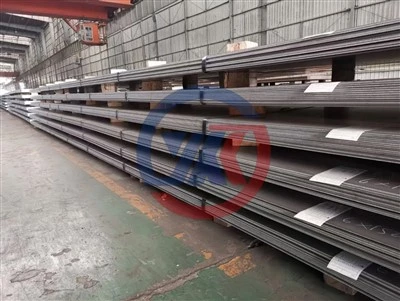
YUXIN STEEL GROUP is a steel Factory. The main business of our company is: medium and thick plates, pressure vessel steel plate ,shipbuilding steel plateetc. We can customize boards and building materials of various specifications, sizes and materials for customers.
Professional Solution
We work very closely with you to gain a clear understanding of your individualized needs. Our dedicated sales team is trained to assist you in meeting all of your requirements.
Rich Experience
With over three decades of experience in the industry, we are exceptionally suited to service your steel requirements and to establish ourselves as the go-to supplier for all your steel needs.
Quality Assurance
We have access to a vast number that manufacture top-quality steel. we supply GB,EN,ASTM standard pressure vessel steel plate and more.
Wide Range of Applications
Our products and specialist solutions are used for everything from consumer goods and commercial kitchen equipment to laser-cutting, metal fabrication, construction, mining and public utilities.
-
![ASME 516 GR.70 Plate Pressure Vessel Plate]() ASME 516 GR.70 Plate Pressure Vessel PlateYuxin Steel supplies high-quality ASME SA516 Gr.70 pressure vessel steel plates, ideal for boilers and storage tanks operating in extreme temperatures (-40°C to 370°C). We maintain extensive stock of SA516 Gr.70 plates in variousread more
ASME 516 GR.70 Plate Pressure Vessel PlateYuxin Steel supplies high-quality ASME SA516 Gr.70 pressure vessel steel plates, ideal for boilers and storage tanks operating in extreme temperatures (-40°C to 370°C). We maintain extensive stock of SA516 Gr.70 plates in variousread more -
![A516 Gr 70 Pressure Vessel Steel Plates]() A516 Gr 70 Pressure Vessel Steel PlatesType:Boiler Quality Steel PlateStandard:AISI, ASTM, DIN, JIS, GBTechnique:Hot RolledShape:PlateThickness: 6MM to 300MMWidth: 1500mm to 4050mmLength: 3000mm to 15000mmread more
A516 Gr 70 Pressure Vessel Steel PlatesType:Boiler Quality Steel PlateStandard:AISI, ASTM, DIN, JIS, GBTechnique:Hot RolledShape:PlateThickness: 6MM to 300MMWidth: 1500mm to 4050mmLength: 3000mm to 15000mmread more -
![ASTM A516 Grade 65 Pressure Vessel Steel Plate]() ASTM A516 Grade 65 Pressure Vessel Steel PlateProduct Overview ASTM A516 Grade 65 (also known as SA516 Gr.65 ) is a carbon steel plate specifically engineered for welded pressure vessels requiring excellent notch toughness in moderate and lower-temperature service environments.read more
ASTM A516 Grade 65 Pressure Vessel Steel PlateProduct Overview ASTM A516 Grade 65 (also known as SA516 Gr.65 ) is a carbon steel plate specifically engineered for welded pressure vessels requiring excellent notch toughness in moderate and lower-temperature service environments.read more -
![P355GH Pressure Vessel Steel Plate]() P355GH Pressure Vessel Steel PlateProduct Overview What is P355GH? P355GH P355GH is a fine-grained, non-alloy pressure vessel steel specified under the EN 10028-2 standard. Designed for high-temperature service, this grade is the European standard equivalent to the globalread more
P355GH Pressure Vessel Steel PlateProduct Overview What is P355GH? P355GH P355GH is a fine-grained, non-alloy pressure vessel steel specified under the EN 10028-2 standard. Designed for high-temperature service, this grade is the European standard equivalent to the globalread more -
![Q345R Steel Plate]() Q345R Steel PlateQ345R Steel Plate: The Ultimate Pressure Vessel Material Welcome to YUXIN Group – a leading certified supplier and exporter of high-performance Q345R steel plates in China. As the preferred material for pressure vessels, boilers, andread more
Q345R Steel PlateQ345R Steel Plate: The Ultimate Pressure Vessel Material Welcome to YUXIN Group – a leading certified supplier and exporter of high-performance Q345R steel plates in China. As the preferred material for pressure vessels, boilers, andread more -
![A516GR70N Steel Plate]() A516GR70N Steel Plate1.Immediate delivery: Common thicknesses (8mm - 50mm) have a stock of over 2,000 tons available, and cutting and retail services are supported. 2. Direct supply from steel mills: We have long-term agreements with major steel mills,read more
A516GR70N Steel Plate1.Immediate delivery: Common thicknesses (8mm - 50mm) have a stock of over 2,000 tons available, and cutting and retail services are supported. 2. Direct supply from steel mills: We have long-term agreements with major steel mills,read more -
![SG295 Steel]() SG295 SteelSG295 is a high-quality carbon structural steel coil, mainly used for manufacturing welded gas cylinders, such as liquefied petroleum gas (LPG) cylinders. It possesses excellent strength and plasticity, is easy to be shaped, and hasread more
SG295 SteelSG295 is a high-quality carbon structural steel coil, mainly used for manufacturing welded gas cylinders, such as liquefied petroleum gas (LPG) cylinders. It possesses excellent strength and plasticity, is easy to be shaped, and hasread more -
![JIS G3116 SG295 Gas Cylinder Steel Coil]() JIS G3116 SG295 Gas Cylinder Steel CoilSource JIS G3116 SG295 gas cylinder steel coils from China. Yield ≥295 MPa, thickness 1.2-12mm. Full MTC traceability. Request free sample & get Pakistan DOE document support.read more
JIS G3116 SG295 Gas Cylinder Steel CoilSource JIS G3116 SG295 gas cylinder steel coils from China. Yield ≥295 MPa, thickness 1.2-12mm. Full MTC traceability. Request free sample & get Pakistan DOE document support.read more -
![A516GR70 Steel Plate Supplier - ASME Standard, Fast Delivery]() A516GR70 Steel Plate Supplier - ASME Standard, Fast DeliveryType:Boiler Quality Steel PlateStandard:AISI, ASTM, DIN, JIS, GBTechnique:Hot RolledShape:PlateThickness: 6MM to 300MMWidth: 1500mm to 4050mmLength: 3000mm to 15000mmread more
A516GR70 Steel Plate Supplier - ASME Standard, Fast DeliveryType:Boiler Quality Steel PlateStandard:AISI, ASTM, DIN, JIS, GBTechnique:Hot RolledShape:PlateThickness: 6MM to 300MMWidth: 1500mm to 4050mmLength: 3000mm to 15000mmread more -
![A516GR70 Pressure Vessel Steel Plate – ASME SA516 Gr70 for Oil & Gas Projects]() A516GR70 Pressure Vessel Steel Plate – ASME SA516 Gr70 fo...Type:Boiler Quality Steel PlateStandard:AISI, ASTM, DIN, JIS, GBTechnique:Hot RolledShape:PlateThickness: 6MM to 300MMWidth: 1500mm to 4050mmLength: 3000mm to 15000mmread more
A516GR70 Pressure Vessel Steel Plate – ASME SA516 Gr70 fo...Type:Boiler Quality Steel PlateStandard:AISI, ASTM, DIN, JIS, GBTechnique:Hot RolledShape:PlateThickness: 6MM to 300MMWidth: 1500mm to 4050mmLength: 3000mm to 15000mmread more -
![A516GR70 Pressure Vessel Steel Plate]() A516GR70 Pressure Vessel Steel PlateASME SA516 Gr.70 Steel Plate for Pressure VesselsCertified · Traceable · In StockLow-temperature toughness guaranteed (-30°C) | Carbon equivalent ≤0.3 | NACE MR0175 available | EN 10204 Type 3.2read more
A516GR70 Pressure Vessel Steel PlateASME SA516 Gr.70 Steel Plate for Pressure VesselsCertified · Traceable · In StockLow-temperature toughness guaranteed (-30°C) | Carbon equivalent ≤0.3 | NACE MR0175 available | EN 10204 Type 3.2read more -
![A516 Grade 70 Plates]() A516 Grade 70 PlatesStandard:AISI, ASTM, DIN, JIS, GB. Technique:Hot Rolled. Shape:Plate. Thickness: 6MM to 300MM. Width: 1500mm to 4050mm. Length: 3000mm to 15000mm.read more
A516 Grade 70 PlatesStandard:AISI, ASTM, DIN, JIS, GB. Technique:Hot Rolled. Shape:Plate. Thickness: 6MM to 300MM. Width: 1500mm to 4050mm. Length: 3000mm to 15000mm.read more


Pressure vessel quality (PVQ) steel plate is used to produce pressure vessels due to its tensile strength, notch toughness, ductility and fatigue characteristics. Before examining the properties of PVQ grades, here are a few terms used to describe the properties of steel, defined:
- Strength: The load the steel can bear. Steel strength is determined by yield point and tensile strength. A yield point is the point at which a material is stressed to the point where it deforms but does not break. Tensile strength is the amount of stress needed for the material to break.
- Notch Toughness: The level of impact steel can absorb before denting, typically measured by a Charpy Impact test.
- Ductility: The capability of a material to be stretched out before it becomes weak or brittle. Ductility is measured by elongation, which is the percent the length of a stretched material increases before it breaks.

Steel Material of Pressure Vessel Plate
Carbon Steel Pressure Vessel Grades
Carbon steel pressure vessel steel plates are general use vessel plates that include several standards and grades. Pressure Vessel Steel provides premium quality carbon steel plate for boiler and pressure vessel fabrication which is perfectly suited to the high standards set by the oil, gas, and petrochemical equipment, we stock a wide range of dimensions of ASTM A516 GR70, A283 Grade C, ASTM A537 CL1/CL2.
Low Alloy Pressure Vessel Grades
Adding alloy elements like chromium, molybdenum, or nickel will increase steel heat and corrosion resistance. These plates are also known as Chrome Moly Steel Plates. The material grades is between pure carbon steel pressure vessel grades and stainless steel plates. Typically standards are ASTM A387 and 16Mo3, these steels have improved corrosion and temperature resistance over the standard carbon steels but without the cost of stainless steels (due to their lower nickel and chromium content).
Stainless Steel Vessel Grades
Adding a certain percent of chromium, nickel and molybdenum, will increase the high resistance of stainless steel plates, for use in critical applications that require high resistance to the environment. Such as used in food or chemical industries.
Some Pressure Vessel Steel Specifications
ASTM A516 Gr. 60, 65
A516 Grade 60 and Grade 65 high quality carbon steel plate material for pressure vessel fabrication exhibit good weldability and notch toughness. A516 gr. 65 has greater tensile and yield strength when compared with A516 gr. 60. This material offers excellent performance in moderate to low temperature services. Used extensively for sour service, H2S applications in the oil and gas, petrochemical industries.
ASTM A516 Gr. 70
A516 Grade 70 plate material is suitable for low temperature application pressure vessels and industrial boilers. A516 Grade 70 plate material is suitable for lower than ambient temperature applications. A516 Grade 70 offers greater tensile and yield strength than grade 65 and can operate at even lower temperatures. This material is also used extensively for Pipe Shoes, Gussets and Base Plates etc.
ASTM A537 Class 1
A537 Class 1 is normalized, heat treated and displays greater yield and tensile strength that the more common A516 grades. Ideal for Pressure Vessels, Boilers, API 650, and API 620 storage tanks in the Oil & Gas and Petrochemical Industries.
ASTM A537 Class 2
A537 Class 2 exhibits higher yield and tensile strength than Class 1. A537 Class 2 is a high strength quenched and tempered alloy steel with excellent cold forming characteristics and weldability. Commonly used in pressure vessels, boilers, API650, and API620 storage tank fabrication.
ASTM A553 Type 1
A553 Type 1 grade covers 9% nickel alloy steel plates that are used in the fabrication of cryogenic pressure vessels. A553 Type 1 is capable of operating at temperatures as low as -196°C, and has high levels of strength and weldability. A martensitic steel when it is quenched or tempered up to 100mm thickness. Commonly used for containing or transporting cryogenic gases, such as nitrogen, oxygen, and argon.
ASTM A553 Type 2
A553 Type 2 grade covers 8% nickel alloy steel plates that are used in the fabrication of cryogenic pressure vessels. A553 Type 2 is capable of operating at temperatures as low as -170°C, and has high levels of strength and weldability. A martensitic steel when it is quenched or tempered up to 100mm thickness. Commonly used for containing or transporting cryogenic gases, such as nitrogen, oxygen, and argon.
The Role of Metal Composite Plate in the Pressure Vessel


Excellent Performance
The metal composite plate is made up of two or more layers of different metals that are bonded together. This allows the plate to have properties that are not found in traditional metal plates. For example, one layer may have high strength, while the other may have good corrosion resistance. The combination of these properties provides a pressure vessel with superior performance compared to traditional metal plates.
Improve Strength-to-weight Ratio
One of the most important advantages of metal composite plates is their improved strength-to-weight ratio. This means that the plates are able to withstand high pressure without adding excessive weight to the pressure vessel. This results in a reduction in the overall weight of the pressure vessel, which can help to reduce transportation costs and make the vessel easier to handle and install.
Enhanced Corrosion Resistance
Another advantage of metal composite plates is their enhanced corrosion resistance. The different layers of metal in the plate can provide a barrier to the corrosion process, preventing the metal from being damaged by chemical reactions. This can be particularly useful in harsh environments where corrosion is a major concern, such as offshore oil and gas platforms.
Improved Dimensional Stability
The dimensional stability of metal composite plates is also improved compared to traditional metal plates. This means that the plates do not deform or warp under pressure, which can cause problems with the pressure vessel's performance over time. The improved dimensional stability of metal composite plates can help to ensure that the pressure vessel remains safe and reliable for many years.

Pressure vessel steel is used to house a range of substances at various temperatures and volumes. It is often used in various applications in the oil industry (including both offshore and onshore), the petrochemical industry and the gas production industry. These companies demand extremely high standards in terms of testing, quality and conditions of supply.
Pressure vessel steel is used for aboveground storage tanks which are used to store fuels, chemicals and petrochemicals. They are also used for belowground storage tanks and are used for storing chemicals and fuels which are partially stored beneath the ground. Pressure vessel steel is also used in railroad tank cars which transport chemicals, fuels and liquids from production locations to storage and usage locations.
It includes applications like below or similar:
- Crude oil storage tanks
- Natural gas storage tanks
- Chemicals and liquid storage tanks
- Firewater tanks
- Diesel storage tanks
- Gas cylinders for welding
- Gas cylinders for cooking in peoples daily life
- Oxygen cylinders for diving
Finishes of Pressure Vessel Steel Plates
1.Powder Coating
Powder coating is a dry finishing process using fine powder to create a rigid, durable finish. It is commonly used to provide a decorative finish and protect the metal from scratches, corrosion, and fading.
2.Galvanizing
Galvanizing involves the application of a layer of zinc to the surface of the sheet metal. This coating provides excellent corrosion protection, making it a popular choice for outdoor applications.
Anodizing
Anodizing is an electrochemical process that creates a thin layer of oxide on the surface of the metal. This finish provides excellent corrosion resistance and can create a range of colors and textures.
Polishing
Polishing involves using abrasive materials to create a smooth, shiny surface on the metal. This finish is often used to enhance the appearance of decorative metal items, such as furniture or architectural features.
Brushed Finish
A brushed finish involves using a wire brush or abrasive pad to create a pattern of fine lines on the surface of the metal. This finish is often used to create a modern, industrial look on metal surfaces.

The Manufacturing Process of Pressure Vessel Steel Plate
The 4-high reversible finishing mill with the maximum load of 7000 tons minimizes internal defects even in extremely thick plates. Automatic gauge control and shape control systems can reduce not only the thickness deviation of plates but also improve the flatness.
The PILAC (POSCO In-line Accelerated Cooling) system enables the production of high strength steel without heat treatment through rolling and accelerated cooling. Using the mist cooling method with suction type, the PILAC system has a high cooling capacity and is able to maintain a uniform temperature gradient in the widthwise direction. This leads to a reduction of plate quality deviation.
The hot leveler is used to make superior quality flat plates by eliminating residual stress left on rolled plates.
After passing through the cooler, the plates undergo a dimensional accuracy inspection and then cut into appropriate width and length according to plate grade and thickness using either mechanical shearing machine or flame planner. To obtain a higher degree of dimensional accuracy in products, production conditions are determined by such factors as the air knife gap and the nozzle size of the gas torch.
To attain the plate structure demanded by customers, plates undergo heat treatment after having the scale removed by shot blasters. The heat treating facilities are of a non-oxidizing radiation tube type, which produces scale-free heat-treated plates.
The ultrasonic tester checks for blow holes, pipes, and laminations and other internal defects. This test is performed to guarantee the internal quality of plates demanded by customers.
Preparation of Raw Materials
Before scribing the steel, the steel must first be pretreated. The pretreatment of steel refers to the purification, orthopedic and protective primer of steel plates, pipes, and profiles.
Underline
Scribing is the first procedure in the manufacturing process of the pressure vessel, which directly determines the dimensional accuracy and geometric accuracy of the parts after forming, and has a great influence on the subsequent alignment and welding procedures. Scribing is to mark the blanking line, processing line, various position lines, and inspection lines on the raw material or the pre-processed blank, and mark (or write) the necessary signs and symbols. The scribing process usually includes the development, lofting, and marking of parts.
Cut
Cutting, also known as blanking, refers to the process of separating the required blanks from the raw materials that have been crossed. There are two cutting methods: mechanical cutting and thermal cutting.
Take Shape
The forming cylinder of the cylinder is composed of a number of cylinder sections welded by circumferential welds, and the cylinder sections are welded by metal plate rolling and longitudinal welding. The rolling principle of the barrel section the roll bending of the barrel section with a plate rolling machine, also known as roll bending or plate rolling, is the basic manufacturing method of the barrel section.
Welding
Welding is a process in which the weldment achieves atomic bonding and forms a permanent joint by heating or pressing, or both. Welding processes account for 50% of the world’s annual steel consumption.
Installation Guidelines of Pressure Vessel Steel Plates
Surface Preparation
Before mounting steel plates, ensure that the surface is adequately prepared. Make sure the surface is clean, dry, and free of pollutants such as rust, grease, or dirt. This promotes a strong connection between the steel plate and the substrate.
Alignment and Positioning
Accurate alignment and orientation are essential during installation. Use careful measurements and alignment equipment to ensure the steel plates fit precisely. This is especially critical in load-bearing applications, where misalignment can jeopardize structural integrity.trate.
Welding and Fastening
Depending on the application, steel plates can be welded or bolted together. Welding creates a smooth connection, whereas bolts facilitate disassembly and maintenance. To ensure stability, adhere to industry welding processes and norms, and utilize high-quality fasteners.
Load Distribution
Consider the load distribution on the steel plates. Make sure the load is well distributed to avoid putting too much stress on individual places. This is critical to preventing deformations, fissures, and structural failures over time.
Weather Considerations
Consider weather conditions while installing steel plates that will be exposed to the elements. Protective coatings and finishes can be used to improve corrosion resistance and shield steel from environmental hazards.
Understand Your Application Requirements
First things first, ensure you clearly define your application requirements. Consider the specific environment in which the steel plate will be used. For instance: Will the plate be used for a heavy-duty construction project? Or will it be part of an application for machinery or industrial equipment? Determine the load-bearing capacity, corrosion resistance, and impact resistance required. This understanding will help you narrow your choices and focus on the appropriate steel grades.
Evaluate Steel Plate Grades
Now it is time to hone-in on the proper steel plate grade. Steel plate is available in various grades, each designed to meet specific performance requirements. Research the properties and characteristics of different grades to identify the one that best aligns with your application needs. Factors to consider include strength, weldability, formability, and toughness.
Consider Steel Plate Weight, Size, and Thickness
Determining the correct plate weight, size, and thickness helps to ensure structural stability and safety. Evaluate the load and stress factors to which the steel plate will be subjected. Consider the dimensions of the area where the plate will be installed. Consider any weight limitations or space restrictions. Ensure that the thickness of the steel plate is adequate to withstand the anticipated loads without compromising structural integrity.
Check Specialized Requirements
In certain applications, specialized steel plates may be required. These can include high-temperature applications, corrosive environments, or situations demanding specific certifications such as ABS (American Bureau of Shipping) or ASTM (American Society for Testing and Materials). Another specification to consider is ASME (American Society of Mechanical Engineers). This is particularly relevant for tank and pressure vessel applications.
Request Samples and Test Reports
Request samples of the steel plates you are considering. Examine their physical properties, test them for quality assurance, and assess their suitability for your application. Ask your steel supplier to supply you with test reports and certifications, such as material composition, mechanical properties, and any tests conducted. Please note that a steel test report will not be available in every instance.
Find the Right Steel Supplier
Choosing a reputable steel supplier is essential with any steel purchase. Beyond having a broad catalog of options, your steel plate supplier should have a proven track record of helping customers navigate the aforementioned five factors.
Top Ways to Maintain Pressure Vessel Steel Plates

Passive Barrier Protection
In this process, the steel is coated with a protective coating containing water, ions, and oxygen. The less penetrable the coating system is, the better is the protection. Providing a two-pack epoxy coating and a chlorinated rubber at a high film ensures better protection of the steel against corrosion.

Active Protection
In this process, the pre-engineered building manufacturers in India use a primer that contains a reactive compound. This is applied directly to the steel which disrupts the formation of anodes on the steel surface. The zinc inhibitive primitives act as anti-corrosion substances. Zinc phosphate is partially soluble in water and produces zinc ions and phosphate ions. These phosphate ions render the steel passive and the zinc ions work as cathodic inhibitors.

Sacrificial Protection
The sacrificial process, also known as Galvanic Protection is one of the most effective ways to prevent corrosion of mils steel plates according to steel dealers in India. Here, two dissimilar metals react together to act as protection. Zinc is the best way to avoid corrosion or at least lower the effect. When the zinc metal when in direct contact with the steel, it develops protection through the oxidation of zinc metal. This process can be further improved in the presence of ions like chlorides, especially in coastal areas.
Company Honor

Common Problem of Pressure Vessel Steel Plates
We're professional pressure vessel steel plates suppliers in China, specialized in providing high quality customized service. If you're going to wholesale pressure vessel steel plates in stock, welcome to get quotation from our factory. Good service and low price are available.
flexible pressure vessel steel plates, pressure vessel steel plates for factory, pressure vessel steel plates for optimization-
![ASME 516 GR.70 Plate Pressure Vessel Plate]() ASME 516 GR.70 Plate Pressure Vessel PlateYuxin Steel supplies high-quality ASME SA516 Gr.70 pressure vessel steel plates, ideal for boilers and storage tanksread more
ASME 516 GR.70 Plate Pressure Vessel PlateYuxin Steel supplies high-quality ASME SA516 Gr.70 pressure vessel steel plates, ideal for boilers and storage tanksread more -
![S275J2 Steel Plate]() S275J2 Steel PlateWhat Is S275J2 steel plate S275J2 steel plate is a kind of material with excellent mechanical properties and weldingread more
S275J2 Steel PlateWhat Is S275J2 steel plate S275J2 steel plate is a kind of material with excellent mechanical properties and weldingread more -
![A516 Gr 70 Pressure Vessel Steel Plates]() A516 Gr 70 Pressure Vessel Steel PlatesType:Boiler Quality Steel PlateStandard:AISI, ASTM, DIN, JIS, GBTechnique:Hot RolledShape:PlateThickness: 6MM toread more
A516 Gr 70 Pressure Vessel Steel PlatesType:Boiler Quality Steel PlateStandard:AISI, ASTM, DIN, JIS, GBTechnique:Hot RolledShape:PlateThickness: 6MM toread more -
![2311 Mold Steel]() 2311 Mold SteelDIN 1.2311 Tool Steel is a low alloyed steel with 2.0% Cr ,0.15%Mo as per DIN standard.As plastic mold tool steel, itread more
2311 Mold SteelDIN 1.2311 Tool Steel is a low alloyed steel with 2.0% Cr ,0.15%Mo as per DIN standard.As plastic mold tool steel, itread more -
![410 Stainless Steel Plate]() 410 Stainless Steel PlateMade from a combination of chromium and carbon, 410 stainless steel is known for its superior strength, durability, andread more
410 Stainless Steel PlateMade from a combination of chromium and carbon, 410 stainless steel is known for its superior strength, durability, andread more -
![ASTM A516 Grade 65 Pressure Vessel Steel Plate]() ASTM A516 Grade 65 Pressure Vessel Steel PlateProduct Overview ASTM A516 Grade 65 (also known as SA516 Gr.65 ) is a carbon steel plate specifically engineered forread more
ASTM A516 Grade 65 Pressure Vessel Steel PlateProduct Overview ASTM A516 Grade 65 (also known as SA516 Gr.65 ) is a carbon steel plate specifically engineered forread more