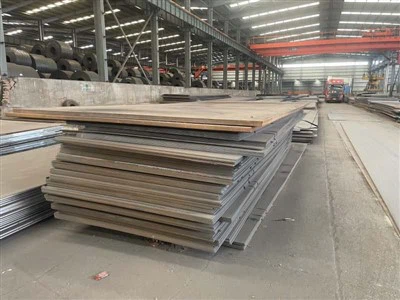
Hey there! I'm a supplier of Corten steel, and I'm super excited to take you through the fascinating process of how Corten steel is made. Corten steel, also known as weathering steel, is a type of steel that forms a protective rust-like appearance over time, which not only looks cool but also provides excellent corrosion resistance.
The Basics of Corten Steel
Before we dive into the manufacturing process, let's talk a bit about what makes Corten steel special. Corten steel is an alloy, which means it's made up of different elements combined together. The main elements in Corten steel include iron, carbon, and a variety of other alloying elements like copper, chromium, nickel, and phosphorus. These elements work together to give Corten steel its unique properties.
Step 1: Raw Material Preparation
The first step in making Corten steel is to gather the raw materials. Iron ore is the primary source of iron, which is the main component of steel. Along with iron ore, other materials like coal, limestone, and alloying elements are also collected. These materials are carefully selected to ensure the right chemical composition of the final steel product.
The iron ore is usually mined from large deposits around the world. Once it's mined, it's crushed and processed to remove impurities. The coal is used as a fuel in the steelmaking process, while the limestone helps to remove impurities from the iron ore.
Step 2: Smelting
Once the raw materials are prepared, they are fed into a blast furnace. The blast furnace is a large, cylindrical structure where the iron ore is heated to a very high temperature. The coal is burned to provide the heat, and the limestone reacts with the impurities in the iron ore to form slag, which floats on top of the molten iron.


The molten iron, also known as pig iron, is then tapped from the bottom of the blast furnace. Pig iron contains a relatively high amount of carbon and other impurities, so it needs to be further refined to make steel.
Step 3: Refining
The pig iron is transferred to a converter, where it undergoes a refining process. In the converter, oxygen is blown into the molten iron to remove the excess carbon and other impurities. This process is called oxidation. The oxygen reacts with the carbon to form carbon monoxide, which is then removed from the converter.
During the refining process, alloying elements are also added to the molten steel to give it the desired properties. For Corten steel, elements like copper, chromium, nickel, and phosphorus are added to improve its corrosion resistance.
Step 4: Casting
Once the steel has been refined, it is ready to be cast into different shapes. There are several casting methods, but the most common one is continuous casting. In continuous casting, the molten steel is poured into a mold, and as it cools, it solidifies into a continuous strand. The strand is then cut into smaller pieces, which can be further processed into various products.
Step 5: Rolling
After casting, the steel is rolled to give it the desired thickness and shape. Rolling is a process where the steel is passed through a series of rollers to reduce its thickness and increase its length. There are two main types of rolling: hot rolling and cold rolling.
Hot rolling is done at a high temperature, usually above 1000°C. This process makes the steel more malleable and easier to shape. Cold rolling, on the other hand, is done at room temperature and is used to produce steel with a smoother surface finish and more precise dimensions.
Step 6: Heat Treatment
Heat treatment is an important step in the manufacturing process of Corten steel. It helps to improve the mechanical properties of the steel, such as its strength and toughness. There are several heat treatment methods, including annealing, quenching, and tempering.
Annealing is a process where the steel is heated to a high temperature and then slowly cooled. This helps to relieve internal stresses in the steel and make it more ductile. Quenching is a process where the steel is rapidly cooled, usually by immersing it in water or oil. This makes the steel harder and stronger. Tempering is a process where the quenched steel is heated to a lower temperature and then cooled slowly. This helps to reduce the brittleness of the steel and improve its toughness.
Step 7: Surface Treatment
Once the steel has been heat treated, it may undergo a surface treatment to further improve its corrosion resistance. One common surface treatment for Corten steel is to apply a protective coating. This coating can be a paint or a special treatment that helps to slow down the corrosion process.
Another surface treatment method is to allow the steel to develop a natural patina. Corten steel forms a protective rust-like layer over time, which is called a patina. This patina not only looks great but also provides excellent corrosion resistance.
Types of Corten Steel Products
As a Corten steel supplier, I offer a wide range of Corten steel products. Some of the popular products include S355J2W(H) Weathering Steel Plate, S355J2WP Corten Steel Plate, and Q235NHB Corten Steel Manufacturer's Bulk Stock. These products are widely used in various industries, such as construction, architecture, and manufacturing.
Conclusion
Well, that's a brief overview of how Corten steel is made. It's a complex process that involves several steps, but the end result is a high-quality steel product with excellent corrosion resistance and unique aesthetic appeal.
If you're interested in purchasing Corten steel products for your project, don't hesitate to get in touch. We can provide you with detailed information about our products and help you choose the right one for your needs. Whether you're working on a small DIY project or a large-scale construction project, we've got you covered.
References
- "Steelmaking: Basic Principles and Processes." Steel.org
- "Weathering Steel: Properties and Applications." Corrosionpedia
- "Corten Steel: A Comprehensive Guide." Engineering.com