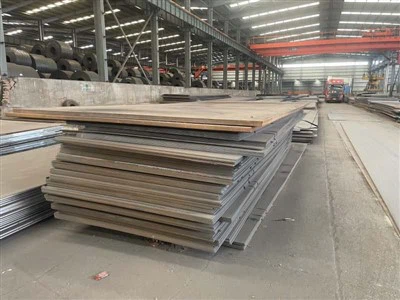
Tool steel is a crucial material in various industries, known for its high hardness, wear resistance, and ability to withstand high temperatures. As a tool steel supplier, I understand the importance of recognizing the signs of wear in tool steel. This knowledge not only helps in maintaining the quality and performance of tools but also aids in making informed decisions about replacement or refurbishment. In this blog post, I will discuss the common signs of wear in tool steel and their implications.
1. Surface Roughness and Abrasion
One of the most visible signs of wear in tool steel is surface roughness and abrasion. When a tool is in use, it comes into contact with workpieces, which can cause the surface of the tool steel to become rough over time. Abrasion occurs when hard particles from the workpiece or the cutting environment rub against the tool surface, removing small amounts of material.
The effects of surface roughness and abrasion can be significant. A rough surface can lead to increased friction between the tool and the workpiece, which in turn can cause higher cutting forces and more heat generation. This can result in premature tool failure, reduced dimensional accuracy of the workpiece, and a poor surface finish.
For example, in machining operations, a rough tool surface can cause chatter marks on the workpiece, which are unacceptable in high - precision applications. In cold forming processes, such as stamping or forging, surface abrasion can lead to galling, where material from the workpiece adheres to the tool surface, further degrading the tool's performance.
2. Cracking and Fracture
Cracking and fracture are serious signs of wear in tool steel. Cracks can initiate due to various factors, including high stress concentrations, thermal cycling, and fatigue. High stress concentrations can occur at sharp corners, notches, or areas with sudden changes in cross - section. Thermal cycling, which is common in processes like heat treatment or high - speed machining, can cause thermal stresses that lead to crack initiation.
Fatigue cracking is another major concern. When a tool is subjected to repeated loading and unloading cycles, microscopic cracks can form and gradually grow over time. These cracks can propagate through the tool steel, eventually leading to fracture.
The consequences of cracking and fracture are severe. A cracked tool may no longer be able to perform its intended function, and if a fractured tool is used, it can cause damage to the workpiece and potentially pose a safety hazard to operators. For instance, in a die - casting operation, a cracked die can lead to uneven filling of the mold cavity, resulting in defective castings.
3. Wear on Cutting Edges
In cutting tools, wear on the cutting edges is a critical sign of tool wear. There are different types of cutting edge wear, including flank wear, crater wear, and nose wear.
Flank wear occurs on the relief face of the cutting tool. It is mainly caused by the rubbing action between the tool flank and the machined surface of the workpiece. As flank wear progresses, the cutting force increases, and the tool's ability to maintain dimensional accuracy decreases.
Crater wear forms on the rake face of the cutting tool. It is typically caused by the high - temperature and high - pressure conditions at the tool - chip interface. Crater wear can weaken the cutting edge, leading to chipping and premature tool failure.
Nose wear, which occurs at the tip of the cutting tool, is important in turning and milling operations. Excessive nose wear can lead to a loss of tool geometry, resulting in poor surface finish and inaccurate workpiece dimensions.
For example, in a turning operation, worn cutting edges can cause the diameter of the workpiece to deviate from the specified tolerance, which is unacceptable in industries such as automotive and aerospace.
4. Erosion
Erosion is a form of wear that is often associated with high - velocity fluid flow or the presence of abrasive particles in a fluid. In tool steel applications, erosion can occur in tools used in processes such as water jet cutting, where the high - velocity water jet can erode the tool surface over time.
In some cases, erosion can also occur in hydraulic tools or in environments where there are abrasive slurries. The erosion process involves the removal of material from the tool surface by the impact of fluid - borne particles or the force of the fluid itself.
Erosion can gradually reduce the thickness and integrity of the tool steel, leading to a decrease in its strength and performance. For example, in a water jet cutting nozzle made of tool steel, erosion can cause the nozzle opening to enlarge, resulting in a loss of jet precision and cutting efficiency.


5. Corrosion
Corrosion is another sign of wear that can affect tool steel. Tool steel is susceptible to corrosion in environments where it is exposed to moisture, chemicals, or salts. There are different types of corrosion, including uniform corrosion, pitting corrosion, and crevice corrosion.
Uniform corrosion occurs when the entire surface of the tool steel is attacked by the corrosive medium. Pitting corrosion, on the other hand, is characterized by the formation of small pits on the tool surface. Crevice corrosion occurs in narrow gaps or crevices, where the corrosive environment can become stagnant and more aggressive.
Corrosion can significantly reduce the mechanical properties of tool steel. It can cause a loss of material, which weakens the tool, and can also increase surface roughness, leading to further problems such as increased friction and reduced wear resistance. For example, in a marine environment, tool steel components used in shipbuilding or offshore equipment can be severely corroded if not properly protected.
6. Microstructural Changes
Microstructural changes are less visible but equally important signs of wear in tool steel. During the service life of a tool, the microstructure of the tool steel can be altered due to factors such as high temperatures, mechanical deformation, and chemical reactions.
For example, in high - temperature applications, the tool steel may undergo phase transformations. Austenite, which is a high - temperature phase, can transform into other phases such as martensite or bainite during cooling. These phase transformations can change the hardness, strength, and toughness of the tool steel.
Mechanical deformation can also cause grain refinement or the formation of dislocations in the tool steel's microstructure. Chemical reactions, such as oxidation in an oxygen - rich environment, can form oxide layers on the tool surface, which can affect the tool's performance.
Microstructural changes can lead to a deterioration of the tool's properties. For instance, a change in hardness can affect the tool's cutting ability, and a decrease in toughness can make the tool more prone to cracking.
How to Mitigate Wear in Tool Steel
As a tool steel supplier, I recommend several strategies to mitigate wear in tool steel. First, proper material selection is crucial. Different applications require different types of tool steel. For example, 9Cr2 Alloy Tool Steel is suitable for cold - work applications due to its high hardness and good wear resistance. SK90 Tool Steel is often used in cutting tools because of its excellent cutting edge retention. AISI D6 Tool Steel is well - known for its high - temperature performance and resistance to cracking in hot - work applications.
Second, proper heat treatment is essential to optimize the mechanical properties of tool steel. Heat treatment can improve hardness, toughness, and wear resistance. For example, quenching and tempering can be used to achieve the desired balance of hardness and toughness in tool steel.
Third, regular inspection and maintenance of tools can help detect signs of wear early. This allows for timely replacement or refurbishment of tools, reducing downtime and costs associated with tool failure.
Contact for Procurement
If you are in need of high - quality tool steel for your applications, I encourage you to reach out to us. As a reliable tool steel supplier, we have a wide range of tool steel products to meet your specific requirements. Whether you are involved in machining, forming, or other manufacturing processes, we can provide you with the right tool steel solution. Contact us to discuss your procurement needs, and let's work together to ensure the success of your projects.
References
- ASM Handbook Volume 8: Mechanical Testing and Evaluation.
- Tool and Manufacturing Engineers Handbook, 4th Edition.
- "Wear of Materials" by M. N. G. Prakash.