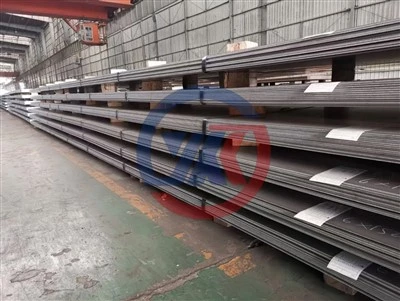
A Technical Insight into High-Strength Shipbuilding Steels: AH36, DH36, EH36, and ABS AH32
In the shipbuilding and offshore engineering sectors, material selection is critical for structural integrity, safety, and longevity. Steels used in hull construction must withstand corrosive marine environments, dynamic wave-induced stresses, and extreme temperatures. Among the most widely specified grades are AH36, DH36, EH36, and ABS AH32. These designations, governed by classification societies like the American Bureau of Shipping (ABS), denote specific levels of yield strength, toughness, and manufacturing process.
The ABS Classification System
The "ABS" prefix indicates that the steel has been certified by the American Bureau of Shipping, ensuring compliance with its rigorous rules for materials and welding. The letters (A, D, E) and numbers (32, 36) convey the steel's minimum yield strength and its Charpy V-notch (CVN) impact toughness at specified temperatures.
Number Designation (32 vs. 36): The number represents the minimum yield strength in ksi (kilopounds per square inch). ABS AH32 has a minimum yield strength of 31.5 ksi (approximately 220 MPa), while AH36 (along with DH36 and EH36) offers a higher strength of 51 ksi (approximately 355 MPa). Thus, Grade 36 steels are preferred for larger vessels and harsh environments where weight reduction and higher stress resistance are paramount.
Letter Designation (A, D, E): This indicates the impact toughness grade at different service temperatures.
Grade A (e.g., AH36, AH32): Standard toughness, tested at 0°C (32°F). Suitable for mild environments or secondary structures.
Grade D (e.g., DH36): Improved toughness, tested at -20°C (-4°F). Ideal for colder regions and exposed hull elements.
Grade E (e.g., EH36): Highest toughness, tested at -40°C (-40°F). Required for critical structures in polar-class vessels or sub-zero operations.
Detailed Grade Profiles
AH36 is the workhorse of commercial shipbuilding. It combines a 355 MPa yield strength with moderate low-temperature performance (0°C impact test). It is widely used for general hull construction, decks, and bulkheads in temperate-water vessels. Its high strength-to-weight ratio allows for thinner plates compared to mild steel, reducing overall vessel weight.
DH36 upgrades performance with a guaranteed Charpy impact value of 34 Joules at -20°C. This makes it indispensable for ship sides, longitudinal strength members, and structures operating in winter conditions or northern sea routes. It is also mandatory for certain critical regions as defined by classification rules.
EH36 represents the pinnacle of standard high-strength shipbuilding steel. With impact toughness verified at -40°C, EH36 is specified for Arctic-class ships, icebreakers, and offshore drilling platforms where brittle fracture is a major risk. It often requires specialized welding procedures and preheating.
ABS AH32 occupies a niche between general mild steel and Grade 36 materials. Although lower in strength (220 MPa yield), it is still stronger than ordinary structural steel. It is commonly used in smaller vessels, repair work, and less critical areas of large ships where full Grade 36 strength is unnecessary but enhanced toughness over mild steel is beneficial. However, in modern large-tonnage shipbuilding, AH36 has largely supplanted AH32 due to better economy and design flexibility.
Key Considerations for Procurement and Fabrication
1.Certification: All plates must be supplied with an ABS mill certificate (e.g., ABS AH36 or ABS AH32), verifying chemical composition, mechanical properties, and impact tests.
2.Weldability: These are fine-grain killed steels with controlled carbon equivalent (CEV). Grades EH36 and DH36 may require low-hydrogen welding consumables and pre- or post-heating, especially at thicker gauges.
3.Corrosion Protection: Despite their strength, these steels are not stainless; they depend on coatings, sacrificial anodes, or cathodic protection against seawater corrosion.
4.Thickness Range: Typical shipbuilding plates vary from 4 mm to 100 mm. Thicker sections of EH36 demand stricter rolling and heat treatment processes.

why choose shipbuilding steel plate?
Selecting the right grade-AH36, DH36, EH36, or ABS AH32-is a balance of mechanical strength, service temperature, and cost. For tropical water general cargo, AH36 suffices. For winter North Atlantic routes, DH36 is mandated. For polar expeditions, EH36 is non-negotiable. Meanwhile, ABS AH32 remains a viable option for lighter duty applications. Understanding these distinctions ensures regulatory compliance, operational safety, and structural economy in any marine environment.
one-stop solution
professional team
high quality
Choose YUXIN steel group, and what you purchase is not merely the steel plates, but also a complete warranty system and a sense of responsibility.
Our address
Tianjin, China
Phone Number
(86)-15937221771(WeChat)
(86)-15837212056(WhatsApp)
info@chinasteelcompany.com

FAQ

01.How are the names of the ship plates determined? For example, what does CCS A mean?
A: Indicates that the strength level is of general strength. The general strength steel plates are divided into four grades: A, B, D, and E. The main difference lies in the test temperature for impact toughness (grade A at 0°C, grade B at 20°C, grade D at -20°C, and grade E at -40°C).
02.When purchasing the ship plates, what documents can you provide?
Traceability: The furnace number and batch number on the certificate must be consistent with the physical markings on the steel plate.
Data: It must include actual measured data such as chemical composition, mechanical properties (yield, tensile strength, impact value), etc.
03.What is the minimum order quantity?
04.Can you provide cutting and processing services?

China one-stop steel processing procurement
Through years of understanding and precipitation of steel, Yuxin Group has now become a mature steel processing and manufacturer, providing various products for many construction companies and steel structure companies around the world. Thanks to Yuxin Group's professionalism and integrity, it has become a world-renowned enterprise.