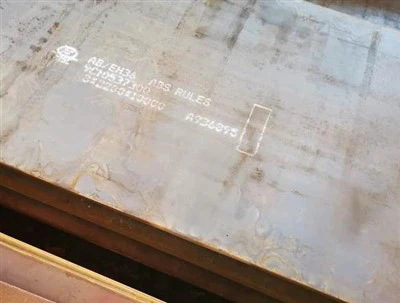
Boiler-grade steel, often referred to in technical circles as steel for boilers and pressure vessels, refers to specialized steel specifically designed for the manufacture of pressure-bearing equipment such as boilers, pressure vessels, and steam pipelines. Since this equipment is subjected to high temperatures, high pressure, and corrosion or erosion from the medium over extended periods, the requirements for the steel's quality, performance, and reliability are far higher than those for ordinary structural steel.
In simple terms: ordinary steel can be used to build houses and bridges, but it may not be safe for use in boilers-because the interior of a boiler contains high-temperature steam or high-pressure gas, and if the material fails, the consequences could be a catastrophic explosion.
What are the key performance requirements for boiler-grade steel?
| Performance Requirements | Specific Requirements |
| High-temperature strength | Maintain sufficient yield strength and tensile strength at high temperatures to resist creep deformation |
| Oxidation resistance | The high-temperature side surface should not form loose scale, thereby preventing wall thinning and contamination of the medium |
| Corrosion resistance | Resist corrosion on the water, steam, or flue gas sides (e.g., oxygen corrosion, alkali embrittlement, hydrogen corrosion) |
| Good weldability | Boiler components often require welding; the material should not crack or harden significantly |
| Sufficient high-temperature creep strength with controllable creep limit | Deformation should be slow and controllable during long-term operation under high-temperature stress |
| Good low-temperature toughness | Cold brittleness fractures should be avoided during winter startup or hydrostatic testing |
| Strict microstructural purity | Low sulfur, low phosphorus, and free of severe segregation, white spots, and other metallurgical defects |
Standards and Grades of Common Boiler Steels
Chinese Standards (GB/T 713 - Steel Plates for Boilers and Pressure Vessels)
- Q245R: Common carbon steel, with a maximum operating temperature of approximately 400°C, used in medium- and low-pressure boilers
- Q345R: Higher strength, widely used, with a maximum operating temperature of approximately 475°C
- Q370R / Q420R: Higher strength, used in large pressure vessels
- 15CrMoR: Chromium-molybdenum steel, high-temperature resistant (up to approximately 550°C), resistant to hydrogen corrosion
American Standards (ASTM)
- ASTM A515 Gr.60/70: Carbon steel for medium- and high-temperature pressure vessels, suitable for temperatures below approximately 455°C
- ASTM A516 Gr.60/65/70: Carbon steel for medium- and low-temperature pressure vessels, with good toughness, upper limit 538°C
- ASTM A387 Gr.11/12/22: Chromium-molybdenum steel, for high-temperature (550°C–620°C) service
European Standard (EN 10028)
- P265GH / P355GH: General-purpose carbon steel boiler plate
- 16Mo3: Molybdenum steel, for use below approximately 500°C
- 13CrMo4-5 / 10CrMo9-10: Chromium-molybdenum steel, for high-temperature applications
Summary
Boiler-grade steel is the foundational material that ensures the safe operation of boilers and pressure vessels. It is not a specific grade but rather a strictly controlled category of materials-every stage, from smelting and rolling to inspection, adheres to dedicated standards and specifications. Understanding the definition and performance requirements of boiler-grade steel helps engineers make safe, cost-effective, and compliant decisions when selecting materials.
Note: In actual engineering applications, the maximum service temperature of a material must be determined by calculating its creep strength based on factors such as specific thickness, stress levels, and expected service life; one should not rely solely on the standard values for the material grade.