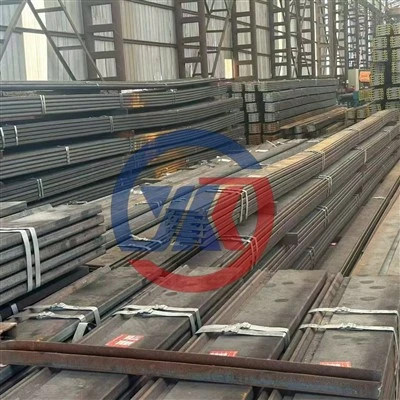
ASTM A516 is a widely used carbon steel plate standard for pressure vessels and boilers. Among its grades, A516 Grade 60 and A516 Grade 70 are the most commonly specified materials in medium and thick plate applications. While they belong to the same standard, there are clear differences in strength, application, and cost.
Mechanical Strength Comparison
The most direct difference between A516 GR 60 and A516 GR 70 lies in their mechanical strength, which is also the basis for their grade classification.
In the ASTM A516 standard, the grade numbers "60" and "70" represent the minimum tensile strength in ksi (thousand pounds per square inch).
A516 Grade 60 has a minimum tensile strength of 60 ksi, equivalent to approximately 415 MPa.
A516 Grade 70 is classified with a minimum tensile strength of 70 ksi, or about 485 MPa.
In practical terms, this means:
A516 GR 60 typically shows a tensile strength range of 415–550 MPa.
A516 GR 70 offers a higher tensile strength range, usually 485–620 MPa.
Because of its higher strength level, A516 GR 70 can withstand greater internal pressure at the same plate thickness. This allows engineers to reduce plate thickness while maintaining required safety margins, which is particularly valuable in the design and manufacture of pressure vessels, boilers, and other load-bearing equipment.
As a result, A516 GR 70 is often preferred in modern industrial projects where higher performance and design efficiency are required.
Application Scenarios and Industry Use
Both grades are designed for pressure vessels, boilers, and storage tanks, but their usage scenarios differ slightly.
A516 GR 60 is commonly used in:
Medium-pressure vessels
Heat exchangers
Industrial tanks with moderate operating conditions
A516 GR 70 is preferred for:
High-pressure boilers
Large-scale pressure vessels
Petrochemical and energy projects requiring higher safety margins
In practice, GR 70 has become the more popular choice for modern industrial projects due to its broader applicability.
Weldability and Fabrication Performance
Despite the difference in strength, both grades offer good weldability and forming performance, which is critical for fabrication.
- A516 GR 60 is slightly easier to form and weld due to its lower carbon equivalent.
- Despite its higher strength level, A516 GR 70 maintains excellent weldability and formability, making it suitable for heavy fabrication.It performs well in cutting, bending, and welding processes.With proper welding procedures, GR 70 plates show stable performance even in thick sections.Post-weld performance meets the strict requirements of pressure vessel codes.
This balance of strength and workability is a key reason why A516 GR 70 is widely accepted by manufacturers and engineering contractors.
Why A516 GR 70 Is the Preferred Choice
From a practical and commercial perspective, A516 GR 70 offers better overall value.
- Higher strength improves design flexibility
- Better adaptability to high-pressure and high-temperature environments
- Long-term reliability reduces maintenance risks
For these reasons, A516 GR 70 has become the standard choice for medium and thick pressure vessel plates, especially for projects where safety, durability, and compliance are critical.