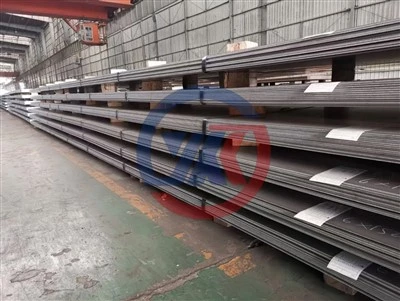
Why ASTM A131 Grade AH36 Marine Steel Plate Dominates Modern Shipbuilding
In the competitive world of commercial vessel construction, material selection dictates not only the safety and durability of the vessel but also the profit margins of the shipowner. While many steel grades exist, the ASTM A131 Grade AH36 marine steel plate (commonly referred to as AH36) has become the undisputed backbone for bulk carriers, container ships, and offshore platforms.
But why do procurement managers and naval architects consistently specify AH36 over standard mild steel? Here is a data-driven breakdown of its mechanical advantages, cost-effectiveness, and fabrication efficiency.
1. Superior Mechanical Properties and Strength-to-Weight Ratio
The primary driver behind AH36's popularity lies in its exceptional high tensile strength. With a minimum yield strength of 355 MPa (51 ksi) -significantly higher than the 235 MPa of Grade A-AH36 allows structural designers to reduce plate thickness without compromising load-bearing capacity.
This reduction in thickness translates directly to a lighter hull, which improves fuel efficiency and increases deadweight tonnage (DWT). For a typical 200,000 DWT bulk carrier, using AH36 hot rolled steel plate for the upper deck and side shells can save hundreds of tons of weight, leading to substantial lifecycle cost savings.
2. Guaranteed Low-Temperature Toughness for Global Routes
Unlike ordinary steels that become brittle in cold environments, Grade AH36 shipbuilding steel undergoes rigorous Charpy V-notch impact testing at 0°C (32°F) . It guarantees minimum impact energy of 34 J (longitudinal) and 24 J (transverse).
This certification ensures that vessels constructed with this material can safely navigate the North Atlantic and Pacific routes without the risk of brittle fracture. For shipyards sourcing materials for European or American projects, selecting ASTM A131 AH36 ensures compliance with IACS (International Association of Classification Societies) requirements.
3. Exceptional Weldability Reduces Fabrication Costs
One of the most overlooked cost factors in shipbuilding is labor. The weldability of AH36 steel is a massive advantage. Thanks to its controlled chemical composition-specifically a low Carbon Equivalent (CEV) of typically ≤ 0.38%-it exhibits excellent compatibility with Submerged Arc Welding (SAW) and FCAW processes.
This low CEV minimizes the risk of cold cracking in the heat-affected zone (HAZ). Consequently, shipyards can perform high-speed, automated welding without extensive preheating, cutting fabrication time by up to 20% compared to older high-carbon grades.
4. Advanced TMCP Technology and Microalloying
Modern AH36 plates are often produced using Thermo-Mechanical Controlled Processing (TMCP) , combined with microalloying elements like Niobium (Nb), Vanadium (V), and Titanium (Ti). This process refines the grain structure, achieving high strength while maintaining superior ductility.
For procurement officers, this means AH36 marine steel plate mechanical properties are consistent across large dimensions (up to 4000mm width), making it ideal for large block construction methods used in modern mega-shipyards.
5. Global Approval and Certifications (ABS, DNV, LR, BV)
When exporting marine steel, certification is non-negotiable. ABS Grade AH36 steel plate is universally recognized and approved by all major classification societies. Whether you are building to DNV, Lloyd's Register, Bureau Veritas, or CCS standards, AH36 covers all bases. This universality simplifies the supply chain, allowing AH36 steel plate stockists to serve international clients seamlessly.
Key Applications in the Maritime Industry
Hull Structures
Main shell plating and decks.
Heavy-Load Areas
Longitudinal girders and transverse frames.
Offshore Engineering and Specialized Vessels
Jacket legs and helidecks for drilling rigs.
LNG carriers and naval combatants.
Cost Considerations: AH36 Steel Plate Price Per Ton
While the AH36 steel plate price per ton is higher than ordinary A/B grade steels (typically $80–$150 more per ton depending on thickness), the total cost of ownership (TCO) is lower. The material savings, reduced welding consumables, and lighter hull design quickly offset the initial premium. For the latest market trends and specific ABS Grade AH36 steel plate price, it is advisable to request a quote based on current billet costs and thickness requirements.

Conclusion
The prevalence of Grade AH36 in global shipyards is a result of engineering optimization. It provides the "Goldilocks" balance-high strength, reliable low-temperature toughness, excellent weldability, and universal classification society approvals.
Looking for a Reliable Supplier of DNV Certified AH36 Steel Plates?
We specialize in supplying high tensile AH36 marine steel plates in thicknesses ranging from 6mm to 150mm, complete with original Mill Test Certificates (MTC). We offer value-added services including plasma cutting, beveling, and shot blasting to streamline your production line.
one-stop solution
professional team
high quality
Choose YUXIN steel group, and what you purchase is not merely the steel plates, but also a complete warranty system and a sense of responsibility.
Our address
Tianjin, China
Phone Number
(86)-15937221771(WeChat)
(86)-15837212056(WhatsApp)
info@chinasteelcompany.com

FAQ

01.What is the difference between Grade A and Grade AH36 marine steel plate?
02.Can AH36 steel plate be welded without preheating?
03.What certifications are required for Grade AH36 shipbuilding steel?
04.What is the current market price trend for ABS Grade AH36 steel plates?

China one-stop steel processing procurement
Through years of understanding and precipitation of steel, Yuxin Group has now become a mature steel processing and manufacturer, providing various products for many construction companies and steel structure companies around the world. Thanks to Yuxin Group's professionalism and integrity, it has become a world-renowned enterprise.