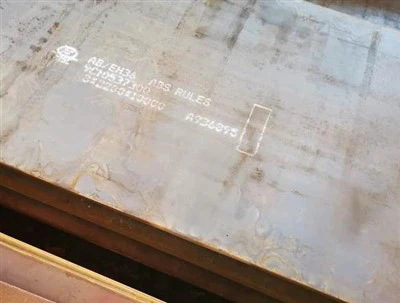
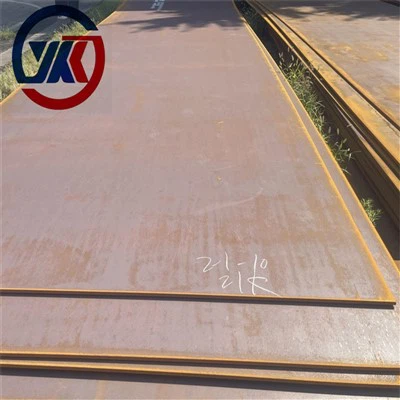
High-Strength Grade B Shipbuilding Steel Plate for Vessel Construction
Our Grade B Shipbuilding Steel Plate is a general-strength structural steel grade certified under ASTM A131 / A131M and major classification societies including ABS, BV, LR, DNV, and CCS. Designed specifically for ship hull construction, marine equipment, and offshore structures, Grade B steel offers a balanced combination of weldability, toughness, and corrosion resistance for moderate marine environments.
As a trusted steel plate supplier with over 10,000 tons monthly production capacity, we provide customized sizes ranging from 4mm to 200mm in thickness and up to 4000mm in width. All plates are available with heat treatment options including normalized, quenched, and tempered conditions to meet specific project requirements.
Why Choose Grade B?
One-stop steel procurement

Better Toughness than Grade A: The mandatory Charpy V-notch impact test at 0°C ensures Grade B steel performs reliably in colder coastal conditions, while Grade A offers no guaranteed impact resistance.

Optimized Weldability: Higher manganese content (≥0.80%) improves deoxidation and grain refinement, reducing welding defects compared to Grade A.

Cost-Effective Alternative to Grade D: For vessels operating in moderate climates (not extreme sub-zero conditions), Grade B provides sufficient toughness at a lower cost than Grade D.
Use Grade A for superstructures and non-critical components; Grade B for main hulls in temperate waters; and Grade D for ice-class vessels or offshore platforms in arctic regions.
Grade B Shipbuilding Plate Specifications & Technical Data
Available Dimensions
| Parameter | Range |
|---|---|
| Thickness | 4mm – 200mm |
| Width | 1000mm – 4000mm |
| Length | 4000mm – 12000mm |
| Production Method | Hot Rolled |
| Heat Treatment | As Rolled, Normalized, TMCP, Quenched & Tempered |
Custom sizes and processing services (cutting, beveling, shot blasting, painting) available upon request.
Chemical Composition (Heat Analysis, %)
| Grade | C (max) | Si (max) | Mn (min) | P (max) | S (max) |
|---|---|---|---|---|---|
| Grade B | 0.21 | 0.35 | 0.80 | 0.035 | 0.035 |
Mechanical Properties
| Property | Value |
|---|---|
| Yield Strength (min) | 235 MPa (34 ksi) |
| Tensile Strength | 400 – 520 MPa (58 – 75 ksi) |
| Elongation (min) | 21% – 22% |
| Impact Test Temperature | 0°C (32°F) |
Certifications: Original Mill Test Certificate available per EN 10204 Type 3.1 or 3.2; third-party inspection (SGS, BV) supported.
Mechanical Properties & Chemical Composition | Built for High Stress
| Element | C | Si | Mn | P | S | Ni | Cr | Mo | Nb |
|---|---|---|---|---|---|---|---|---|---|
| Max % | ≤0.18 | ≤0.50 | 0.90–1.60 | ≤0.035 | ≤0.035 | ≤0.40 | ≤0.20 | ≤0.08 | 0.02–0.05 |
Mechanical Requirements
| Property | Value (AH36 Standard) |
|---|---|
| Yield Strength (Reh) | ≥ 355 MPa (51,000 psi) |
| Tensile Strength (Rm) | 490 – 620 MPa (71 - 90 ksi) |
| Elongation | ≥ 21% (in 5x diameter) |
| Impact Test (Charpy V-notch) | 34J min @ 0°C (Longitudinal) – ensures toughness in cold waters |
Grade B vs Grade A vs Grade D Shipbuilding Steel: Key Comparisons
Choosing the right shipbuilding steel grade is critical for project safety and cost-efficiency. While all three are "general strength" grades with identical yield (235 MPa) and tensile ranges (400–520 MPa), their key differences lie in impact toughness, chemical composition, and application suitability.
| Feature | Grade A | Grade B | Grade D |
|---|---|---|---|
| Impact Test Temperature | Not required (ambient only) | 0°C (32°F) | -20°C (-4°F) |
| Mn Content (min) | 2.5 x C% (or ≥0.60) | ≥0.80% | ≥0.60% |
| Application Environment | Non-critical hull parts, mild climates | General hull construction, coastal vessels | Cold regions, offshore structures, impact-critical areas |
| Typical Thickness Limit | Up to 25mm (for guaranteed yield) | Up to 50mm (As Rolled) | Up to 40mm (As Rolled) |
| Cost Level | Lowest | Moderate (Best Value) | Higher |
Obtain the latest inventory list
Applications & Industries

Ship Hull Construction
Shell plates, deck plates, bulkheads, and longitudinal stiffeners.
Offshore Structures
Jack-up rigs, floating production units, and support vessels.


Marine Equipment
Cargo ship hatches, barge components, and tanker structures.
Coastal Infrastructure
Port machinery, docks, and bridge components exposed to seawater.

Value-Added Services for Global Buyers
We understand that procurement success depends not just on material quality but on supply chain reliability. We offer:
Customized Processing: Cutting, beveling, drilling, shot blasting, and anti-corrosion priming to reduce your on-site fabrication time.
Flexible Logistics: Strategically located near major ports (Qingdao, Shanghai) ensuring on-time delivery rates exceeding 98%.
Complete Documentation: EN 10204 3.1/3.2 Mill Test Certificates, ultrasonic testing (UT), Z-direction testing (Z15–Z35), and PWHT simulation reports.
Low MOQ Support: Trial orders as low as 10 tons available for first-time buyers; bulk discounts for container orders.

why choose us?
Classification Society Approved: Certified by ABS, BV, LR, DNV, NK, KR, and CCS.
Inventory Advantage: 10,000+ tons monthly production ensures immediate stock availability for standard sizes.
Technical Expertise: In-house metallurgical team supports welding procedure qualification (WPQR) and carbon equivalent (CEq) optimization for your specific fabrication process.
Global Track Record: Successful deliveries to shipyards and fabricators in Europe, Southeast Asia, Middle East, and the Americas.
Get the quotation within 24 hours
one-stop solution
professional team
high quality
our Partners
We trusted by


User Evaluation

Mr. Tran Van Minh
Procurement Director, Hai Phong Shipyard Co., Ltd.

Ms. Sophie de Vries
Senior Welding Engineer, Rotterdam Marine Structures B.V.

Mr. Khalid Al-Hassan
General Manager, Gulf Marine Supply FZE
FAQ

01.What is the difference between Grade A, Grade B, and Grade D shipbuilding steel?
Grade A has no guaranteed impact toughness (test not required) and lower manganese content; suitable for non-critical interior structures in mild climates.
Grade B requires Charpy V-notch impact testing at 0°C (32°F) and has higher manganese (≥0.80%) for better deoxidation and grain refinement; ideal for general hull construction in temperate and coastal waters.
Grade D requires impact testing at -20°C (-4°F) and offers superior low-temperature toughness; recommended for ice-class vessels, offshore platforms, and arctic environments.
For most commercial shipbuilding in moderate climates, Grade B provides the best cost-performance balance.
02.What certifications do you provide for Grade B shipbuilding steel plates?
03.Can you process Grade B plates to custom sizes or add surface treatments?
Yes. We offer a full range of value-added processing services, including:
Flame/Plasma cutting to your specified dimensions
Beveling (single or double bevel) for welding preparation
Drilling and punching
Shot blasting (SA 2.5) and anti-corrosion primer coating (zinc-rich epoxy)
Ultrasonic testing (UT) and Z-direction testing (Z15–Z35)
These services reduce your on-site fabrication time and ensure ready-to-use materials upon delivery.
04.What is the minimum order quantity (MOQ) and lead time for Grade B shipbuilding plates?
Our standard MOQ is 10 tons for trial orders, with larger volume discounts available for container shipments (20+ tons). For standard sizes (e.g., 20mm × 2000mm × 6000mm), we maintain in-stock inventory and can ship within 7–10 working days. For custom thicknesses, heat treatments (normalized, TMCP, QT), or third-party inspection arrangements, please allow 3–4 weeks production lead time. We are strategically located near Qingdao and Shanghai ports to ensure efficient global logistics.
Hot Tags: astm a131 / bv / lr grade b shipbuilding steel plate, China astm a131 / bv / lr grade b shipbuilding steel plate suppliers, ground shipbuilding steel plate, scheduled shipbuilding steel plate, shelved shipbuilding steel plate, shipbuilding steel plate finish, stock shipbuilding steel plate, tugboat steel plate