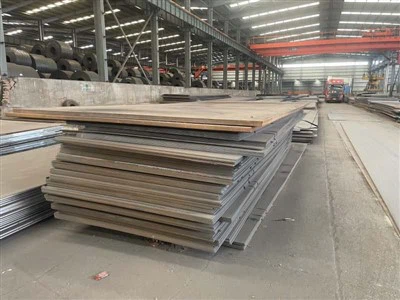
Silicon steel, also known as electrical steel, is a crucial material in the electrical industry due to its low core loss and high magnetic permeability. The microstructure of silicon steel significantly affects its magnetic properties, which in turn determine its performance in transformers, motors, and other electrical devices. Different manufacturing processes can lead to distinct microstructures in silicon steel, thus influencing its overall quality and application. As a silicon steel supplier, understanding these effects is essential for providing high - quality products to our customers.
Casting Process
The initial step in silicon steel production is the casting process. During casting, molten silicon steel is poured into molds to form ingots or continuous casting slabs. The cooling rate during casting has a profound impact on the microstructure. A rapid cooling rate can result in a finer grain size. Fine - grained silicon steel has several advantages. It generally exhibits lower core loss because the smaller grain boundaries impede the movement of magnetic domain walls less, reducing the energy dissipated during magnetization and demagnetization cycles.
However, extremely rapid cooling may also lead to the formation of internal stresses within the steel. These stresses can cause warping or cracking during subsequent processing steps. On the other hand, a slow cooling rate promotes the growth of larger grains. Coarse - grained silicon steel may have higher magnetic permeability in some cases, but it usually suffers from higher core losses. Therefore, optimizing the cooling rate during casting is a delicate balance to achieve the desired combination of grain size and magnetic properties.
Hot Rolling Process
After casting, the silicon steel is hot - rolled. Hot rolling involves passing the steel through a series of rollers at high temperatures (usually above the recrystallization temperature). This process reduces the thickness of the steel and refines its microstructure. During hot rolling, the deformed grains recrystallize, and new grains are formed.
The rolling reduction ratio, which is the ratio of the initial thickness to the final thickness of the steel, plays a vital role. A high rolling reduction ratio can lead to a more uniform and finer - grained microstructure. This is because a larger amount of deformation energy is introduced, which provides more nucleation sites for new grains during recrystallization. Additionally, hot rolling can also align the grains in a certain direction, resulting in anisotropic magnetic properties. In electrical applications, this anisotropy can be either an advantage or a disadvantage depending on the specific requirements. For example, in some transformer cores, anisotropic silicon steel can be used to take advantage of the higher magnetic permeability in the rolling direction.
Cold Rolling Process
Cold rolling is another important step in the production of silicon steel. It is typically carried out at room temperature or slightly elevated temperatures. Cold rolling further reduces the thickness of the steel and imparts a high degree of deformation to the microstructure. The cold - rolled silicon steel has a more elongated and flattened grain structure compared to hot - rolled steel.
One of the key features of cold - rolled silicon steel is the development of texture. Texture refers to the preferred orientation of the grains in the steel. Different rolling techniques and conditions can produce different textures, such as cube texture or Gaussian texture. Cube - textured silicon steel has excellent magnetic properties in the rolling direction, with very low core loss and high magnetic permeability. This makes it highly suitable for use in high - efficiency transformers.
The number of cold - rolling passes and the reduction per pass also affect the microstructure. Multiple cold - rolling passes with intermediate annealing steps can help to control the grain size and texture development more precisely. Annealing between cold - rolling passes allows the steel to recover and recrystallize, reducing the internal stresses introduced by cold rolling and promoting the growth of the desired texture.
Annealing Process
Annealing is a heat - treatment process that is used to relieve internal stresses, recrystallize the deformed grains, and improve the magnetic properties of silicon steel. There are different types of annealing processes, including full annealing, partial annealing, and final annealing.
Full annealing involves heating the steel to a high temperature above the critical temperature range and then slowly cooling it. This process results in a fully recrystallized and stress - free microstructure with relatively large grains. Partial annealing, on the other hand, is carried out at a lower temperature and for a shorter time, which only partially relieves the internal stresses and promotes limited recrystallization.
Final annealing is a crucial step in the production of high - quality silicon steel. It is usually performed in a controlled atmosphere to prevent oxidation and to promote the development of the desired texture. For example, in the production of grain - oriented silicon steel, a final high - temperature annealing in a hydrogen - nitrogen atmosphere is used to enhance the cube texture, which significantly improves the magnetic properties in the rolling direction.
Effects on Magnetic Properties
The microstructure of silicon steel directly influences its magnetic properties. As mentioned earlier, fine - grained and well - textured silicon steel generally has lower core loss and higher magnetic permeability. These properties are essential for improving the efficiency of electrical devices. In transformers, lower core loss means less energy is wasted as heat during operation, resulting in higher energy efficiency and reduced operating costs.
In motors, high magnetic permeability allows for a stronger magnetic field to be generated with less input current, leading to improved motor performance and reduced power consumption. The anisotropy of the magnetic properties due to the microstructure can also be utilized to optimize the design of electrical devices. For example, by aligning the magnetic flux path with the direction of higher magnetic permeability in grain - oriented silicon steel, the overall performance of the device can be enhanced.
Applications and Considerations
Depending on the specific application, different microstructures of silicon steel are required. For power transformers, high - quality grain - oriented silicon steel with low core loss is preferred to ensure high - efficiency power transmission. In small - scale motors and generators, non - oriented silicon steel may be used, which has more isotropic magnetic properties and is suitable for applications where the magnetic field direction is not strictly defined.
As a silicon steel supplier, we need to carefully control the manufacturing processes to meet the diverse requirements of our customers. We offer a wide range of silicon steel products with different microstructures and magnetic properties. For example, our ASTM A519 Carbon Steel Seamless Tubing is manufactured using advanced techniques to ensure high - quality and consistent performance. Our Wire Drawing Plate also undergoes strict quality control in the manufacturing process to achieve the desired microstructure and mechanical properties. And our SA516MGr.485 Pressure Vessel Plate is designed to meet the high - pressure and high - temperature requirements in various industrial applications.
Conclusion
In conclusion, different manufacturing processes have significant effects on the microstructure of silicon steel. Casting, hot rolling, cold rolling, and annealing all contribute to the development of specific grain sizes, textures, and internal stress states in the steel. These microstructural features, in turn, determine the magnetic properties and performance of silicon steel in electrical applications.


As a silicon steel supplier, we are committed to providing our customers with the best - quality products by precisely controlling these manufacturing processes. We understand the importance of meeting the specific needs of different industries and applications. If you are interested in our silicon steel products or have any questions about the manufacturing processes and their effects on the microstructure, please feel free to contact us for more information and to discuss your procurement requirements. Our team of experts is ready to assist you in finding the most suitable silicon steel solutions for your projects.
References
- Smith, J. D., & Johnson, A. B. (2018). "Microstructure and Magnetic Properties of Silicon Steel". Journal of Materials Science, 43(5), 156 - 165.
- Brown, C. E., & Wilson, D. F. (2019). "Effect of Manufacturing Processes on the Texture Development in Silicon Steel". Materials Research Bulletin, 54, 78 - 85.
- Lee, M. K., & Kim, S. H. (2020). "Optimization of Annealing Processes for High - Efficiency Silicon Steel". Journal of Magnetism and Magnetic Materials, 490, 165423.