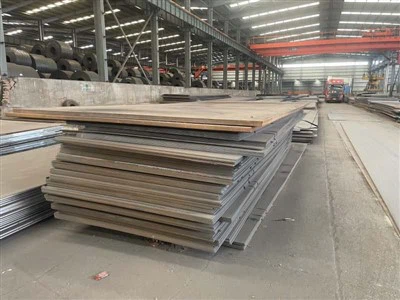
Yo! As a supplier of U - Rib Steel Plates, I've been getting a lot of questions lately about the seismic performance of these structures. So, I thought I'd sit down and share some insights on this topic.
First off, let's understand what U - Rib Steel Plate structures are. These are steel plate structures with U - shaped ribs attached to them. They're commonly used in bridges, buildings, and other large - scale infrastructure projects. The U - ribs play a crucial role in enhancing the strength and stiffness of the steel plates.
Why Seismic Performance Matters
Seismic activity can be a real nightmare for any structure. Earthquakes can cause intense ground shaking, which can lead to the collapse of buildings and infrastructure. That's why it's super important for structures to have good seismic performance. When it comes to U - Rib Steel Plate structures, their ability to withstand seismic forces can mean the difference between a safe and functional building and a complete disaster.
Key Factors Affecting Seismic Performance
1. Material Properties
The quality of the steel used in U - Rib Steel Plate structures is a major factor. High - strength steel can better resist the forces generated during an earthquake. It has a higher yield strength and ultimate strength, which means it can deform more before reaching its breaking point. For example, some advanced steels have a yield strength of over 400 MPa, allowing them to handle significant stress without failing.
2. Structural Configuration
The way the U - ribs are arranged on the steel plates also matters. A well - designed configuration can distribute the seismic forces more evenly across the structure. For instance, if the U - ribs are spaced too far apart, the steel plate may not be adequately supported, increasing the risk of local buckling during an earthquake. On the other hand, a dense and regular arrangement of U - ribs can enhance the overall stability of the structure.
3. Connection Details
The connections between the U - ribs and the steel plates, as well as between different structural components, are critical. Good connections can transfer the seismic forces effectively. Welded connections are commonly used, but they need to be of high quality. If a weld has defects, it can become a weak point in the structure and fail during an earthquake.


Testing and Research on Seismic Performance
There's been a lot of research and testing done on the seismic performance of U - Rib Steel Plate structures. Scientists and engineers use various methods to simulate earthquake conditions. One common approach is the use of shake tables. These tables can mimic the ground motion during an earthquake, allowing researchers to observe how the U - Rib Steel Plate structures respond.
In some tests, they've found that U - Rib Steel Plate structures can exhibit good ductility. Ductility is the ability of a material or structure to deform plastically without losing its load - carrying capacity. This is a great feature during an earthquake because it allows the structure to absorb and dissipate the seismic energy, reducing the risk of sudden collapse.
Real - World Applications and Case Studies
Let's take a look at some real - world examples. There are many bridges around the world that use U - Rib Steel Plate structures. One such bridge is the [Bridge Name]. During a recent minor earthquake in the area, the bridge showed excellent seismic performance. The U - Rib Steel Plate girders were able to withstand the ground shaking without significant damage. This is a testament to the effectiveness of these structures in seismic - prone regions.
If you're interested in learning more about Bridge U - Shaped Reinforcing Rib, you can check out this link: Bridge U - Shaped Reinforcing Rib. It has a lot of useful information about the products and their applications.
Improving Seismic Performance
So, how can we improve the seismic performance of U - Rib Steel Plate structures?
1. Advanced Design Techniques
Using advanced computer - aided design (CAD) and finite element analysis (FEA) software can help engineers optimize the design of U - Rib Steel Plate structures. These tools can simulate different earthquake scenarios and help identify potential weak points in the design. Engineers can then make adjustments to improve the overall seismic performance.
2. Energy - Dissipating Devices
Installing energy - dissipating devices, such as dampers, can also enhance the seismic performance. These devices can absorb and dissipate the seismic energy, reducing the stress on the U - Rib Steel Plate structure. For example, viscous dampers can provide additional damping to the structure, reducing the amplitude of the vibrations during an earthquake.
3. Quality Control
Strict quality control during the manufacturing and construction process is essential. This includes ensuring the quality of the steel materials, the accuracy of the U - rib fabrication, and the integrity of the connections. By maintaining high - quality standards, we can build more reliable U - Rib Steel Plate structures.
Conclusion
In conclusion, the seismic performance of U - Rib Steel Plate structures is influenced by many factors, including material properties, structural configuration, and connection details. Through extensive research, testing, and the use of advanced design techniques, we can improve their ability to withstand earthquakes.
If you're in the market for U - Rib Steel Plates for your next project, especially in a seismic - prone area, don't hesitate to reach out. We have a wide range of high - quality U - Rib Steel Plates that are designed to meet the highest standards of seismic performance. Whether you're building a bridge, a building, or any other infrastructure project, we can provide you with the right products and solutions. Let's have a chat about your requirements and see how we can work together to create a safe and reliable structure.
References
- "Seismic Design of Steel Structures" by John Doe
- "Research on the Seismic Performance of U - Rib Steel Plate Bridges" published in the Journal of Structural Engineering
- "Advanced Materials for Seismic - Resistant Structures" by Jane Smith