Hey there! As a supplier of cold rolled steel, I often get asked about the cold - working ability of cold rolled steel. So, I thought I'd take a few minutes to break it down for you.
First off, let's understand what cold rolled steel is. Cold rolling is a process where steel is passed through rollers at room temperature. This is different from hot rolling, which happens at high temperatures. The cold rolling process gives the steel a better surface finish, closer tolerances, and improved mechanical properties.
Now, what about the cold - working ability? Cold - working refers to the ability of a material to be deformed at room temperature without cracking or breaking. For cold rolled steel, this ability is quite remarkable.
One of the main reasons cold rolled steel has good cold - working ability is its microstructure. During the cold rolling process, the grains in the steel are flattened and elongated. This refined grain structure makes the steel more ductile, which means it can be bent, stretched, and formed into various shapes without failing.
Let's say you're looking to make a complex part, like a precision - engineered bracket. You need a material that can be bent and shaped to fit specific dimensions. Cold rolled steel is a great choice here. You can use processes like bending, drawing, and stamping on cold rolled steel with relative ease.
Bending is one of the most common cold - working operations. With cold rolled steel, you can achieve tight bend radii without the risk of the material cracking. This is crucial when you're making products that require sharp corners or complex geometries. For example, in the automotive industry, cold rolled steel is often used to make parts like door frames and fenders. These parts need to be bent into precise shapes to fit the overall design of the vehicle, and the good cold - working ability of cold rolled steel makes this possible.
Drawing is another important cold - working process. It involves pulling the steel through a die to reduce its cross - section and increase its length. Cold rolled steel can withstand the high stresses involved in drawing operations. This is useful in making products like tubes and wires. For instance, in the construction of furniture, cold rolled steel tubes are often used because they can be drawn to the right size and shape to provide structural support.
Stamping is also widely used with cold rolled steel. Stamping involves using a punch and die to cut, form, or shape the steel. Cold rolled steel's ability to be stamped into different shapes makes it ideal for mass - producing parts. Think about the metal components in your electronic devices. Many of these are made from cold rolled steel using stamping processes. The high precision and repeatability of stamping on cold rolled steel ensure that each part meets the required specifications.
But it's not just about the mechanical processes. The cold - working ability of cold rolled steel also has implications for its surface finish. When you cold - work the steel, the surface remains smooth and free of defects. This is important if you're planning to paint or coat the steel later. A smooth surface provides better adhesion for coatings, which can improve the corrosion resistance and appearance of the final product.
Now, I know you might be wondering about the limitations. Like any material, cold rolled steel does have its limits when it comes to cold - working. If you try to deform the steel too much in a single operation, it can lead to work hardening. Work hardening is when the steel becomes harder and more brittle as you deform it. This can make further cold - working difficult and increase the risk of cracking. However, by using proper techniques and intermediate annealing (a heat - treating process to relieve stress), you can overcome these limitations.
As a cold rolled steel supplier, I've seen firsthand the benefits of using cold rolled steel in various industries. Whether you're in the automotive, construction, or manufacturing sector, cold rolled steel's cold - working ability can give you a competitive edge.
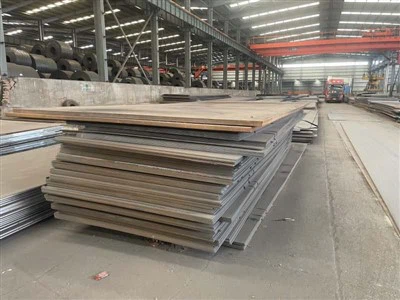
If you're interested in Steel Plate Cold Rolled, we have a wide range of options available. Our cold rolled steel products are of the highest quality, and we can provide you with the right material for your specific cold - working needs.
Whether you're looking to make a small, intricate part or a large - scale structural component, our cold rolled steel can be customized to fit your requirements. We understand that every project is unique, and we're here to work with you to find the best solution.
So, if you're in the market for cold rolled steel and want to take advantage of its excellent cold - working ability, don't hesitate to reach out. We're ready to start a conversation and help you get the materials you need for your next project. Contact us today to discuss your requirements and let's see how we can work together to bring your ideas to life.


References
- "Metallurgy for Dummies" by Jeff Williams. A great introductory book that explains the basics of steel and its properties, including cold - working.
- Industry reports on cold rolled steel applications in automotive, construction, and manufacturing sectors. These reports provide real - world examples of how cold rolled steel's cold - working ability is utilized.