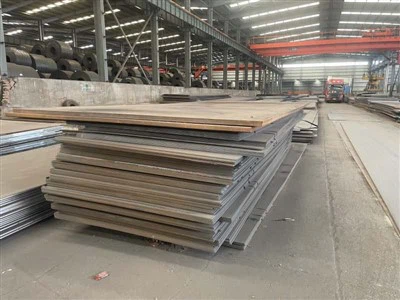
Rebar steel, also known as reinforcing steel bar, is a crucial component in the construction industry. It is used to provide tensile strength to concrete structures, enhancing their durability and load - bearing capacity. One of the most important properties of rebar steel is its corrosion resistance. In this blog, as a rebar steel supplier, I will delve into the details of what corrosion resistance of rebar steel means, its influencing factors, and its significance in construction projects.
Understanding Corrosion of Rebar Steel
Corrosion is a natural electrochemical process that occurs when metal reacts with its environment. In the case of rebar steel, it typically involves the oxidation of iron in the steel when exposed to oxygen and moisture. The chemical reaction can be simplified as follows:
[4Fe + 3O_{2}+6H_{2}O\rightarrow4Fe(OH){3}]
The iron hydroxide ((Fe(OH){3})) further decomposes to form rust ((Fe_{2}O_{3})). Rust has a much larger volume than the original iron, which can cause expansion and cracking of the surrounding concrete. As the corrosion progresses, the cross - sectional area of the rebar decreases, leading to a reduction in its strength and ultimately compromising the structural integrity of the concrete structure.
Factors Affecting the Corrosion Resistance of Rebar Steel
1. Chemical Composition
The chemical composition of rebar steel plays a vital role in its corrosion resistance. Steel with a higher content of alloying elements such as chromium, nickel, and copper generally has better corrosion resistance. For example, stainless steel rebar contains a significant amount of chromium, which forms a passive oxide layer on the surface of the steel. This layer acts as a barrier, preventing further oxidation and corrosion.
In traditional carbon steel rebar, the carbon content also affects corrosion. Higher carbon content can increase the hardness of the steel but may also make it more susceptible to corrosion in some environments. Additionally, impurities such as sulfur and phosphorus can have a negative impact on corrosion resistance.
2. Environmental Conditions
The environment in which the rebar is placed has a profound influence on its corrosion rate. In coastal areas, the presence of salt in the air and soil significantly accelerates the corrosion process. Chloride ions from salt can penetrate the concrete and break down the passive layer on the rebar surface, allowing corrosion to occur more readily.
High - humidity environments also promote corrosion as moisture is a key component in the electrochemical reaction. Moreover, acidic or alkaline conditions can affect the stability of the passive layer on the rebar. For instance, in industrial areas with high levels of air pollution containing sulfur dioxide, the formation of acid rain can increase the acidity of the environment around the rebar, leading to faster corrosion.
3. Concrete Quality
The quality of the concrete in which the rebar is embedded is another important factor. Well - compacted, dense concrete with low porosity provides better protection for the rebar. The concrete acts as a physical barrier, preventing oxygen, moisture, and aggressive chemicals from reaching the rebar.
The alkalinity of concrete is also crucial. Concrete is typically alkaline, which helps to maintain the passive layer on the rebar surface. However, if the concrete carbonates over time due to the reaction with carbon dioxide in the air, the pH of the concrete decreases, and the passive layer may become unstable, increasing the risk of corrosion.
Measuring Corrosion Resistance of Rebar Steel
There are several methods to measure the corrosion resistance of rebar steel. One common method is the electrochemical impedance spectroscopy (EIS). This technique measures the electrical impedance of the rebar - concrete system, which can provide information about the corrosion rate and the condition of the passive layer on the rebar surface.
Another method is the half - cell potential measurement. By measuring the potential difference between the rebar and a reference electrode, the likelihood of corrosion can be estimated. A more negative potential indicates a higher probability of corrosion.
Importance of Corrosion Resistance in Construction
1. Structural Integrity
As mentioned earlier, corrosion of rebar can lead to a reduction in its cross - sectional area and strength. In a concrete structure, the rebar is responsible for resisting tensile forces. If the rebar corrodes, the structure's ability to withstand loads is compromised, increasing the risk of structural failure. This is especially critical in large - scale projects such as bridges, high - rise buildings, and dams, where the safety of the public depends on the integrity of the structure.
2. Service Life
A structure with rebar that has good corrosion resistance will have a longer service life. This reduces the need for frequent repairs and replacements, saving both time and money in the long run. For example, in a building project, using high - quality, corrosion - resistant rebar can extend the building's lifespan from a few decades to over a century, making it a more sustainable investment.
3. Cost - effectiveness
Although corrosion - resistant rebar may have a higher initial cost compared to regular rebar, the cost savings in the long term can be significant. The cost of repairing or replacing a corroded structure can be extremely high, including the cost of labor, materials, and the disruption to the normal use of the structure. By investing in corrosion - resistant rebar, the overall cost of the project over its lifespan can be reduced.
Our Rebar Steel Products and Corrosion Resistance
As a rebar steel supplier, we offer a wide range of rebar products, including HRB 500E and HRB 400E. These rebars are manufactured with strict quality control to ensure good corrosion resistance.
Our rebar is produced using advanced steel - making techniques, which allow for precise control of the chemical composition. We carefully select the raw materials to minimize impurities and optimize the content of alloying elements.
We also provide rebar with different surface treatments to enhance corrosion resistance. For example, some of our rebars are coated with epoxy resin. The epoxy coating acts as a physical barrier, preventing moisture, oxygen, and chloride ions from reaching the steel surface. This significantly reduces the risk of corrosion, especially in harsh environments.
Conclusion
The corrosion resistance of rebar steel is a critical property that directly affects the performance and durability of concrete structures. Understanding the factors that influence corrosion resistance, such as chemical composition, environmental conditions, and concrete quality, is essential for selecting the right rebar for a construction project.
As a rebar steel supplier, we are committed to providing high - quality rebar products with excellent corrosion resistance. Our products, including HRB 500E and HRB 400E, are designed to meet the diverse needs of our customers in different construction scenarios.
If you are involved in a construction project and are looking for reliable rebar steel with good corrosion resistance, please feel free to contact us for procurement and further discussions. We are here to offer you the best solutions and support for your project.


References
- ACI 222R - 14, "Corrosion of Metals in Concrete", American Concrete Institute.
- NACE International, "Corrosion Basics: An Introduction", NACE International Publications.
- Neville, A. M., "Properties of Concrete", Pearson Education.