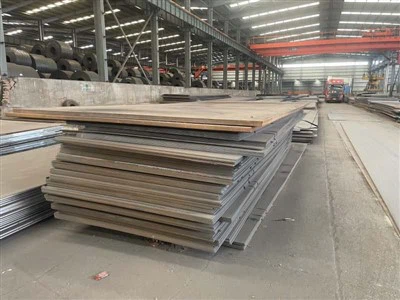
What is the effect of corrosion on ASME 516 GR.70 Plate Pressure Vessel Plate?
As a dedicated supplier of ASME 516 GR.70 Plate Pressure Vessel Plate, I have witnessed firsthand the critical role these plates play in various industries. Pressure vessels are essential components in sectors such as oil and gas, chemical processing, and power generation. They are designed to hold gases or liquids at a pressure significantly different from the ambient pressure. In this blog, I will delve into the impact of corrosion on ASME 516 GR.70 plates and why it is a matter of great concern for users.
Understanding ASME 516 GR.70 Plate
Before we discuss the effects of corrosion, it's important to understand what ASME 516 GR.70 plate is. ASME (American Society of Mechanical Engineers) is a well - recognized authority in establishing standards for mechanical devices, including pressure vessels. ASTM A516 Gr 70 is a specification that defines the requirements for carbon steel plates used in welded pressure vessels for moderate - and lower - temperature service. You can find more details about the ASTM A516 Gr 70 Specification.


These plates are known for their excellent notch toughness, good weldability, and high strength. They are commonly used in the construction of pressure vessels in oil and gas projects, where they are subjected to high pressures and sometimes harsh environmental conditions. You can explore more about A516GR70 Pressure Vessel Steel Plate – ASME SA516 Gr70 for Oil & Gas Projects.
Types of Corrosion Affecting ASME 516 GR.70 Plates
There are several types of corrosion that can affect ASME 516 GR.70 plates in pressure vessels.
Uniform Corrosion: This is the most common type of corrosion. It occurs when the entire surface of the steel plate is uniformly attacked by the corrosive medium. In pressure vessels, this can be caused by exposure to acidic or alkaline substances in the stored fluids. For example, if a pressure vessel is used to store a mildly acidic solution, over time, the acid will react with the iron in the steel, leading to a gradual loss of material from the surface of the plate.
Pitting Corrosion: Pitting corrosion is more localized. It starts with small pits or holes on the surface of the steel plate. Once a pit is formed, it acts as a cathode, and the surrounding area becomes an anode. This creates a galvanic cell, accelerating the corrosion process within the pit. Pitting corrosion can be extremely dangerous because it can cause sudden failures in the pressure vessel, even though the overall loss of material may seem insignificant.
Stress - Corrosion Cracking (SCC): SCC is a combination of tensile stress and a corrosive environment. In pressure vessels, the plates are often under high internal pressure, which creates tensile stress. When this stress is combined with a corrosive medium, such as a chloride - containing solution, it can lead to the formation of cracks. These cracks can propagate rapidly and cause catastrophic failure of the pressure vessel.
Effects of Corrosion on ASME 516 GR.70 Plates
Reduction in Thickness: One of the most obvious effects of corrosion on ASME 516 GR.70 plates is the reduction in thickness. As the steel plate corrodes, the material is gradually lost from the surface. This reduction in thickness weakens the plate, reducing its ability to withstand the internal pressure of the vessel. Over time, if the corrosion is not addressed, the plate may become too thin to maintain the structural integrity of the pressure vessel, leading to potential leaks or even explosions.
Loss of Mechanical Properties: Corrosion can also have a significant impact on the mechanical properties of the ASME 516 GR.70 plates. The steel's strength, ductility, and toughness can be compromised. For example, pitting corrosion can create stress concentrations, which can lead to a decrease in the plate's fatigue life. Stress - corrosion cracking can cause sudden and brittle failures, as the cracks can propagate rapidly through the material.
Contamination of the Stored Fluid: In some cases, corrosion products from the ASME 516 GR.70 plates can contaminate the fluid stored in the pressure vessel. This can be a major problem in industries such as food and beverage or pharmaceutical, where the purity of the product is crucial. The corrosion products can also clog valves and pipes, leading to operational issues and maintenance problems.
Increased Maintenance and Replacement Costs: When corrosion occurs in a pressure vessel, it often requires extensive maintenance or even replacement of the affected plates. The cost of inspection, repair, and replacement can be substantial, especially for large - scale pressure vessels. Additionally, the downtime associated with maintenance and replacement can result in lost production and revenue for the end - user.
Preventive Measures
To mitigate the effects of corrosion on ASME 516 GR.70 plates, several preventive measures can be taken.
Coating and Lining: Applying a protective coating or lining to the surface of the pressure vessel plates can provide a barrier between the steel and the corrosive medium. There are various types of coatings available, such as epoxy coatings and rubber linings. These coatings should be carefully selected based on the nature of the stored fluid and the operating conditions of the pressure vessel.
Cathodic Protection: Cathodic protection is a technique used to protect metals from corrosion by making them the cathode of an electrochemical cell. This can be achieved through either sacrificial anodes or impressed current systems. Sacrificial anodes, such as zinc or magnesium, are connected to the steel plate. The anode corrodes preferentially, protecting the steel from corrosion. Impressed current systems use an external power source to supply a direct current to the steel plate, making it the cathode.
Corrosion - Resistant Alloys: In some cases, using corrosion - resistant alloys instead of standard ASME 516 GR.70 plates may be a viable option. Alloys such as stainless steel or nickel - based alloys have better corrosion resistance properties. However, these alloys are often more expensive, so the cost - effectiveness needs to be carefully evaluated.
Conclusion
Corrosion is a serious issue that can have significant effects on ASME 516 GR.70 Plate Pressure Vessel Plates. It can lead to a reduction in thickness, loss of mechanical properties, contamination of the stored fluid, and increased maintenance costs. As a supplier of these plates, I understand the importance of providing high - quality materials and also offering guidance on corrosion prevention.
If you are in the market for ASME 516 GR.70 plates or need more information about corrosion prevention for pressure vessels, we are here to help. We are a reliable A516GR70 Steel Plate Supplier - ASME Standard, Fast Delivery. Feel free to contact us for further discussion and procurement. We can also provide you information on alternative materials like SPV490Q Pressure Vessel Steel and DIWA373 Pressure Vessel Steel depending on your specific requirements.
References
- ASME Boiler and Pressure Vessel Code
- ASTM International standards related to A516 Gr 70 steel
- Scientific literature on corrosion of carbon steel in pressure vessel applications