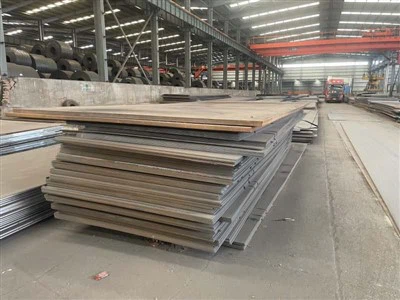
Hot forming is a crucial manufacturing process that significantly impacts the properties of various steel plates. As a supplier of S355J2WP Steel Plate, I have witnessed firsthand how this process can transform the characteristics of S355J2WP steel. In this blog, I will delve into the effects of hot forming on the properties of S355J2WP steel plate, exploring its mechanical, chemical, and microstructural changes.
Mechanical Properties
One of the most significant effects of hot forming on S355J2WP steel plate is its impact on mechanical properties. Hot forming involves heating the steel plate to a high temperature, typically above its recrystallization temperature, and then shaping it into the desired form. This process can lead to several changes in the mechanical properties of the steel, including increased strength, improved ductility, and enhanced toughness.
Strength
Hot forming can significantly increase the strength of S355J2WP steel plate. When the steel is heated to a high temperature, the atoms in the crystal lattice become more mobile, allowing them to rearrange themselves into a more stable structure. This results in the formation of smaller grains, which are known to improve the strength of the steel. Additionally, hot forming can introduce dislocations into the crystal lattice, which further enhance the strength of the steel by impeding the movement of dislocations.
Ductility
Despite the increase in strength, hot forming can also improve the ductility of S355J2WP steel plate. Ductility refers to the ability of a material to deform plastically without fracturing. During hot forming, the steel is subjected to high temperatures and stresses, which can cause the grains to elongate and align in the direction of the applied force. This results in a more uniform distribution of stress throughout the material, reducing the likelihood of cracking and improving the ductility of the steel.
Toughness
Toughness is another important mechanical property that can be affected by hot forming. Toughness refers to the ability of a material to absorb energy and resist fracture under impact loading. Hot forming can improve the toughness of S355J2WP steel plate by refining the grain structure and reducing the presence of impurities. A finer grain structure provides more grain boundaries, which can act as barriers to crack propagation, increasing the toughness of the steel. Additionally, hot forming can remove impurities from the steel, such as sulfur and phosphorus, which can weaken the material and reduce its toughness.


Chemical Properties
In addition to its impact on mechanical properties, hot forming can also affect the chemical properties of S355J2WP steel plate. The high temperatures and stresses involved in hot forming can cause chemical reactions to occur within the steel, leading to changes in its composition and corrosion resistance.
Composition
Hot forming can cause changes in the composition of S355J2WP steel plate. During the hot forming process, the steel is heated to a high temperature, which can cause some of the elements in the steel to react with each other or with the surrounding atmosphere. For example, carbon can react with oxygen in the air to form carbon dioxide, which can lead to a decrease in the carbon content of the steel. Additionally, hot forming can cause the diffusion of elements within the steel, leading to a more uniform distribution of elements throughout the material.
Corrosion Resistance
S355J2WP steel is a weathering steel, which means it has a high resistance to corrosion. Hot forming can further enhance the corrosion resistance of S355J2WP steel plate by promoting the formation of a protective oxide layer on the surface of the steel. When the steel is heated to a high temperature, the oxygen in the air reacts with the iron in the steel to form a layer of iron oxide. This layer of iron oxide acts as a barrier, preventing further corrosion of the steel. Additionally, hot forming can improve the adhesion of the oxide layer to the steel surface, making it more resistant to peeling and flaking.
Microstructural Changes
Hot forming can also cause significant microstructural changes in S355J2WP steel plate. The high temperatures and stresses involved in hot forming can cause the grains in the steel to recrystallize, leading to the formation of a new grain structure. This new grain structure can have a significant impact on the mechanical and chemical properties of the steel.
Grain Size
One of the most significant microstructural changes that can occur during hot forming is a change in grain size. When the steel is heated to a high temperature, the grains in the steel begin to grow. However, during hot forming, the steel is subjected to high stresses, which can cause the grains to deform and break up. This results in the formation of smaller grains, which are known to improve the strength and ductility of the steel.
Phase Transformation
Hot forming can also cause phase transformations to occur within the steel. S355J2WP steel is a low-alloy steel, which means it contains small amounts of alloying elements such as copper, chromium, and nickel. These alloying elements can affect the phase transformation behavior of the steel. During hot forming, the steel is heated to a high temperature, which can cause the austenite phase to form. As the steel cools, the austenite phase can transform into other phases, such as ferrite, pearlite, or bainite. The type of phase transformation that occurs depends on the cooling rate and the composition of the steel.
Applications
The changes in mechanical, chemical, and microstructural properties that occur during hot forming make S355J2WP steel plate suitable for a wide range of applications. Some of the common applications of S355J2WP steel plate include:
- Construction: S355J2WP steel plate is commonly used in the construction industry for applications such as bridges, buildings, and towers. Its high strength, good ductility, and excellent corrosion resistance make it an ideal material for these applications.
- Transportation: S355J2WP steel plate is also used in the transportation industry for applications such as railway wagons, trucks, and ships. Its high strength and good toughness make it suitable for these applications, where the material is subjected to high stresses and impact loading.
- Energy: S355J2WP steel plate is used in the energy industry for applications such as wind turbines, oil and gas pipelines, and power plants. Its high strength, good corrosion resistance, and excellent weldability make it an ideal material for these applications, where the material is exposed to harsh environments and high temperatures.
Conclusion
Hot forming is a crucial manufacturing process that can significantly impact the properties of S355J2WP steel plate. The process can lead to changes in the mechanical, chemical, and microstructural properties of the steel, including increased strength, improved ductility, enhanced toughness, and better corrosion resistance. These changes make S355J2WP steel plate suitable for a wide range of applications in various industries.
If you are interested in purchasing S355J2WP Steel Plate or other related products such as S355J0WP Steel Plate, S355J2WP Corten Steel Plate, S355J2W(H) Weathering Steel Plate, or Weathering Steel Plate, please feel free to contact us for more information and to discuss your specific requirements. We are committed to providing high-quality products and excellent customer service.
References
- ASM Handbook Committee. (2008). ASM Handbook, Volume 14A: Metalworking: Bulk Forming. ASM International.
- Bhadeshia, H. K. D. H., & Honeycombe, R. W. K. (2017). Steels: Microstructure and Properties. Elsevier.
- Degarmo, E. P., Black, J. T., & Kohser, R. A. (2003). Materials and Processes in Manufacturing. Wiley.