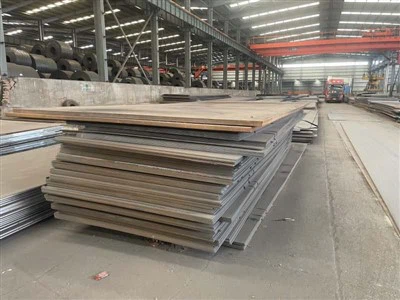
Hey there, folks! As a supplier of ASME 516 GR.70 Plate Pressure Vessel Plate, I've seen a lot in the industry. One question that often pops up is about the influence of fatigue on the properties of these plates. Let's dig into it.
First off, what is ASME 516 GR.70? ASME 516 GR.70, also known as ASTM A516 GR 70, is a widely used steel plate in pressure vessel applications. It has excellent notch toughness and it is suitable for service in low - temperature environments. These plates are commonly used in the construction of boilers, storage tanks, and other pressure - containing equipment where reliability is crucial.
Now, let's talk about fatigue. Fatigue occurs when a material is subjected to repeated loading and unloading. In a pressure vessel, this can happen due to regular pressure changes during operation. For example, a storage tank might experience pressure fluctuations as it fills and empties. These cyclic loads can gradually cause changes in the material properties of the ASME 516 GR.70 plates.


Impact on Mechanical Properties
One of the most significant effects of fatigue on ASME 516 GR.70 plates is on their mechanical properties. When these plates are under cyclic loading, the fatigue process can lead to a reduction in their strength. The repeated stress can cause micro - cracks to form within the material. Over time, these micro - cracks can grow and propagate, weakening the plate.
For instance, the yield strength might decrease. Yield strength is the point at which a material starts to deform plastically. A lower yield strength means that the plate is more likely to deform under normal operating pressures. This can be a huge problem in pressure vessel applications, as any deformation can compromise the integrity of the vessel.
Tensile strength can also be affected. Tensile strength is the maximum stress a material can withstand while being pulled or stretched. Fatigue can lead to a drop in tensile strength, making the plate more prone to failure under high - stress situations.
In addition to strength, fatigue can also impact the ductility of the ASME 516 GR.70 plates. Ductility is the ability of a material to deform under tensile stress without fracturing. As the plate undergoes fatigue, its ductility can decrease. Once the ductility is reduced, the plate becomes more brittle. A brittle material is more likely to fracture suddenly, which is extremely dangerous in a pressure vessel context.
Microstructural Changes
Fatigue doesn't just affect the mechanical properties on a macroscopic level; it also causes changes at the microstructural level. In ASME 516 GR.70 plates, the cyclic loading can lead to the formation of dislocations in the crystal structure. These dislocations can pile up at grain boundaries, which can act as stress concentration points.
As the fatigue continues, new phases might form in the material. These phase changes can alter the material's properties. For example, the transformation of austenite to martensite can increase the hardness of the plate but also make it more brittle. This change in hardness and brittleness can further impact the plate's ability to withstand pressure and cyclic loads.
Influence on Corrosion Resistance
Another important aspect is the influence of fatigue on the corrosion resistance of ASME 516 GR.70 plates. Fatigue cracks can act as paths for corrosive agents to penetrate the material. Once these agents get into the plate, they can start to corrode the internal structure.
In a pressure vessel environment, there might be various corrosive substances like water, acids, or alkalis. When the plate is fatigued and has cracks, these substances can easily reach the inner layers of the material. This can accelerate the corrosion process and reduce the service life of the pressure vessel.
The combination of fatigue and corrosion can be especially damaging. The corrosion can weaken the material around the fatigue cracks, causing them to grow faster. This, in turn, further reduces the mechanical properties of the plate, creating a vicious cycle.
Detection and Mitigation
So, how can we deal with the influence of fatigue on ASME 516 GR.70 plates? First, it's important to detect the signs of fatigue early. Non - destructive testing methods like ultrasonic testing and magnetic particle testing can be used to detect micro - cracks on the surface or inside the plate. Regular inspections can help identify potential problems before they turn into major failures.
To mitigate the effects of fatigue, proper design of the pressure vessel is crucial. Designers should try to minimize stress concentrations in the vessel. For example, using rounded corners and smooth transitions can reduce the likelihood of fatigue cracks forming.
Choosing the right heat treatment for the ASME 516 GR.70 plates can also improve their fatigue resistance. Heat treatment can optimize the microstructure of the material, making it more resistant to crack initiation and propagation.
We at our company, as a reliable supplier of ASTM A516 Gr70 Steel Plate For Boiler, understand the importance of these factors. We ensure that our plates are of high quality and have good fatigue resistance. Our plates are manufactured according to strict industry standards, and we offer a wide range of thicknesses and sizes to meet different customer needs.
If you're in the market for high - quality ASME 516 GR.70 plates for your pressure vessel applications, don't hesitate to reach out. We can provide you with detailed information about the properties of our plates and how they can withstand fatigue and other challenges. You might also be interested in our other products like ASTM A203 Grade A(A203GRA) Pressure Vessel And Boiler Steel Plate and ASTM A516 Gr70 Boiler Plate.
Whether you're building a new pressure vessel or replacing old plates, we can offer you the best solutions. Our A516GR70 Pressure Vessel Steel Plate is known for its reliability and performance. So, if you want to discuss your requirements or have any questions about fatigue and the properties of our plates, just get in touch. We're here to help you make the right choice for your project.
References
- Smith, J. (2018). Fatigue Behavior of Structural Steels. Journal of Materials Science.
- Brown, A. (2019). Corrosion and Fatigue in Pressure Vessel Materials. International Journal of Pressure Vessel Engineering.
- Johnson, R. (2020). Microstructural Changes in Steel Plates under Cyclic Loading. Metallurgical Transactions.