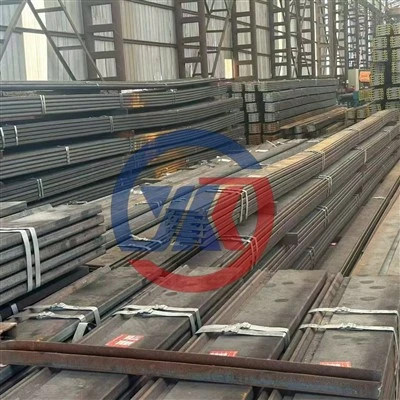
In the selection of materials for pressure vessels and industrial equipment, A516 Grade 70 (hereinafter referred to as A516 Gr. 70) is an extremely common carbon steel plate. The ASTM A516 standard itself clearly states that A516 Gr. 70 is a steel intended for medium- and low-temperature pressure vessels. It was originally designed to withstand certain low-temperature operating conditions. However, the exact temperature range considered "low-temperature" depends on the impact test temperature grade.
- Standard default supply conditions: hot-rolled or normalized. For low-temperature applications, the normalized condition is virtually mandatory.
- The minimum impact test temperature permitted by the standard can reach -50°C (subject to additional requirements). However, the actual low-temperature performance of Gr. 70 is somewhat inferior to that of Gr. 65 or Gr. 60-higher strength naturally comes at the expense of some toughness.
Determining Suitability for -20°C and -40°C Operating Conditions
-20°C: Compliant and usable; normalized condition is preferred.
- The standard directly requires that the impact energy meet the specified criteria at this temperature; both the standard normalized condition (Gr70N) and the compliant hot-rolled condition can satisfy design safety requirements.
- For thick plates (>40 mm), forced normalizing is recommended to refine the grain structure, improve the consistency of impact toughness, and better ensure pressure-bearing safety.
-40°C: Additional conditions must be met; default use is not permitted
- The standard does not list -40°C as a basic test temperature, and standard supply cannot directly guarantee compliance;
- Feasible solutions:
- Specify the **-40°C impact test requirement** when placing an order, and agree on an impact energy value of ≥27 J;
- Normally annealed (Gr70N) plates must be selected, as hot-rolled plates struggle to consistently meet the standard;
- Select products from high-quality steel mills with strictly controlled sulfur and phosphorus content (P ≤ 0.025%) to reduce the risk of cold brittleness;
- For plates with a thickness > 40 mm, additional verification of Z-direction properties (resistance to laminar tearing) is required to prevent structural failure at low temperatures.
Typical Applications
- -20°C Applications: Pressure vessels in cold regions, auxiliary equipment for LNG storage tanks, cryogenic oil and gas transmission pipelines, and boiler heat transfer components;
- -40°C Applications: Atmospheric storage tanks in extremely cold northern regions, cryogenic chemical reactors, and non-extreme-low-temperature pressure vessels (must be ordered in accordance with the additional conditions listed above).
Practical Recommendations
- -20°C: A516 Gr70 is fully compliant; the normalized condition is preferred. The material can be used with confidence provided that impact tests are conducted in accordance with the standard;
- -40°C: Ordering requirements must be clearly specified, the normalized condition must be specified, and low-temperature impact performance must be verified; standard stock material cannot be selected directly;
In practice, it is recommended to request a Material Test Certificate (MTC) from the steel mill, focusing on verifying the impact energy data at -20°C and -40°C to ensure compatibility with operating conditions and avoid the risk of brittle fracture.