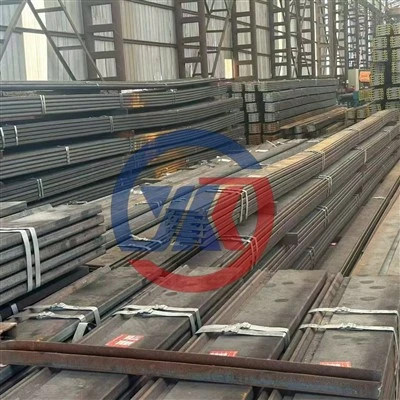
With the rapid development of modern architecture, bridges, containers, and landscape engineering, weathering steel has become a popular structural material thanks to its excellent corrosion resistance and unique rust-like aesthetic. Weathering steel is a type of low-alloy structural steel in which small amounts of alloying elements are added to enhance resistance to atmospheric corrosion. Its surface can form a stable and dense rust layer that protects the inner metal from further deterioration. To meet the needs of different engineering environments and applications, weathering steel is divided into multiple grades and specifications. This article will introduce the common grades of weathering steel and explain in detail how to distinguish them.


Common Grades of Weathering Steel
Weathering steel has corresponding standards in Chinese, American, European, and other systems. The following lists the grades that are most widely used and most easily recognized.
1. Chinese Standard Grades (GB/T)
The main representative grades of weathering steel in the Chinese standard include:
Q235NH
Q235NH is a normal-strength weathering steel with a yield strength of about 235 MPa. It is suitable for light-duty structures, landscape installations, guardrails, and similar applications.
Q295NH / Q295GNH
These grades offer higher strength than the Q235 series and are used for outdoor structures requiring a certain load-bearing capacity.
Q355NH / Q355GNH
One of the most widely used weathering steel grades, it offers a high yield strength (≥355 MPa) and is suitable for building structures, bridges, containers, and welded components.
Q450NQR1 / Q550NH
These are high-strength weathering steels with further increased yield strength and can be used in large buildings, heavy-duty structures, and extreme environmental conditions.
2. American Weathering Steel Grades (ASTM)
American weathering steel is represented by the Cor-Ten brand. Common grades include:
Corten A (ASTM A242 Type 1)
Suitable for thin-plate applications, commonly used in architectural decoration, exterior wall panels, and subway guardrails.
Corten B (ASTM A588 Grade B)
This grade offers higher strength and superior corrosion resistance, making it suitable for bridges, rail cars, and large structural components.
3. European Weathering Steel Grades (EN 10025-5)
The European standard includes weathering steels in its structural steel system. Representative grades include:
S355J0WP / S355J2WP
These grades have good weldability and corrosion resistance and are commonly used for unpainted structures.
S355J0W / S355J2W / S460W
These plates are used for structures that must withstand higher loads or more complex environments.
How to Distinguish Between Different Grades of Weathering Steel
There are many grades of weathering steel, and different standard systems use different naming conventions. Understanding how to identify these grades is essential for proper material selection.
1. Distinguishing by the "letter + number" naming rules
Different standards follow clear naming patterns:
Chinese naming rule (Example: Q355NH)
Q: Yield strength
355: Yield strength ≥355 MPa
N: Weathering steel
H: Good weldability
Thus, Q355NH means a weathering steel with 355 MPa yield strength and good welding performance.
American naming (e.g., ASTM A588)
A588: ASTM high-strength weathering steel
Grades such as Grade A and Grade B indicate differences in strength levels and alloy content.
Corten A and Corten B are commercial names; the former for thin plates, the latter for thicker or structural plates.
European naming (e.g., S355J0W)
S: Structural steel
355: Yield strength (MPa)
J0: Impact toughness rating (tested at 0°C)
W: Weathering steel
For example, S355J2W indicates weathering steel with higher impact performance (tested at −20°C).
2. Distinguishing by chemical composition
Weathering steel contains specific amounts of corrosion-resistant elements such as Cu, P, Cr, and Ni:
Cu: typically 0.2–0.6%
Cr, Ni, P: generally 0.1–0.7%
Higher alloy content corresponds to stronger corrosion resistance and higher grade
Chemical analysis is the most reliable method when labeling is missing.
3. Distinguishing by mechanical properties
Different grades vary significantly in yield strength, tensile strength, and elongation:
- Q235NH → yield 235 MPa
- Q355NH → yield 355 MPa
- Q450NQR1 → yield above 450 MPa
- ASTM A588 → yield ≥345 MPa
- EN S355 series → yield 355 MPa
Mechanical testing allows accurate determination of grade and steel type.
4. Distinguishing by appearance and rust-layer characteristics (auxiliary method)
Although all weathering steels form reddish-brown rust layers, there are subtle differences:
- Higher-alloy grades (e.g., Q450NQR1) form denser protective layers
- Lower grades (e.g., Q235NH) rust slightly faster
- Surface color may vary among different manufacturers
- However, this method is only supplementary and should not serve as the sole basis for identification.
Weathering steel, as a material combining structural function and aesthetic value, has a mature grading system and wide application range. From the Chinese Q235NH and Q355NH to American Corten A/B and European S355J2W, different grades vary significantly in performance, alloy composition, and suitable applications.
If you are looking for steel plates but are unsure which type to choose, click the button below for a free consultation. We can provide you with a professional solution.