What Are the Plates for Ship Building? A Deep Dive into Marine Steel
Shipbuilding is one of the most demanding industries for structural steel. Unlike standard construction, a vessel operates in a corrosive, dynamic, and high-stress environment (the ocean). Therefore, the steel plates used in ship building are not just any metal; they are a specialized category known as Marine Steel Plates.
In this guide, we will explore the technical specifications, classification standards, and market trends for shipbuilding plates, helping you make informed sourcing decisions for your next project.
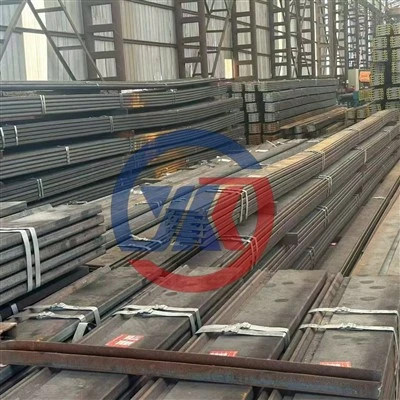
Steel plates for ship construction are primarily hot-rolled carbon steel plates. They account for approximately 75% of the total steel consumption in a shipyard, used mainly for the hull, deck, and bulkheads .
However, what separates a standard plate from a shipbuilding plate is certification.
To be used on a vessel, a steel plate must be approved by a Classification Society (also known as a "Class"). These are independent organizations that verify that the steel meets specific safety and performance standards.
Common Classification Societies includ
ABS (American Bureau of Shipping)
LR (Lloyd's Register - UK)
Common Classification Societies includ
DNV (Det Norske Veritas - Norway)
CCS (China Classification Society)
Common Classification Societies includ
NK (ClassNK - Japan)
KR (Korean Register)
Emerging Trends: High-End Steel Plates
LNG & Cryogenic Steel
Ships carrying Liquefied Natural Gas (LNG) require steel resistant to extreme cold (-163°C). This includes 9% Nickel steel and high-manganese steel.
Corrosion-Resistant Plates
Designed for oil tankers, these plates eliminate the need for costly coating layers on cargo oil tanks.
Thin & Wide Plates (4mm - 60mm)
Driven by the boom in Cruise ships and PCTC (Car Carriers) , there is growing demand for "large-span thin-wall" plates that offer flatness and precision for complex designs.
Chemical Composition and Mechanical Properties
When reviewing a Mill Test Certificate (MTC) for shipbuilding plates, pay close attention to these metrics:
Carbon Equivalent (CEV): Ship steel must be highly weldable. A low CEV ensures that welding the giant sections together doesn't cause cracking.
Toughness: Especially for vessels traversing cold climates (North Atlantic), Charpy V-Notch tests are mandatory. Grade E steel, for example, requires impact testing at -40°C .
Thickness: Ranges from 4mm for small bulkheads to over 100mm for keel plates.

why choose us?
Wide Range of Grades & Dimensions - One-Stop Sourcing
Shipbuilding requires multiple grades across one hull. We carry them all in stock or with short mill rolling lead times.
| Category | Grades | Thickness Range |
|---|---|---|
| Ordinary Strength | A, B, D, E | 4mm – 150mm |
| High Tensile | AH32, DH32, EH32, AH36, DH36, EH36 | 5mm – 120mm |
| Ultra-High Strength | FH36, FH40, EH47 | 6mm – 80mm |
| Special Use | 9% Ni (LNG), corrosion-resistant for oil tankers | 6mm – 50mm |
Width up to 4,500mm - reducing weld seams and lowering your fabrication costs.
one-stop solution
professional team
high quality
Choose YUXIN steel group, and what you purchase is not merely the steel plates, but also a complete warranty system and a sense of responsibility.
Our address
Tianjin, China
Phone Number
(86)-15937221771(WeChat)
(86)-15837212056(WhatsApp)
info@chinasteelcompany.com


China one-stop steel processing procurement
Through years of understanding and precipitation of steel, Yuxin Group has now become a mature steel processing and manufacturer, providing various products for many construction companies and steel structure companies around the world. Thanks to Yuxin Group's professionalism and integrity, it has become a world-renowned enterprise.