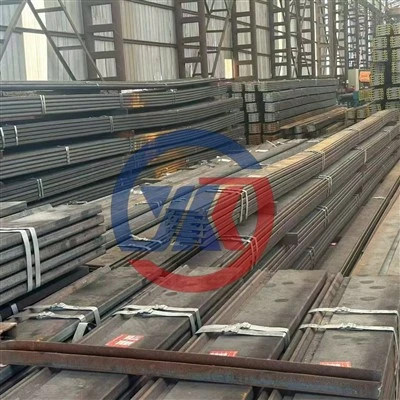
In the fields of pressure vessels, piping, and related engineering, A516 GR70 and A105 are two highly common yet frequently confused material grades. Both belong to the ASTM (American Society for Testing and Materials) standards system, but they differ significantly in their applicable forms, performance emphases, and usage scenarios. Yuxin Steel systematically compares these two materials from multiple perspectives to help you select the correct steel grade for your practical material selection needs.
To purchase steel plates, please visit the following website.
https://www.chinasteelcompany.com/contact-us
I. Material Standards
A516 GR70
- Standard: ASTM A516 / A516M
- Material Type: Medium Carbon Manganese Steel Plate
- Form of Supply: Steel Plate
- Primary Application: Steel plate for medium- and low-temperature pressure vessels
A516 GR70 is one of the most widely used steel plate materials in the pressure vessel industry, particularly suitable for equipment requiring good toughness such as boilers, storage tanks, and heat exchangers.

A105
- Standard: ASTM A105 / A105M
- Material Type: Carbon Steel Forgings
- Supply Form: Forgings
- Primary Application: Pressure-bearing components in piping systems
A105 is commonly used to manufacture forgings such as flanges, valve bodies, pipe fittings, and joints, serving as a classic material choice for piping systems.

II. Chemical Composition and Mechanical Properties
1. Chemical Composition (Typical Range)
A516 GR70: C ≤ 0.30%, Mn 0.85–1.20%, P ≤ 0.035%, S ≤ 0.035%, Si 0.15–0.40%. Strictly controlled sulfur and phosphorus content enhances weldability and crack resistance.
A105: C ≤ 0.35%, Mn 0.60–1.05%, P ≤ 0.040%, S ≤ 0.050%, Si ≤ 0.40%. Slightly higher carbon content for suitability with forging processes.
2. Key Mechanical Properties
|
Property Item |
A516 GR70 |
A105 |
|
Tensile Strength |
485–620 MPa |
≥485 MPa |
|
Yield Strength |
≥260 MPa |
≥250 MPa |
|
Elongation |
≥21% |
≥22% |
|
Low-Temperature Impact Toughness |
Qualified impact energy at -20℃~-45℃, resistant to low-temperature brittleness |
No mandatory low-temperature impact requirement, only for normal/elevated temperatures |
|
Hardness |
- |
HB ≤ 187 |
III. Core Application Scenarios
Focused on pressure vessels and pressure-bearing shells, primarily for medium-low temperature and high-pressure environments:
Petrochemical storage tanks, reactors, boiler drums
LNG cryogenic storage equipment, oil-gas separation vessels
Medium-low temperature pressure components in power plants, auxiliary pressure vessels in nuclear power plants

A105 Application Scenarios

Focused on pipeline system connectors, primarily for ambient or high-temperature, pressure-rated assemblies:
Forged pipe fittings (flanges, elbows, reducers, etc.)
Valve bodies, valve covers, pipeline fasteners
Oil and gas transmission, water treatment, general industrial pipeline systems
IV. Differences in Processing and Usage Characteristics
Weldability
A516 GR70 is specifically engineered for welding, featuring lower carbon equivalent and reduced cold cracking risk, making it suitable for multi-pass welding of pressure vessels.
A105 forgings exhibit slightly weaker weldability, requiring preheating for thick-section welds.
Forming Processes
A516 GR70 primarily involves cutting, rolling, and welding, ideal for forming large-dimension shells.
A105 is primarily forged and machined, suitable for precision pipe fittings and irregular connectors.
Temperature Range
A516 GR70: -45°C to +345°C, covering low-temperature applications.
A105: -29°C to +425°C. No guaranteed toughness at low temperatures; below -29°C, replace with low-temperature forgings (e.g., A350 LF2).
V. Key Material Selection Decision Guide
For pressure vessels, storage tank shells, or applications involving cryogenic environments, A516 GR70 must be selected to meet ASME pressure vessel code requirements for low-temperature toughness.
For pipeline flanges, pipe fittings, or valve forgings operating at ambient or elevated temperatures, A105 is preferred for its cost-effectiveness and superior machinability.
Strictly prohibit cross-form substitution: A516 GR70 plates cannot be directly forged into pipe fittings, and A105 forgings cannot be rolled into pressure vessel shells.
For pipeline connections in low-temperature conditions (≤-20°C): A105 is unsuitable; select low-temperature forgings like A350 LF2.
VI. Summary
Though both A516 GR70 and A105 are carbon steels, they differ entirely in standard positioning, product form, performance emphasis, and application scenarios. A516 GR70 is a medium-to-low-temperature pressure vessel plate, with core advantages in low-temperature toughness and weldability.
A105 is a pipe forging connection component, with core advantages in forging strength and machinability.
Engineering selection must strictly match equipment type and operating temperature conditions while adhering to ASTM/ASME code requirements. This ensures both safe equipment operation and controlled material costs.
Yuxin Steel offers a diverse range of plate grades. If you're uncertain about selecting the appropriate steel plate, please share your requirements. We provide professional customized solutions.