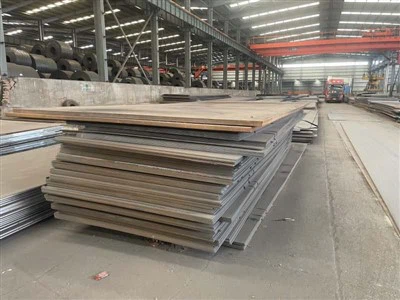
Hey there! As a spring steel supplier, I often get asked about the calculation methods for spring steel spring parameters. It's a crucial topic, especially for those in industries that rely heavily on springs, like automotive, aerospace, and manufacturing. So, let's dive right in and explore these calculation methods.
Understanding the Basics
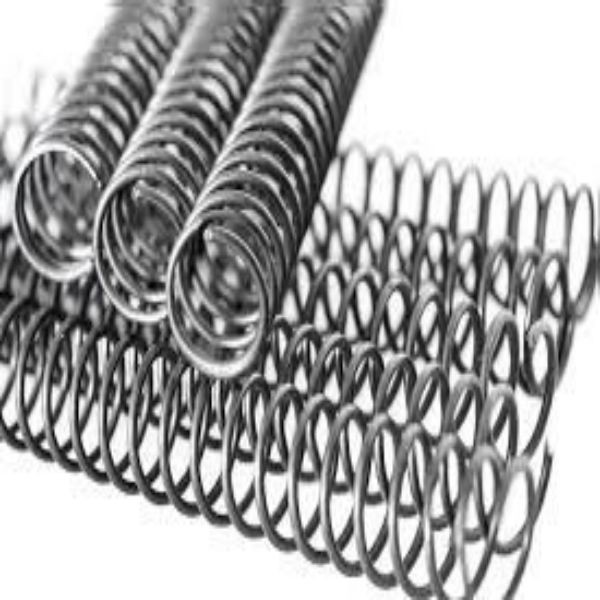
Before we get into the nitty - gritty of calculations, it's important to understand some basic spring parameters. Springs are mechanical devices that store and release energy. The key parameters we'll be dealing with include the spring rate, deflection, stress, and coil diameter.
The spring rate, also known as the stiffness of the spring, is the amount of force required to compress or extend the spring by a unit length. Deflection is how much the spring moves when a force is applied. Stress is the internal force per unit area within the spring material, and the coil diameter affects the overall size and performance of the spring.
Calculating the Spring Rate
The spring rate (k) is one of the most important parameters. For a helical compression spring, the formula for calculating the spring rate is:
[k=\frac{Gd^{4}}{8nD^{3}}]
where:
- (G) is the shear modulus of the spring steel. Different types of spring steel have different shear moduli. For example, for Stainless Spring Steels (check out Stainless Spring Steels), the shear modulus is typically around (79\times10^{3}) MPa.
- (d) is the wire diameter of the spring.
- (n) is the number of active coils. Active coils are the coils that actually contribute to the spring's deflection.
- (D) is the mean coil diameter of the spring.
Let's say we have a helical compression spring made of 65Mn Spring Steel (you can learn more about it at 65Mn Spring Steel). The wire diameter (d = 5) mm, the number of active coils (n = 10), and the mean coil diameter (D= 50) mm. The shear modulus (G) for 65Mn is approximately (80\times10^{3}) MPa.
First, we need to convert the units to SI units. (d = 0.005) m, (D = 0.05) m.
[k=\frac{80\times10^{9}\times(0.005)^{4}}{8\times10\times(0.05)^{3}}]
[k=\frac{80\times10^{9}\times6.25\times10^{-10}}{8\times10\times1.25\times10^{-4}}]
[k=\frac{50}{1\times10^{-2}} = 5000\space N/m]
Calculating Deflection
Once we know the spring rate, calculating the deflection ((\delta)) is relatively straightforward. The relationship between force ((F)), spring rate ((k)), and deflection is given by Hooke's Law:
[F = k\delta]
So, (\delta=\frac{F}{k})
If we apply a force (F = 100\space N) to the spring we calculated above with (k = 5000\space N/m), then the deflection (\delta=\frac{100}{5000}=0.02\space m = 20\space mm)
Calculating Stress
Stress calculation is important to ensure that the spring doesn't fail under the applied load. For a helical compression spring, the torsional shear stress ((\tau)) is given by:
[\tau = K\frac{8FD}{\pi d^{3}}]
where (K) is the Wahl factor, which accounts for the curvature and direct shear effects in the spring. The Wahl factor is calculated as:
[K=\frac{4C - 1}{4C - 4}+\frac{0.615}{C}]
and (C=\frac{D}{d}) is the spring index.
Let's go back to our previous example. (C=\frac{0.05}{0.005}=10)
[K=\frac{4\times10 - 1}{4\times10 - 4}+\frac{0.615}{10}]
[K=\frac{39}{36}+0.0615]
[K = 1.083+0.0615=1.1445]
If (F = 100\space N), (D = 0.05\space m), and (d = 0.005\space m)
[\tau = 1.1445\times\frac{8\times100\times0.05}{\pi\times(0.005)^{3}}]
[\tau = 1.1445\times\frac{40}{\pi\times1.25\times10^{-7}}]
[\tau = 1.1445\times\frac{40}{3.927\times10^{-7}}]
[\tau\approx1.1445\times1.02\times10^{8}\approx1.17\times10^{8}\space Pa = 117\space MPa]
Other Considerations
When calculating these parameters, we also need to consider factors like end conditions. There are different end types for springs, such as closed and ground ends, open ends, etc. The end conditions can affect the number of active coils and the overall performance of the spring.
Also, the environment in which the spring will operate matters. For example, if the spring is used in a corrosive environment, we might need to choose a spring steel with better corrosion resistance, like the Stainless Spring Steels I mentioned earlier.
Importance of Accurate Calculations
Accurate calculation of spring parameters is crucial. If the spring rate is miscalculated, the spring might not perform as expected. For instance, in an automotive suspension system, an incorrect spring rate can lead to a rough ride or even affect the vehicle's handling.

In aerospace applications, where safety is of utmost importance, any error in stress calculation could result in spring failure, which could have catastrophic consequences.
Why Choose Our Spring Steel
As a spring steel supplier, we offer high - quality spring steel materials. Our 65Mn Spring Steel and Stainless Spring Steels are sourced from reliable manufacturers and undergo strict quality control. We understand the importance of these calculations and can provide you with detailed material specifications to help you with your spring design.
If you're in the process of designing springs or need to source spring steel for your projects, we're here to help. Whether you're a small - scale manufacturer or a large - scale industrial player, we can meet your needs. Our team of experts can assist you in choosing the right spring steel and provide guidance on these calculation methods.
So, if you're interested in purchasing spring steel or have any questions about spring parameter calculations, don't hesitate to get in touch. We're looking forward to starting a business relationship with you and helping you create high - performance springs.
References
- Shigley, J. E., & Mischke, C. R. (2001). Mechanical Engineering Design. McGraw - Hill.
- Budynas, R. G., & Nisbett, J. K. (2011). Shigley's Mechanical Engineering Design. McGraw - Hill.