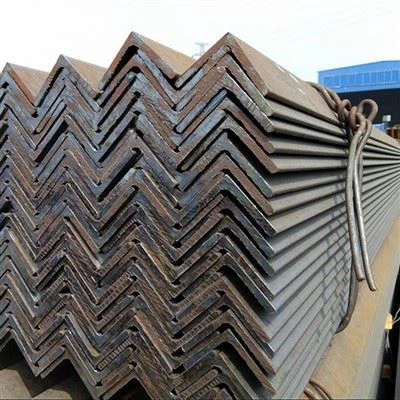
In the realm of modern infrastructure development, bridges stand as crucial arteries connecting different regions and facilitating seamless transportation. At the heart of these engineering marvels lies the bridge steel plate, a fundamental material that plays a pivotal role in ensuring the structural integrity, safety, and longevity of bridges. As a leading bridge steel plate supplier, I am thrilled to delve into the characteristics that make bridge steel plates indispensable for the construction of robust and reliable bridges.


High Strength and Load - Bearing Capacity
One of the most prominent characteristics of bridge steel plates is their high strength. Bridge structures are subject to a variety of static and dynamic loads, including the weight of vehicles, pedestrians, the bridge's own weight, wind forces, and seismic loads. High - strength bridge steel plates can effectively resist these forces without significant deformation or failure.
Materials such as Q420qD High Strength Low Alloy Steel and Q345qD High Strength Low Alloy Steel are commonly used in bridge construction. Q420qD steel plate has a yield strength of not less than 420 MPa, which allows bridges to carry heavy loads while minimizing the amount of steel required. This not only reduces the weight of the bridge superstructure but also cuts down on construction costs and makes the overall design more efficient. Similarly, Q345qD steel plate with a yield strength of 345 MPa is also well - regarded for its ability to handle substantial loads and is widely used in medium - sized bridge projects.
Excellent Weldability
Weldability is a crucial characteristic for bridge steel plates. Since bridges are typically assembled from multiple steel components through welding, the steel plates need to be able to be welded easily and without forming defects. Good weldability ensures that the joints between steel plates have high strength and toughness, comparable to the base metal.
Modern bridge steel plates are designed with proper alloying elements and manufacturing processes to guarantee excellent weldability. For example, by strictly controlling the carbon equivalent and sulfur and phosphorus content, the tendency for cracking during welding can be minimized. When welding high - strength steel plates like Q420qD and Q345qD, advanced welding techniques and appropriate welding electrodes are used to ensure the quality of the welded joints. This is essential because any flaws in the welds can significantly compromise the structural integrity of the bridge, especially under repeated loading conditions.
Impact Resistance
Bridges are exposed to various dynamic loads, including impacts from vehicles and sudden changes in wind or seismic forces. Therefore, bridge steel plates must have high impact resistance to withstand these unexpected forces without fracturing.
Low - temperature impact toughness is a key indicator of a bridge steel plate's impact resistance. Steel plates used in bridge construction are often required to have good impact toughness even at low temperatures. This is because bridges in cold regions can experience extremely low temperatures during winter, and the steel needs to remain ductile to prevent brittle fracture. Through careful alloying and heat treatment processes, bridge steel plates can achieve excellent low - temperature impact toughness. For instance, the micro - structure of the steel can be refined to improve its ability to absorb energy during impact, ensuring the safety and reliability of the bridge in different environmental conditions.
Corrosion Resistance
Bridges are often built in harsh environments, such as near the ocean, rivers, or in areas with high levels of air pollution. Corrosion can significantly reduce the service life and structural performance of a bridge. Therefore, corrosion resistance is an important characteristic of bridge steel plates.
Some bridge steel plates are made of weathering steel, which forms a dense and adherent rust layer on the surface when exposed to the atmosphere. This rust layer acts as a protective barrier, preventing further corrosion of the steel. Weathering steel can reduce the need for frequent painting and maintenance, thus lowering the long - term cost of bridge maintenance. Additionally, for steel plates in more severe corrosion environments, such as those in marine settings, additional anti - corrosion measures such as coating protection can be applied to enhance their corrosion resistance.
Fatigue Resistance
Bridges are subjected to repeated cyclic loads throughout their service life, such as the continuous passage of vehicles. These cyclic loads can cause fatigue cracks to initiate and propagate in the steel plates, which may eventually lead to structural failure. Therefore, bridge steel plates need to have good fatigue resistance.
The fatigue resistance of bridge steel plates is related to their material properties and manufacturing quality. Micro - structural refinement, proper heat treatment, and smooth surface finish can all contribute to improved fatigue resistance. During the design and manufacturing process, attention is paid to reducing stress concentrations in the steel plates, as stress concentrations are the main factors that promote the initiation of fatigue cracks. By using high - quality bridge steel plates with good fatigue resistance, the service life of the bridge can be significantly extended, and the safety of the bridge can be better ensured.
Consistency in Quality
As a bridge steel plate supplier, we understand the importance of quality consistency. Bridges are large - scale infrastructure projects with high safety requirements, and any variation in the quality of steel plates can have a significant impact on the overall performance of the bridge.
We adopt strict quality control systems throughout the production process, from raw material procurement to the final product inspection. Advanced testing equipment and methods are used to ensure that the chemical composition, mechanical properties, and other quality indicators of each batch of steel plates meet the relevant standards and specifications. This consistency in quality gives our customers confidence when using our bridge steel plates for their projects.
Availability and Customization
We offer a wide range of bridge steel plates to meet the diverse needs of different bridge projects. Whether it is a small - scale pedestrian bridge or a large - scale long - span bridge, we can provide the appropriate steel plates in terms of size, thickness, and strength.
In addition to standard products, we also provide customization services. Our experienced technical team can work closely with customers to develop tailored solutions based on the specific requirements of their projects. This includes customizing the chemical composition, mechanical properties, and geometric dimensions of the steel plates to ensure the best performance of the bridge.
In conclusion, bridge steel plates possess a series of unique and important characteristics that are essential for the construction of safe, durable, and efficient bridges. As a reliable bridge steel plate supplier, we are committed to providing high - quality products with excellent performance. If you are involved in a bridge construction project and are looking for the right bridge steel plates, please feel free to contact us for more information and to discuss your procurement needs. Our team of experts will be happy to assist you in selecting the most suitable products for your project.
References
- American Institute of Steel Construction (AISC). "Specification for Structural Steel Buildings".
- European Committee for Standardization (CEN). "EN 10025: Structural steels for general purposes".
- Japanese Industrial Standards (JIS). "JIS G3106: Weldable structural steel for bridges".