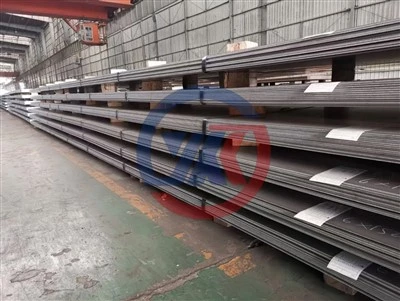
ABS DH36 Steel Properties: A Comprehensive Guide for Shipbuilding
ABS DH36 is a high-strength structural steel grade certified by the American Bureau of Shipping (ABS) for marine and offshore applications. It is one of the most widely used materials in commercial shipbuilding, alongside its counterpart AH36. Understanding its properties, performance characteristics, and how it compares to AH36 is essential for engineers, procurement specialists, and welding professionals in the maritime industry.
What is ABS DH36?
ABS DH36 is a high-strength low-alloy (HSLA) steel designed specifically for ship hull construction and offshore structures. The designation breaks down as follows:
ABS: Certified by the American Bureau of Shipping
D: Grade level indicating impact testing temperature
H: High-strength material
36: Minimum yield strength of 355 MPa (51 ksi)
The steel is available in plate thicknesses ranging from approximately 4.76 mm to 150 mm, with widths up to 3.3 meters and lengths up to 25.9 meters, making it suitable for large-scale shipbuilding projects.
Chemical Composition
ABS DH36 is carefully alloyed to achieve its mechanical properties while maintaining good weldability. The typical chemical composition limits are:
| Element | Maximum Content (%) |
|---|---|
| Carbon (C) | 0.18 |
| Manganese (Mn) | 0.90 – 1.60 |
| Silicon (Si) | 0.10 – 0.50 |
| Phosphorus (P) | 0.035 |
| Sulfur (S) | 0.035 |
| Aluminum (Al) | 0.015 (min) |
| Niobium (Nb) | 0.02 – 0.05 |
| Vanadium (V) | 0.05 – 0.10 |
| Titanium (Ti) | 0.02 |
| Copper (Cu) | 0.35 |
| Chromium (Cr) | 0.20 |
| Nickel (Ni) | 0.40 |
| Molybdenum (Mo) | 0.08 |
Mechanical Properties
Tensile Properties
ABS DH36 demonstrates consistent mechanical performance regardless of plate thickness:
| Property | Value |
|---|---|
| Yield Strength (min) | 355 MPa (51 ksi) |
| Tensile Strength | 490 – 620 MPa (71 – 90 ksi) |
| Elongation (min) | 22% |
| Vickers Hardness (typical) | 160 HV |
Impact Toughness
The defining characteristic of DH36 is its Charpy V-notch impact toughness performance. The grade designation "D" indicates that impact testing is conducted at -20°C (-4°F).
Impact energy requirements vary with plate thickness:
| Thickness Range | Longitudinal Energy (ft-lbs) | Transverse Energy (ft-lbs) |
|---|---|---|
| 4.76 – 50.8 mm | 25 (min avg) | 17 (min avg) |
| 50.83 – 71.1 mm | 30 (min avg) | 20 (min avg) |
| 71.15 – 150 mm | 37 (min avg) | 25 (min avg) |
AH36 vs. DH36: A Direct Comparison
While AH36 and DH36 share many properties, their key difference lies in the temperature at which impact toughness is guaranteed:
| Feature | AH36 | DH36 |
|---|---|---|
| Grade Designation | A (impact tested at 0°C) | D (impact tested at -20°C) |
| Impact Test Temperature | 0°C (32°F) | -20°C (-4°F) |
| Yield Strength (min) | 355 MPa | 355 MPa |
| Tensile Strength | 490–620 MPa | 490–620 MPa |
| Elongation (min) | 22% | 22% |
| Chemical Composition | Similar limits | Similar limits |
| Weldability | Excellent | Excellent |
| Carbon Equivalent | ≤0.38% | ≤0.38% |
| Typical Applications | General hull structures, upper decks | Critical hull structures, colder environments, offshore |
Summary of Differences
Impact Temperature: The sole significant difference between AH36 and DH36 is the Charpy V-notch test temperature. AH36 must meet impact energy requirements at 0°C, while DH36 must meet the same requirements at -20°C-a 20°C lower temperature.
Application Suitability: DH36 is preferred for vessels and structures operating in colder environments or where higher toughness margins are required for critical structural elements.
Cost: Due to the more stringent impact testing requirements, DH36 typically carries a slight cost premium over AH36.
Weldability: Both grades exhibit similar excellent weldability characteristics and can be welded using identical filler metals and procedures.

why choose ABS DH36 shipbuilding steel?
ABS DH36 represents a versatile, high-strength shipbuilding steel that combines excellent mechanical properties with superior low-temperature toughness. Its guaranteed performance at -20°C makes it a reliable choice for demanding marine applications. When compared to AH36, the primary differentiator is the lower impact test temperature, making DH36 the preferred option for applications requiring enhanced toughness in colder environments. Both grades offer excellent weldability, making them mainstays in commercial shipbuilding worldwide.
one-stop solution
professional team
high quality
Choose YUXIN steel group, and what you purchase is not merely the steel plates, but also a complete warranty system and a sense of responsibility.
Our address
Tianjin, China
Phone Number
(86)-15937221771(WeChat)
(86)-15837212056(WhatsApp)
info@chinasteelcompany.com

FAQ

01.What does the "D" in ABS DH36 stand for?
02.Can AH36 and DH36 be welded using the same procedures?
03.Which grade should I choose-AH36 or DH36?
04.Is ABS DH36 suitable for use above 500°C?

China one-stop steel processing procurement
Through years of understanding and precipitation of steel, Yuxin Group has now become a mature steel processing and manufacturer, providing various products for many construction companies and steel structure companies around the world. Thanks to Yuxin Group's professionalism and integrity, it has become a world-renowned enterprise.