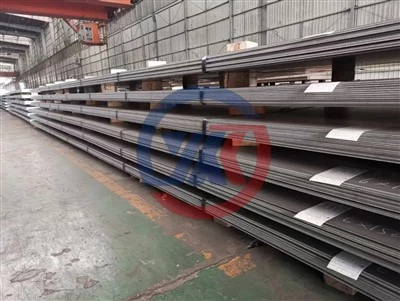
Weathering steel, as the preferred corrosion-resistant material for outdoor applications, has long been a key concern for engineers, procurement professionals, and design practitioners regarding its outdoor service life. The lifespan of weathering steel is not a fixed value; it is influenced by multiple factors including the usage environment, material grade, plate thickness, fabrication and installation methods, and maintenance practices.
Standard Range of Outdoor Service Life for Weathering Steel
Based on industry practices and standard data, the core range of outdoor service life for weathering steel can be categorized into three tiers.

Standard Environments (Urban, Rural)
Service life of 20-35 years. This represents the most common application range, suitable for scenarios such as urban building facades, highway guardrails, park landscaping, and general outdoor supports. It also serves as the reference benchmark for most project selections. The annual corrosion rate of weathering steel is controlled at 0.02-0.04mm, offering 2-5 times the outdoor lifespan of ordinary carbon steel.

Harsh Environments (Marine, Industrial)
Service life of 10-30 years. Suitable for coastal bridges, seaport terminals, chemical industrial parks, boiler chimneys, and similar scenarios. These environments contain highly corrosive media like salt spray and acidic gases, accelerating rust layer degradation. Extended service life requires selecting premium grades, applying protective coatings, or implementing regular maintenance.
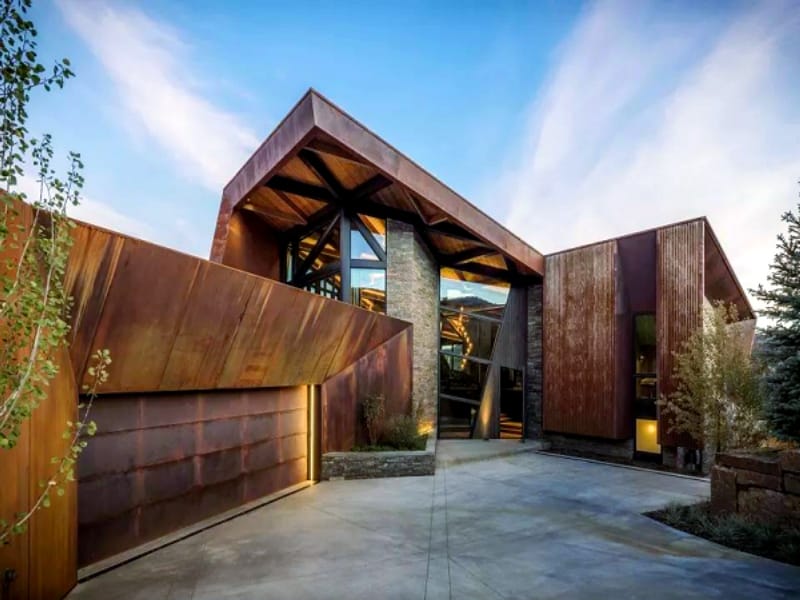
Ideal Environments (Dry, Low-Corrosion Settings)
Service life of 30–50 years, with premium grades exceeding 50 years. Certain load-bearing structures like bridges and towers can serve for over a century. These dry, low-precipitation areas free from industrial pollution allow weathering steel to rapidly form dense, stable rust layers. Corrosion rates range from 0.01–0.03 mm/year, maximizing its corrosion resistance advantages.
Four Core Factors Affecting the Outdoor Service Life of Weathering Steel
1. Material Composition and Alloying Elements
The corrosion resistance of weathering steel relies on the synergistic action of alloying elements such as Cu, P, Cr, Ni, and Mo to form a dense, amorphous protective rust layer.
Substandard alloy ratios or element segregation can result in a loose, easily detached rust layer, compromising its self-protective capability.
Insufficient steel purity (excessive sulfur/phosphorus, excessive inclusions) accelerates localized corrosion.
2. Atmospheric Environment and Service Conditions
The intensity of corrosive agents in different outdoor environments directly determines corrosion rates:
Climate Type: Hot, humid, rainy conditions accelerate electrochemical corrosion. Dry, low-precipitation regions promote more stable rust layer formation and longer service life.
Corrosive Media: Coastal salt fog, industrial pollution zones, and road deicing salts (chloride ions) can destroy rust layers, significantly shortening service life.
3. Structural Design and Construction Practices
Design and construction flaws create corrosion blind spots, serving as primary causes of premature outdoor failure.
Liquid/Dust Accumulation Design: Grooves, dead corners, and overlapping joints readily trap water and dust, creating persistently damp corrosive environments.
Dissimilar Metal Contact: Direct contact with carbon steel, stainless steel, copper, etc., induces galvanic corrosion, preferentially attacking weathering steel.
Welding and Coating Defects: Unprotected welds, damaged coatings, or uncleaned oxide scale on cut surfaces create corrosion initiation points.
4. Post-Installation Maintenance
Initial Rust Layer Care: The first 1-3 years outdoors are critical for stable rust layer formation. Avoid frequent washing and mechanical scratches.
Regular Cleaning: Remove surface dust, salts, and debris to prevent localized accumulation of corrosive agents.
Damage Repair: Promptly repair damaged coatings and rusted weld areas. Apply sealing coatings to reinforce high-corrosion zones.
Improper Maintenance: Applying non-compatible coatings or using strong acids/alkalis for rust removal will destroy the original protective rust layer.
Practical Tips for Extending the Outdoor Service Life of Weathering Steel
Based on industry practices, these cost-effective methods can significantly extend the outdoor service life of weathering steel, suitable for various outdoor projects:
1. Select Appropriate Grades: Choose grades based on the corrosion intensity of the environment. For standard environments, use Q235NH or Q355NH. For coastal areas, select grades resistant to marine corrosion. For heavy chemical environments, choose high-end grades like Q415NHC. Prioritize thicknesses of 8mm or greater; for load-bearing structures, use 12mm or greater to increase corrosion allowance.
2. Standardized Processing and Installation: Perform annealing after welding to repair the heat-affected zone. Avoid mixing with ordinary carbon steel components. Ensure proper drainage design during installation to prevent water accumulation. Clean surfaces promptly after cutting or grinding to promote uniform rust layer formation.
3. Minimal Maintenance: Clean surface debris and dust 1-2 times annually, increasing frequency in coastal areas. Repair damaged rust layers promptly with specialized rust inhibitors to prevent localized corrosion spread.
4. Enhanced Protection: In harsh environments, apply fluorocarbon paint coatings or hot-dip galvanizing to weathering steel surfaces to isolate corrosive agents. Install corrosion-resistant sleeves on critical areas (e.g., welds, joints) for targeted protection.
Summary
The service life of weathering steel in outdoor environments ranges primarily between 15 and 50 years, with no fixed standard. In typical urban and rural settings, it can reliably serve for 20 to 35 years without complex maintenance. In ideal environments like dry inland regions, high-quality grades can last over 50 years. In harsh environments such as marine and industrial settings, a service life of 10 to 30 years can be ensured through optimized material selection and basic maintenance.
Yuxin company is a steel agent. The main business of our company is: medium and thick plates, ductile cast iron pipe, seamless pipes, deformed bars, etc. of Angang, Hangang, Wugang, Nangang, Shagang and other steel plants, as well as a variety of steel related products. If you want to know more about our products, please feel free to send us an email! info@chinasteelcompany.com