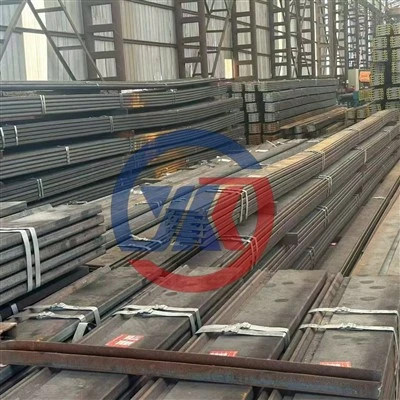
As is widely known in the steel plate industry, A516 GR 70 steel plate is a widely used product, particularly prevalent in pressure vessels, petrochemicals, power generation, and other sectors. When procuring this steel plate, one of the core concerns for many customers is: What is its temperature tolerance range? Does its performance change at different temperatures? Today, Yuxin Steel provides a detailed explanation of the temperature range for A516 GR 70, helping you quickly determine if it meets your application requirements.
First, the core answer: According to the ASTM A516/A516M standard and practical industry experience, the standard operating temperature range for A516 GR 70 steel plate is -30°C to 350°C. This represents its safest and most stable service interval, making it the preferred range for the vast majority of operating conditions. This naturally leads to the question: Why this specific range? What issues arise when operating outside it?
As a carbon steel specifically designed for medium- and low-temperature pressure vessels, one of A516 GR 70's greatest advantages is its outstanding low-temperature toughness. This is also its key distinguishing feature from ordinary carbon steel. Many common steel plates become extremely brittle in low-temperature environments, resembling glass-they fracture easily under even slight external impact. However, through strict composition control and normalizing treatment, A516 GR 70 maintains good toughness at -30°C, achieving impact energy exceeding 27J. This effectively mitigates the risk of brittle fracture in low-temperature service.
Consider this real-world example: In China's frigid northern regions, winter temperatures frequently drop to around -20°C, with some areas reaching -30°C. Liquefied petroleum gas (LPG) storage tanks manufactured with A516 GR 70 steel plates for their outer shells can reliably withstand low-temperature challenges without developing safety hazards due to extreme cold. For applications requiring operation at even lower temperatures (e.g., -45°C), impact energy can be enhanced to exceed 40J through contractual agreements, making it suitable for cryogenic scenarios like LNG storage tanks. However, such conditions fall outside the standard temperature range and necessitate custom manufacturing.

Now consider the high-temperature end-the 350°C upper limit.

A516 GR 70 boasts a tensile strength of 485–620 MPa and a yield strength of no less than 260 MPa. In high-temperature environments below 350°C, its strength, hardness, and weldability remain stable without noticeable softening or deformation. For instance, in distillation towers within the petrochemical industry, internal high-temperature oil and gas typically reach around 300°C. Using A516 GR 70 for tower construction enables it to withstand both high-temperature pressure and resist medium corrosion, ensuring long-term reliable operation. Similarly, in boiler drums of thermal power plants operating at approximately 300°C and 10 MPa pressure, it delivers stable performance, safeguarding equipment safety.
It is crucial to note that A516 GR 70's performance degrades progressively beyond 350°C. Specifically, its strength diminishes significantly, increasing susceptibility to thermal deformation and creep. I believe prolonged use in environments exceeding these high-temperature limits will significantly shorten equipment lifespan and may even trigger safety incidents. For instance, in critical high-temperature boiler sections where temperatures frequently exceed 400°C, A516 GR 70 is unsuitable. It is recommended to replace it with special steel plates offering superior high-temperature resistance.
Beyond the standard temperature range, several practical details warrant attention.
- First, the temperature adaptability of A516 GR 70 correlates with plate thickness. For plates exceeding 25mm in thickness, layered sampling and testing are required to ensure the toughness at the product's center meets specifications. This prevents performance inconsistencies in thick plates at low temperatures.
- Second, its applicable temperature also depends on operating pressure and the medium involved. For instance, in wet H₂S corrosive environments, even within the -30°C to 350°C range, plate hardness must be controlled ≤200 HB to prevent hydrogen-induced cracking.
- Third, for extreme low temperatures (below -60°C), Yuxin Steel recommends replacing it with A537 Cl.1 or 9% nickel steel for enhanced safety assurance.
Finally, let's summarize. A516 GR 70's standard operating temperature range is -30°C to 350°C. Within this range, it offers a balanced combination of strength, toughness, and weldability, delivering significantly better cost-effectiveness than ordinary carbon steel and certain stainless steels. It is the preferred material for medium-to-low temperature pressure vessels, petrochemical, and power generation applications. If your operating conditions fall within this temperature range and require high safety and stability, A516 GR 70 is a suitable choice. Conversely, if temperatures exceed this range, we recommend consulting a professional steel plate supplier to explore customized solutions tailored to your specific operating conditions.
Click the button below to contact us. Our technical team will provide customized solutions. As a professional steel plate supplier, we offer a wide range of specifications year-round. Feel free to inquire anytime-our experts provide one-on-one assistance.