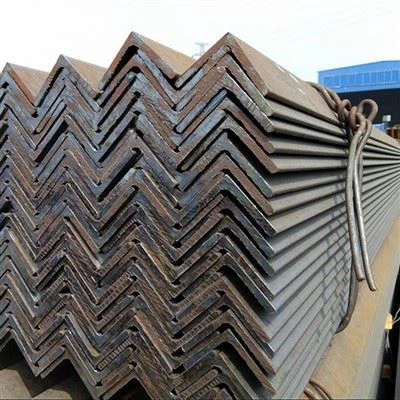
As a supplier of Angle Steel Plate, I often receive inquiries about various properties of our products, and one question that frequently comes up is, "What is the thermal conductivity of Angle Steel Plate?" In this blog, I'll delve into this topic in detail, explaining what thermal conductivity is, how it applies to Angle Steel Plate, and why it matters in different applications.
Understanding Thermal Conductivity
Thermal conductivity is a measure of a material's ability to conduct heat. It is defined as the quantity of heat that passes through a unit area of a material in a unit time when there is a unit temperature difference across the material. The SI unit for thermal conductivity is watts per meter-kelvin (W/(m·K)).
A high thermal conductivity means that the material can transfer heat quickly, while a low thermal conductivity indicates that the material is a poor conductor of heat and can act as an insulator. For example, metals generally have high thermal conductivity because they have free electrons that can easily transfer heat energy. On the other hand, materials like wood and plastic have low thermal conductivity.
Thermal Conductivity of Angle Steel Plate
Angle Steel Plate is typically made of steel, which is an alloy mainly composed of iron and carbon, along with other elements in small amounts. Steel has a relatively high thermal conductivity compared to many other materials. The thermal conductivity of steel can vary depending on its composition, temperature, and other factors.
For most common steel grades used in Angle Steel Plate, the thermal conductivity at room temperature (around 20°C or 293 K) is approximately in the range of 40 - 60 W/(m·K). For example, carbon steel, which is widely used in Angle Steel Plate manufacturing, has a thermal conductivity of about 50 W/(m·K) at room temperature.
The thermal conductivity of steel decreases as the temperature increases. This is because as the temperature rises, the lattice vibrations in the steel structure become more intense, which hinders the movement of free electrons and thus reduces the heat transfer efficiency. For instance, at 500°C, the thermal conductivity of carbon steel may drop to around 30 - 40 W/(m·K).
Importance of Thermal Conductivity in Angle Steel Plate Applications
The thermal conductivity of Angle Steel Plate plays a crucial role in many applications. Here are some examples:


1. Construction
In construction, Angle Steel Plate is often used as a structural component. In buildings located in regions with extreme temperatures, the thermal conductivity of the Angle Steel Plate can affect the overall energy efficiency of the building. If the Angle Steel Plate has a high thermal conductivity, it can transfer heat more easily between the interior and exterior of the building, which may lead to increased energy consumption for heating or cooling. On the other hand, in some cases where heat dissipation is required, such as in industrial buildings with high - heat equipment, Angle Steel Plate with high thermal conductivity can help to quickly transfer heat away from the equipment and prevent overheating.
2. Manufacturing
In manufacturing processes, Angle Steel Plate may be used in machinery and equipment. For example, in heat exchangers, Angle Steel Plate with high thermal conductivity can enhance the heat transfer efficiency, allowing for more effective cooling or heating of fluids. In the automotive industry, Angle Steel Plate is used in various components, and its thermal conductivity can affect the performance and durability of these components, especially those exposed to high temperatures.
3. Electrical Applications
In electrical applications, Angle Steel Plate may be used as a support structure for electrical equipment. The thermal conductivity of the Angle Steel Plate can impact the heat dissipation of the electrical components. If the heat generated by the electrical equipment cannot be effectively dissipated, it may lead to overheating and reduced performance or even damage to the equipment.
Factors Affecting the Thermal Conductivity of Angle Steel Plate
As mentioned earlier, several factors can affect the thermal conductivity of Angle Steel Plate:
1. Composition
The composition of the steel used in the Angle Steel Plate has a significant impact on its thermal conductivity. Different alloying elements can change the crystal structure and the movement of free electrons in the steel, thereby affecting its heat - transfer ability. For example, adding elements like chromium and nickel to steel can change its thermal conductivity. Stainless steel, which contains a relatively high percentage of chromium and nickel, generally has a lower thermal conductivity compared to carbon steel.
2. Temperature
As described above, the thermal conductivity of steel decreases with increasing temperature. This is an important consideration in applications where the Angle Steel Plate is exposed to high temperatures, such as in furnaces or high - temperature industrial processes.
3. Microstructure
The microstructure of the steel, such as grain size and phase composition, can also affect its thermal conductivity. A fine - grained microstructure may have a different thermal conductivity compared to a coarse - grained one. Heat treatment processes can alter the microstructure of the steel and thus influence its thermal conductivity.
Our Angle Steel Plate Products
At our company, we offer a wide range of Angle Steel Plate products, including the Q335B Angle Steel Plate. Q335B is a popular steel grade known for its good mechanical properties and weldability. Our Q335B Angle Steel Plate has a thermal conductivity that is typical for this type of steel, which makes it suitable for various applications where heat transfer is a consideration.
We ensure that our Angle Steel Plate products meet high - quality standards. Our manufacturing process is carefully controlled to ensure consistent composition and microstructure, which in turn affects the thermal conductivity and other properties of the products.
Conclusion
In conclusion, the thermal conductivity of Angle Steel Plate is an important property that affects its performance in various applications. Understanding the thermal conductivity of Angle Steel Plate and the factors that influence it can help customers make more informed decisions when choosing the right product for their specific needs.
If you are interested in our Angle Steel Plate products or have any questions about thermal conductivity or other properties, we encourage you to contact us for further discussion. We are committed to providing high - quality products and excellent customer service. Our team of experts is ready to assist you in finding the best Angle Steel Plate solution for your project.
References
- Incropera, F. P., & DeWitt, D. P. (2002). Fundamentals of Heat and Mass Transfer. Wiley.
- ASM Handbook Committee. (1991). ASM Handbook Volume 1: Properties and Selection: Irons, Steels, and High - Performance Alloys. ASM International.