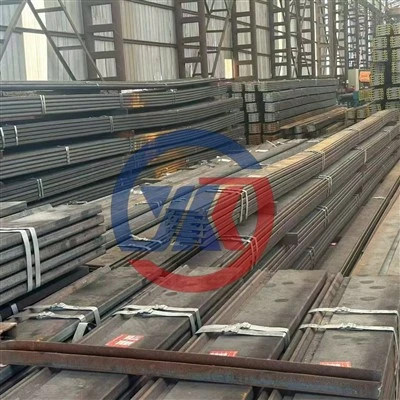
A516 Grade 70 is weldable, and this material was actually designed specifically for welding. It is used exclusively in low- and medium-temperature pressure vessels. It is used in reactors at refineries, columns at chemical plants, deaerators at power plants, and the inner tanks of many LNG storage tanks.
The most critical point: The full name of the ASTM A516 standard is "Carbon Steel Plates for Medium- and Low-Temperature Pressure Vessels," and it explicitly states that it is suitable for fusion welding.
But it's not a material you can weld "with your eyes closed." You need to:
- Know its composition and carbon equivalent
- Choose the right welding consumables (low-hydrogen type-don't skimp on cost)
- Determine whether preheating is necessary based on plate thickness and environmental conditions
- Control the interpass temperature-don't let it get too high
- Perform post-weld heat treatment when necessary
- Conduct a welding procedure qualification to verify low-temperature impact toughness
In the pressure vessel industry, A516 Gr. 70 has remained in use for decades without being phased out, which is precisely why it's considered reliable. As long as you follow the specifications, it will never let you down.
What kinds of problems commonly occur during welding?
The most common defect in A516 Gr. 70 is cold cracking-cracks that appear in the heat-affected zone or at the root of the weld several hours or even two to three days after welding. These cracks are as fine as a strand of hair, but they fail as soon as pressure is applied.
The three main causes of cold cracking are hydrogen, stress, and hardened microstructure. You can resolve all three by ensuring the welding consumables are properly dried, performing adequate preheating, controlling interpass temperatures, and applying post-weld heat treatment with controlled cooling when necessary.
Another issue is softening or embrittlement of the heat-affected zone (HAZ). When heat input is too high, the HAZ either develops coarse grains and becomes brittle, or over-ages and softens. The solution is to control heat input by using smaller parameters, narrower weld beads, and multiple passes, and avoiding large swing angles.
Additionally, special attention must be paid to the low-temperature impact toughness of the weld. A516 Gr. 70 is frequently used in environments with temperatures as low as several dozen degrees below zero. If the heat input per unit length is too high, the weld's impact value at -30°C may not even reach 27 J. Therefore, when conducting welding procedure qualification, it is essential to perform low-temperature impact tests; do not rely solely on tensile and bending tests.
Recommendations
- If you are a buyer, when purchasing A516 Gr. 70 steel plates, check the actual carbon equivalent value. Carbon equivalents can vary between steel mills, so try to select plates with a carbon equivalent below 0.43% for easier welding.
- If you are a welder, make sure to dry the electrodes thoroughly and keep the heat-retaining cylinder within reach at all times. Don't be afraid to take the time to preheat the material-using a temperature gun to check is a hundred times more reliable than relying on guesswork.
- If you're an inspector or engineer, make sure to complete the full welding procedure qualification, especially the impact test. Don't wait until there's a problem with the product to review the procedure-by then, the cost will be much higher.
A516 Gr.70 is a material that can be simple or complex, depending on how you look at it. But one thing is certain: as long as you take it seriously, it's a great material.
Please refer to your welding procedure specification for specific process parameters.
Third-party inspection available