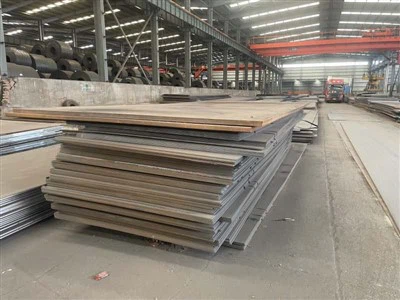
As a supplier of angle steel plates, ensuring the quality and performance of our products is of utmost importance. One critical aspect of quality assessment is testing the fatigue resistance of angle steel plates. Fatigue resistance refers to the ability of a material to withstand repeated loading without failure. In this blog post, I will share some common methods and considerations for testing the fatigue resistance of angle steel plates.
Understanding Fatigue in Angle Steel Plates
Before delving into the testing methods, it's essential to understand the concept of fatigue in angle steel plates. Fatigue failure occurs when a material is subjected to cyclic loading, such as vibrations, fluctuating stresses, or repeated impacts. Over time, these cyclic loads can cause microscopic cracks to form and propagate within the material, eventually leading to complete failure.
The fatigue life of an angle steel plate depends on several factors, including the material properties, the magnitude and frequency of the cyclic loads, the geometry of the plate, and the presence of any defects or stress concentrations. By testing the fatigue resistance of angle steel plates, we can determine their expected service life under specific operating conditions and ensure that they meet the required safety and performance standards.
Testing Methods for Fatigue Resistance
1. Axial Fatigue Testing
Axial fatigue testing is one of the most common methods for evaluating the fatigue resistance of angle steel plates. In this test, a specimen of the angle steel plate is subjected to cyclic axial loading, either in tension or compression. The load is applied using a servo-hydraulic testing machine, which can precisely control the magnitude and frequency of the cyclic loads.
The test specimen is typically a dog-bone-shaped sample cut from the angle steel plate. The specimen is mounted in the testing machine, and a constant amplitude cyclic load is applied until the specimen fails. The number of cycles to failure is recorded, and the fatigue life of the material is determined based on the stress level and the number of cycles.
Axial fatigue testing can provide valuable information about the fatigue properties of the angle steel plate, such as the fatigue strength, the fatigue limit, and the S-N curve (stress vs. number of cycles to failure). The S-N curve is a graphical representation of the relationship between the applied stress and the number of cycles to failure, and it can be used to predict the fatigue life of the material under different loading conditions.
2. Bending Fatigue Testing
Bending fatigue testing is another commonly used method for testing the fatigue resistance of angle steel plates. In this test, a specimen of the angle steel plate is subjected to cyclic bending loads. The specimen is typically a rectangular beam cut from the angle steel plate, and it is supported at both ends and loaded at the center.
The bending loads are applied using a servo-hydraulic testing machine or a mechanical testing device. The test is conducted by applying a constant amplitude cyclic load to the specimen until it fails. The number of cycles to failure is recorded, and the fatigue life of the material is determined based on the stress level and the number of cycles.
Bending fatigue testing can simulate the real-world loading conditions that angle steel plates may experience in structural applications, such as bridges, buildings, and machinery. It can provide valuable information about the fatigue properties of the material under bending loads, such as the fatigue strength, the fatigue limit, and the crack initiation and propagation behavior.
3. Torsional Fatigue Testing
Torsional fatigue testing is a specialized method for evaluating the fatigue resistance of angle steel plates under torsional loads. In this test, a specimen of the angle steel plate is subjected to cyclic torsional loads. The specimen is typically a cylindrical rod cut from the angle steel plate, and it is fixed at one end and loaded with a torque at the other end.
The torsional loads are applied using a servo-hydraulic testing machine or a mechanical testing device. The test is conducted by applying a constant amplitude cyclic torque to the specimen until it fails. The number of cycles to failure is recorded, and the fatigue life of the material is determined based on the stress level and the number of cycles.


Torsional fatigue testing can simulate the real-world loading conditions that angle steel plates may experience in applications such as shafts, couplings, and gears. It can provide valuable information about the fatigue properties of the material under torsional loads, such as the fatigue strength, the fatigue limit, and the crack initiation and propagation behavior.
Considerations for Fatigue Testing
When conducting fatigue testing on angle steel plates, there are several important considerations that need to be taken into account:
1. Specimen Preparation
The quality of the test specimen can significantly affect the accuracy and reliability of the fatigue test results. The specimen should be carefully prepared to ensure that it has the correct dimensions, surface finish, and material properties. The specimen should be cut from the angle steel plate using a suitable cutting method, such as sawing or laser cutting, to avoid introducing any defects or damage to the material.
2. Testing Conditions
The testing conditions, such as the load amplitude, the frequency, the waveform, and the environment, can also affect the fatigue test results. The testing conditions should be carefully selected to simulate the real-world loading conditions that the angle steel plate may experience in service. For example, if the angle steel plate is expected to be exposed to high temperatures or corrosive environments, the fatigue test should be conducted under similar conditions.
3. Data Analysis
The analysis of the fatigue test data is crucial for determining the fatigue properties of the angle steel plate. The test data should be carefully analyzed using appropriate statistical methods to ensure that the results are accurate and reliable. The S-N curve should be fitted to the test data using a suitable curve-fitting method, such as the least squares method, to determine the fatigue strength and the fatigue limit of the material.
4. Standardization
Fatigue testing of angle steel plates should be conducted in accordance with relevant standards and specifications, such as ASTM E466, ASTM E606, and ISO 1099. These standards provide detailed guidelines for specimen preparation, testing procedures, data analysis, and reporting of the test results. By following these standards, we can ensure that the fatigue test results are comparable and reproducible.
Importance of Fatigue Testing for Angle Steel Plate Suppliers
As an angle steel plate supplier, fatigue testing is an essential part of our quality control process. By testing the fatigue resistance of our angle steel plates, we can ensure that they meet the required safety and performance standards and provide our customers with high-quality products that are reliable and durable.
Fatigue testing can also help us to improve the design and manufacturing processes of our angle steel plates. By understanding the fatigue properties of the material, we can optimize the geometry, the material selection, and the manufacturing processes to enhance the fatigue resistance of the angle steel plates and extend their service life.
In addition, fatigue testing can provide valuable information to our customers. By providing them with the fatigue test results and the S-N curve of our angle steel plates, we can help them to make informed decisions about the selection and use of our products. We can also provide them with technical support and advice on how to ensure the proper installation and maintenance of our angle steel plates to prevent fatigue failure.
Conclusion
Testing the fatigue resistance of angle steel plates is a critical step in ensuring the quality and performance of our products. By using appropriate testing methods and considering the important factors discussed in this blog post, we can accurately evaluate the fatigue properties of the angle steel plates and provide our customers with high-quality products that are reliable and durable.
If you are interested in purchasing high-quality angle steel plates, we offer a wide range of products, including Q235B Angle Steel Plate and Q335B Angle Steel Plate. Our products are rigorously tested for fatigue resistance and other important properties to ensure their quality and performance. Please feel free to contact us for more information and to discuss your specific requirements. We look forward to working with you.
References
- ASTM E466 - Standard Practice for Conducting Force-Controlled Constant Amplitude Axial Fatigue Tests of Metallic Materials
- ASTM E606 - Standard Test Method for Strain-Controlled Fatigue Testing
- ISO 1099 - Metallic materials - Fatigue testing - Axial force-controlled method