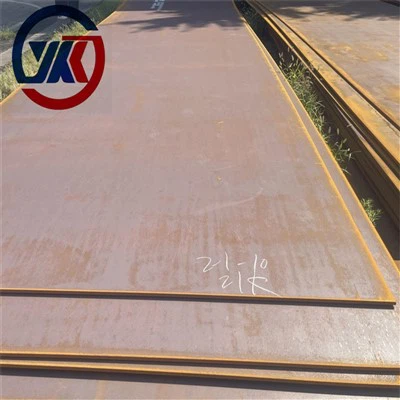
Is EH36 steel plate approved by ABS, LR, and DNV easy to machine in shipbuilding and offshore manufacturing?
Hey there, shipbuilders and offshore manufacturing pros! I'm a supplier of EH36 Steel Plate that's approved by ABS, LR, and DNV for shipbuilding and offshore use. Today, I wanna chat about how easy it is to machine this awesome steel in our industries.
First off, let's talk about EH36 steel. It's a high - strength, low - alloy steel that's super popular in shipbuilding and offshore structures. The ABS (American Bureau of Shipping), LR (Lloyd's Register), and DNV (Det Norske Veritas) approvals mean that this steel meets some pretty strict international standards. These approvals are like a stamp of quality, telling us that the steel is up to the job when it comes to the tough conditions of the sea.
When it comes to machining, there are a few factors we need to consider. Machinability is basically how easy it is to cut, shape, and work on a material. For EH36 steel, in general, it has a decent machinability rate. The alloying elements in EH36 give it strength, but they also affect how it behaves under machining operations.
One of the key things about machining EH36 is the cutting tools. Since it's a high - strength steel, we need to use the right cutting tools. Carbide tools are often a great choice. They're hard enough to cut through the steel without wearing down too quickly. High - speed steel tools can also work, but they might not last as long, especially when doing high - volume machining.
In shipbuilding, we often need to cut and shape EH36 steel into different parts. For example, we might be making the hull components or the structural frames of a ship. When cutting, we need to think about the cutting speed and feed rate. If the cutting speed is too high, the tool can overheat and wear out fast. If the feed rate is too high, it can cause the tool to break or leave a poor surface finish on the steel.
In drilling operations, which are also common in shipbuilding and offshore manufacturing, EH36 can be a bit tricky. The steel's hardness means that we need to use sharp drill bits and apply the right amount of pressure. A dull drill bit will just chew up the steel and not make a proper hole. And too much pressure can cause the drill bit to break or the hole to be out of size.
Another important aspect is the surface finish. In shipbuilding, a good surface finish is crucial. It not only looks better but also helps with the performance of the steel. For EH36, achieving a good surface finish during machining requires careful control of the machining parameters. If we use the wrong speed or feed, we might end up with a rough surface that could lead to corrosion or stress concentration points.
Now, let's compare EH36 with some other shipbuilding steels. For instance, the FH36 Shipbuilding Steel Plate has different properties and machinability characteristics. FH36 is a higher - grade steel, often used in more demanding applications. It might be a bit more difficult to machine compared to EH36 because of its higher strength.
On the other hand, the DH32 Shipbuilding Steel Plate is a lower - strength steel. It's generally easier to machine than EH36. The lower strength means that we can use lower - cost cutting tools and still get good results. But remember, for applications where high strength is required, we can't just use DH32 instead of EH36.
Our ABS AH32 DH32 EH36 Shipbuilding Steel Plate range gives you options. Each grade has its own place in different parts of shipbuilding and offshore manufacturing. The AH32 and DH32 are great for less critical areas where high strength isn't as much of a concern, while EH36 is for those areas that need that extra strength.
The CCS A Shipbuilding Steel Plate also has its own features. It's approved by the China Classification Society and is designed to meet specific Chinese standards. Machining it might be different from EH36 depending on its composition and heat treatment.
For those looking for a large stock of steel, the DH36 Shipbuilding Steel Plate Manufacturers A Large Number Of Stock might be a good option. DH36 is also a popular choice in shipbuilding, with a good balance between strength and machinability.
If you're involved in shipbuilding or offshore manufacturing and are thinking about using EH36 steel, I'd say it's definitely doable when it comes to machining. You just need to understand the properties of the steel and use the right machining techniques. And if you have any questions or want to purchase EH36 steel with ABS, LR, and DNV approvals, don't hesitate to reach out. We're here to help you out with all your steel plate needs. Whether it's for a small project or a large - scale shipbuilding operation, we've got the right steel for you.
To sum it up, EH36 steel with ABS, LR, and DNV approvals is machinable. It does require some know - how and the right tools, but with the proper approach, you can get great results in shipbuilding and offshore manufacturing.
So, if you're in the market for high - quality EH36 steel plates, come talk to us. We're your go - to suppliers for all your shipbuilding and offshore steel needs.


References:
- Various industry manuals on shipbuilding steel and machining
- Technical data sheets provided by steel manufacturers