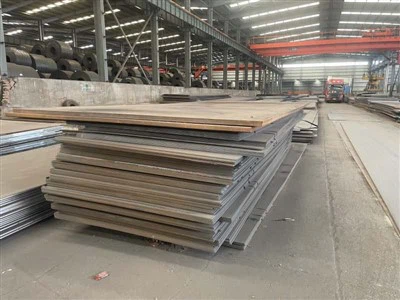
High strength steel (HSS) and high-strength low-alloy (HSLA) steel are two important materials in the field of engineering and construction. As a high strength steel supplier, I have witnessed the wide application of these two types of steel in various industries. In this blog, I will compare the characteristics of HSLA steel with high strength steel to help you better understand their differences and applications.
Chemical Composition
The chemical composition is the primary factor that differentiates HSLA steel from high strength steel. High strength steel typically achieves its high strength through a relatively high carbon content, along with the addition of other alloying elements such as manganese, silicon, and chromium. The higher carbon content contributes to the formation of a harder and stronger microstructure, but it also reduces the steel's weldability and ductility.
On the other hand, HSLA steel contains a lower carbon content, usually less than 0.2%. Instead of relying on high carbon levels, HSLA steel achieves its high strength through the addition of small amounts of alloying elements such as niobium, vanadium, titanium, and copper. These elements form fine precipitates in the steel matrix, which strengthen the steel through a process called precipitation hardening. The lower carbon content in HSLA steel results in better weldability and formability compared to high strength steel.
Mechanical Properties
Strength
Both high strength steel and HSLA steel offer high strength, but the way they achieve it is different. High strength steel has a high yield strength and ultimate tensile strength due to its high carbon content and the presence of alloying elements. The yield strength of high strength steel can range from 345 MPa to over 1000 MPa, depending on the specific grade and heat treatment.
HSLA steel also has a high yield strength, typically in the range of 290 MPa to 550 MPa. Although the yield strength of HSLA steel may be lower than some high strength steels, it still provides sufficient strength for many applications. The advantage of HSLA steel lies in its high strength-to-weight ratio, which means it can provide the same strength as high strength steel with a lower weight. This makes HSLA steel an ideal choice for applications where weight reduction is important, such as in the automotive and aerospace industries.
Ductility and Toughness
Ductility is the ability of a material to deform plastically before fracture. High strength steel, due to its high carbon content, has relatively low ductility. It is more prone to brittle fracture, especially under high-stress conditions or at low temperatures. This limits its use in applications where significant deformation or impact resistance is required.
HSLA steel, on the other hand, has better ductility and toughness compared to high strength steel. The lower carbon content and the presence of fine precipitates in HSLA steel provide a more ductile microstructure, which allows the steel to deform plastically without fracturing. This makes HSLA steel suitable for applications where high ductility and toughness are required, such as in bridges, buildings, and heavy machinery.


Weldability
Weldability is an important consideration in many applications, especially in construction and manufacturing. High strength steel with a high carbon content has poor weldability. The high carbon content can cause the formation of hard and brittle martensite in the heat-affected zone during welding, which can lead to cracking and reduced joint strength. Special welding techniques and preheating are often required to weld high strength steel successfully.
HSLA steel, with its lower carbon content and better microstructure, has excellent weldability. It can be welded using conventional welding methods without the need for preheating in most cases. This makes HSLA steel easier and more cost-effective to fabricate compared to high strength steel.
Corrosion Resistance
Corrosion resistance is another important factor to consider when choosing between high strength steel and HSLA steel. High strength steel, like most carbon steels, is susceptible to corrosion in the presence of moisture and oxygen. It requires protective coatings such as paint or galvanizing to prevent corrosion.
HSLA steel, on the other hand, has better corrosion resistance compared to high strength steel. The addition of alloying elements such as copper, nickel, and chromium in HSLA steel forms a passive oxide layer on the surface of the steel, which protects it from corrosion. This makes HSLA steel more suitable for applications in harsh environments, such as in marine and offshore structures.
Cost
The cost of high strength steel and HSLA steel can vary depending on several factors, including the specific grade, production process, and market demand. Generally, high strength steel is more expensive than HSLA steel. The higher carbon content and the need for more complex heat treatment processes in high strength steel contribute to its higher cost.
HSLA steel, with its lower carbon content and simpler production process, is more cost-effective. It can provide a good balance between strength, ductility, and cost, making it a popular choice for many applications.
Applications
High Strength Steel
High strength steel is commonly used in applications where high strength and hardness are required, such as in the automotive industry for manufacturing engine components, suspension systems, and chassis parts. It is also used in the construction industry for building high-rise buildings, bridges, and industrial structures. In the oil and gas industry, high strength steel is used for pipelines and offshore platforms.
HSLA Steel
HSLA steel is widely used in the automotive industry for manufacturing lightweight vehicles. Its high strength-to-weight ratio allows for weight reduction, which improves fuel efficiency and reduces emissions. HSLA steel is also used in the construction industry for building bridges, buildings, and storage tanks. In the transportation industry, it is used for manufacturing railway cars, trucks, and trailers.
Conclusion
In conclusion, HSLA steel and high strength steel have different characteristics and applications. High strength steel offers high strength and hardness but has lower ductility, weldability, and corrosion resistance. It is suitable for applications where high strength and hardness are the primary requirements.
HSLA steel, on the other hand, provides a good balance between strength, ductility, weldability, and corrosion resistance. It has a high strength-to-weight ratio and is more cost-effective compared to high strength steel. HSLA steel is ideal for applications where weight reduction, good formability, and corrosion resistance are important.
As a high strength steel supplier, we offer a wide range of high strength steel products, including Q420E and Q420C, which are suitable for various applications. We also provide Low Price 16MnR High Strength Steel for customers who are looking for cost-effective solutions.
If you are interested in purchasing high strength steel or have any questions about our products, please feel free to contact us for a detailed discussion. We are committed to providing high-quality products and excellent service to meet your specific needs.
References
- ASM Handbook Committee. (2008). ASM Handbook Volume 1: Properties and Selection: Irons, Steels, and High-Performance Alloys. ASM International.
- Bhadeshia, H. K. D. H., & Honeycombe, R. W. K. (2017). Steels: Microstructure and Properties. Elsevier.
- Degarmo, E. P., Black, J. T., & Kohser, R. A. (2003). Materials and Processes in Manufacturing. Wiley.