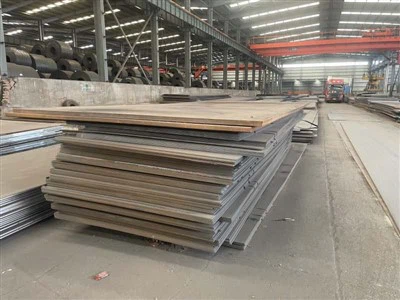
Angle steel plates, also known as angle irons, are widely used in construction, manufacturing, and various engineering projects due to their versatility and strength. As an angle steel plate supplier, I often encounter inquiries about the common angles of these plates. In this blog post, I will discuss the typical angles of angle steel plates, their applications, and the factors that influence the choice of angles.
Common Angles of Angle Steel Plates
The most common angles for angle steel plates are 90 degrees (right angles). Right - angled angle steel plates are the standard and most widely used type. They have two legs that are perpendicular to each other, forming a 90 - degree angle. This shape provides excellent stability and is suitable for a variety of structural applications.
Right - angled angle steel plates can be found in many construction projects, such as building frames, bridges, and machinery supports. For example, in building construction, they are used to reinforce corners, support beams, and create a rigid framework. The 90 - degree angle allows for easy connection with other structural components, making it a popular choice in the industry.
In addition to 90 - degree angles, there are also other non - standard angles available. Some common non - 90 - degree angles include 45 degrees, 60 degrees, and 120 degrees.


- 45 - degree angle steel plates: These are often used in applications where a more acute angle is required. For instance, in some decorative or architectural elements, 45 - degree angle steel plates can add an aesthetic touch. They are also used in certain mechanical systems where components need to be joined at a specific acute angle for optimal functionality.
- 60 - degree angle steel plates: Commonly used in applications related to triangular structures. In truss systems, 60 - degree angle steel plates can be used to form the sides of equilateral or isosceles triangles, which are known for their high strength - to - weight ratio. This makes them suitable for large - scale structures such as industrial sheds and large - span bridges.
- 120 - degree angle steel plates: These are useful in applications where a wider angle is needed. For example, in some circular or curved structures, 120 - degree angle steel plates can be used to approximate the curvature and provide support. They can also be used in custom - designed machinery where components need to be arranged at a specific obtuse angle.
Applications of Different Angled Angle Steel Plates
90 - Degree Angle Steel Plates
As mentioned earlier, 90 - degree angle steel plates are the workhorses of the construction and manufacturing industries. In building construction, they are used for:
- Framing: To create the framework of buildings, including the corners of walls, floors, and roofs. The right - angle shape ensures that the structure is square and stable.
- Supporting Beams: They can be used as supports for beams, providing additional strength and preventing sagging.
- Staircases: In the construction of staircases, 90 - degree angle steel plates are used to form the frames and supports, ensuring the safety and stability of the stairs.
In manufacturing, 90 - degree angle steel plates are used in the production of machinery, furniture, and storage racks. They provide a strong and rigid base for these products.
Non - 90 - Degree Angle Steel Plates
- 45 - Degree Angle Steel Plates: In addition to decorative uses, they are used in precision engineering applications. For example, in the manufacturing of optical equipment, 45 - degree angle steel plates can be used to align mirrors and lenses at the correct angle.
- 60 - Degree Angle Steel Plates: In the aerospace industry, 60 - degree angle steel plates are used in the construction of aircraft frames and wings. The triangular structures formed by these plates help to distribute the load evenly and reduce the weight of the aircraft.
- 120 - Degree Angle Steel Plates: In the oil and gas industry, 120 - degree angle steel plates are used in the construction of offshore platforms. The wider angle helps to withstand the strong forces exerted by the waves and wind in the marine environment.
Factors Influencing the Choice of Angles
When choosing the angle of an angle steel plate for a particular application, several factors need to be considered:
Structural Requirements
The structural requirements of the project are the most important factor. If the structure needs to be square and stable, 90 - degree angle steel plates are the obvious choice. However, if the design requires a triangular or curved structure, non - 90 - degree angles may be more appropriate.
Load - Bearing Capacity
The load - bearing capacity of the angle steel plate is also crucial. Different angles distribute the load differently. For example, in a triangular structure made of 60 - degree angle steel plates, the load is distributed more evenly compared to a structure made of 90 - degree angle steel plates. This means that in applications where high load - bearing capacity is required, the choice of angle can have a significant impact on the performance of the structure.
Aesthetic Considerations
In some architectural and decorative applications, the aesthetic appearance of the angle steel plate is an important factor. Non - 90 - degree angles can add a unique and modern look to the project. For example, in a contemporary building facade, 45 - degree angle steel plates can be used to create an eye - catching pattern.
Compatibility with Other Components
The angle of the angle steel plate needs to be compatible with other components in the structure. For example, if the angle steel plate needs to be connected to a beam or a column, the angle should match the connection requirements of these components.
Our Offerings as an Angle Steel Plate Supplier
As an angle steel plate supplier, we offer a wide range of angles to meet the diverse needs of our customers. Whether you need 90 - degree angle steel plates for a standard construction project or non - standard angles for a custom - designed application, we have the products you need.
One of our popular products is the Q335B Angle Steel Plate. Q335B is a high - strength low - alloy steel that offers excellent mechanical properties. It has good weldability, plasticity, and impact toughness, making it suitable for a variety of applications. Our Q335B angle steel plates are available in different angles and sizes, ensuring that you can find the perfect fit for your project.
We also provide custom - made angle steel plates. If you have specific requirements for the angle, size, or material of the angle steel plate, our experienced team can work with you to produce the product that meets your exact specifications.
Conclusion
In conclusion, the common angles of angle steel plates include 90 degrees, 45 degrees, 60 degrees, and 120 degrees. Each angle has its own unique applications and advantages, and the choice of angle depends on various factors such as structural requirements, load - bearing capacity, aesthetic considerations, and compatibility with other components.
As an angle steel plate supplier, we are committed to providing high - quality products and excellent customer service. If you are in the market for angle steel plates, we invite you to contact us for more information and to discuss your procurement needs. Our team of experts will be happy to assist you in finding the right angle steel plates for your project.
References
- "Structural Steel Design Handbook", Fourth Edition, by Jack C. McCormac and Russell H. Gallagher
- "Steel Construction Manual", Fifteenth Edition, by the American Institute of Steel Construction
- "Engineering Materials and Their Applications", Sixth Edition, by William D. Callister, Jr. and David G. Rethwisch