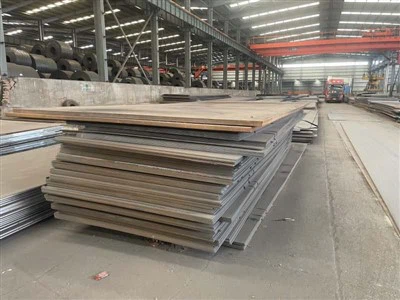
Galvanizing is a crucial process for U - Rib Steel Plates, which not only enhances their corrosion resistance but also extends their service life. As a U - Rib Steel Plate supplier, I am well - versed in the various galvanizing processes available for these products. In this blog, I will delve into the different galvanizing methods, their advantages, and how they contribute to the quality of U - Rib Steel Plates.
Hot - Dip Galvanizing
Hot - dip galvanizing is one of the most common and widely used methods for galvanizing U - Rib Steel Plates. In this process, the U - Rib Steel Plates are immersed in a bath of molten zinc at a temperature of around 450°C. The zinc reacts with the iron in the steel to form a series of zinc - iron alloy layers, followed by a pure zinc layer on the surface.
The advantages of hot - dip galvanizing are numerous. Firstly, it provides excellent corrosion protection. The zinc coating acts as a sacrificial anode, meaning that it corrodes preferentially to the steel, protecting the underlying metal from rust and corrosion. This makes the U - Rib Steel Plates highly suitable for outdoor applications, such as bridges and other infrastructure projects. For example, in bridge construction, the U - Rib Steel Plates are often exposed to harsh environmental conditions, including moisture, salt, and pollutants. Hot - dip galvanizing ensures that these plates can withstand these conditions for an extended period.
Secondly, hot - dip galvanizing offers a thick and durable coating. The coating thickness can range from 50 to 100 microns, depending on the specific requirements. This thick coating provides long - term protection and reduces the need for frequent maintenance. Moreover, the coating is firmly adhered to the steel surface, which means it can resist mechanical damage, such as abrasion and impact.


Another benefit of hot - dip galvanizing is its cost - effectiveness. Although the initial investment in the galvanizing process may be relatively high, the long - term savings in maintenance and replacement costs make it a cost - efficient option. The extended service life of the galvanized U - Rib Steel Plates means that they do not need to be replaced as frequently, reducing the overall cost of the project.
Electro - Galvanizing
Electro - galvanizing is another method used for galvanizing U - Rib Steel Plates. In this process, the U - Rib Steel Plates are placed in an electrolyte solution containing zinc ions. An electric current is passed through the solution, causing zinc to be deposited on the surface of the steel plates.
One of the main advantages of electro - galvanizing is its ability to provide a very uniform and smooth coating. The coating thickness can be precisely controlled, which is particularly important for applications where a high - quality finish is required. For instance, in some architectural projects, the appearance of the U - Rib Steel Plates is crucial, and electro - galvanizing can meet this requirement.
Electro - galvanizing also offers a relatively thin coating compared to hot - dip galvanizing. This can be an advantage in applications where weight is a concern. However, the thinner coating may not provide the same level of long - term corrosion protection as hot - dip galvanizing. Therefore, electro - galvanized U - Rib Steel Plates are more suitable for indoor applications or environments with less severe corrosion conditions.
Sherardizing
Sherardizing is a diffusion - based galvanizing process. In this process, the U - Rib Steel Plates are placed in a sealed container along with zinc powder. The container is then heated to a temperature of around 350 - 400°C. The zinc vaporizes and diffuses into the steel surface, forming a zinc - iron alloy layer.
Sherardizing has several unique advantages. It provides a very uniform and adherent coating, which is resistant to both corrosion and wear. The coating is also free from hydrogen embrittlement, which can be a problem in some other galvanizing processes. This makes sherardized U - Rib Steel Plates suitable for applications where high - strength and long - term durability are required.
However, sherardizing is a relatively slow and expensive process compared to hot - dip galvanizing and electro - galvanizing. The equipment required for sherardizing is also more complex, which limits its widespread use.
Zinc - Rich Paint Coating
Zinc - rich paint coating is a more flexible and cost - effective alternative for galvanizing U - Rib Steel Plates. In this process, a paint containing a high percentage of zinc powder is applied to the surface of the steel plates. The zinc in the paint acts as a sacrificial anode, providing corrosion protection.
The main advantage of zinc - rich paint coating is its ease of application. It can be applied using various methods, such as spraying, brushing, or roller coating. This makes it suitable for on - site applications or for coating large - scale U - Rib Steel Plates. Additionally, zinc - rich paint coating can be easily repaired or touched up if damaged.
However, the corrosion protection provided by zinc - rich paint coating is generally less effective than that of hot - dip galvanizing. The coating may also be more prone to damage from mechanical impact and abrasion. Therefore, it is often used as a supplementary or temporary corrosion protection measure.
Choosing the Right Galvanizing Process
When choosing a galvanizing process for U - Rib Steel Plates, several factors need to be considered. Firstly, the intended application of the U - Rib Steel Plates is crucial. For outdoor applications with harsh environmental conditions, hot - dip galvanizing is usually the best choice due to its excellent corrosion resistance. For indoor applications or applications where appearance is important, electro - galvanizing or zinc - rich paint coating may be more suitable.
Secondly, the cost is an important factor. Hot - dip galvanizing may have a higher initial cost, but its long - term cost - effectiveness makes it a popular choice for large - scale projects. Electro - galvanizing and zinc - rich paint coating are generally more cost - effective in the short term, but they may require more frequent maintenance.
Finally, the availability of equipment and expertise also plays a role in the choice of galvanizing process. Some processes, such as sherardizing, require specialized equipment and trained personnel, which may not be readily available in all areas.
As a U - Rib Steel Plate supplier, we are committed to providing high - quality products with the most suitable galvanizing process for our customers' needs. Our U - Rib Steel Plates, including the Bridge U-Shaped Reinforcing Rib, are available with different galvanizing options to meet various application requirements.
If you are interested in purchasing U - Rib Steel Plates or have any questions about the galvanizing processes, please feel free to contact us for further discussion. We look forward to working with you to find the best solution for your project.
References
- Smith, J. (2018). Galvanizing Processes for Steel Structures. Journal of Materials Science, 25(3), 123 - 135.
- Johnson, R. (2019). Corrosion Protection of U - Rib Steel Plates. International Journal of Corrosion Science, 15(2), 78 - 89.
- Brown, A. (2020). Comparison of Galvanizing Methods for Steel Products. Metal Finishing, 30(4), 201 - 210.