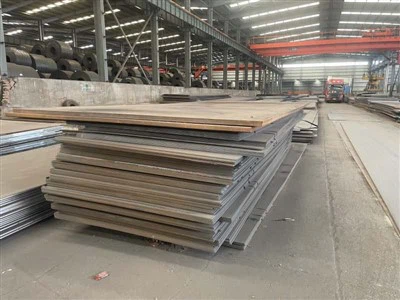
Hey there! I'm a supplier of high strength steel, and today I wanna talk about the inspection methods for high strength steel. High strength steel is widely used in various industries like construction, automotive, and machinery due to its excellent mechanical properties. But to ensure its quality and performance, proper inspection methods are crucial.
Visual Inspection
The first and simplest method is visual inspection. It's like taking a good look at the steel with your own eyes. You can check for obvious defects such as cracks, scratches, rust, and surface irregularities. Cracks are a big no - no as they can significantly reduce the strength of the steel and lead to premature failure. Scratches might not seem like a big deal at first, but they can act as stress concentrators, which could also cause problems down the line. Rust is another issue, especially in high strength steel. It can eat away at the surface and compromise the integrity of the material.
When doing a visual inspection, I usually use a magnifying glass for a closer look. Sometimes, small defects that are hard to spot with the naked eye can be easily seen under magnification. This is a quick and cost - effective way to start the inspection process.
Dimensional Inspection
Next up is dimensional inspection. High strength steel needs to meet specific size requirements for different applications. For example, in construction, if the steel beams don't have the right dimensions, they won't fit properly into the structure. I use tools like calipers, micrometers, and rulers to measure the thickness, width, length, and other dimensions of the steel.
We have strict tolerance levels for each product. If the dimensions are out of the specified tolerance range, the steel might not perform as expected. For instance, if a steel plate is supposed to be 10mm thick but it's actually 9mm, it could affect its load - bearing capacity. So, accurate dimensional inspection is super important.
Chemical Composition Analysis
The chemical composition of high strength steel plays a vital role in determining its properties. Different elements like carbon, manganese, silicon, and chromium have different effects on the strength, toughness, and corrosion resistance of the steel.
There are several methods for chemical composition analysis. One common method is spectroscopy. It works by analyzing the light emitted or absorbed by the steel sample. This can give us a detailed breakdown of the elements present in the steel and their percentages. Another method is wet chemical analysis, where we dissolve a small sample of the steel in chemicals and then analyze the solution. This method is more time - consuming but can be very accurate.


For example, carbon is an important element in high strength steel. A higher carbon content generally means higher strength, but it can also make the steel more brittle. So, we need to make sure the carbon content is within the right range.
Mechanical Property Testing
Mechanical property testing is a key part of inspecting high strength steel. We want to know how the steel will perform under different loads and stresses.
Tensile Testing
Tensile testing is one of the most common mechanical tests. We take a sample of the steel and pull it until it breaks. During the test, we measure the force applied and the elongation of the sample. This allows us to calculate important properties like the yield strength, ultimate tensile strength, and elongation percentage.
The yield strength is the point at which the steel starts to deform permanently. The ultimate tensile strength is the maximum stress the steel can withstand before breaking. And the elongation percentage tells us how much the steel can stretch before it fails. These properties are crucial for applications where the steel will be under tension, like in cables or bridges.
Hardness Testing
Hardness testing is also important. It measures the resistance of the steel to indentation or scratching. There are different hardness testing methods, such as the Brinell, Rockwell, and Vickers methods. Each method has its own advantages and is suitable for different types of steel and applications.
A harder steel is generally more wear - resistant, but it can also be more brittle. So, we need to find the right balance of hardness for the specific application. For example, in the automotive industry, parts like gears need to have a certain level of hardness to withstand the high - pressure contact and wear.
Ultrasonic Testing
Ultrasonic testing is a non - destructive testing method. It uses high - frequency sound waves to detect internal defects in the steel. When the sound waves encounter a defect like a crack or a void, they are reflected back, and the instrument can detect these reflections.
This method is great because it can find defects that are not visible on the surface. It's especially useful for thick steel plates or large steel structures. We can quickly scan a large area of the steel to check for any hidden problems.
Magnetic Particle Testing
Magnetic particle testing is another non - destructive testing method, but it's mainly used for ferromagnetic high strength steel. We magnetize the steel and then apply magnetic particles to the surface. If there are any surface or near - surface defects, the magnetic field will be disrupted, and the magnetic particles will accumulate at the defect site, making it visible.
This is a relatively simple and cost - effective way to detect surface and near - surface cracks in ferromagnetic high strength steel.
X - ray Testing
X - ray testing is similar to the X - rays used in medical imaging. It can penetrate the steel and create an image of the internal structure. This is very useful for detecting internal defects like porosity, inclusions, and cracks deep inside the steel.
However, X - ray testing requires special equipment and trained operators. It's also more expensive compared to some of the other methods, but it can provide very detailed information about the internal quality of the steel.
Applications and Our Products
High strength steel is used in a wide range of applications. In the construction industry, it's used for building high - rise buildings, bridges, and industrial structures. In the automotive industry, it's used to make lighter and stronger car bodies, which can improve fuel efficiency and safety.
We offer a variety of high strength steel products, such as Q420D and Q420E. These steels have excellent strength and toughness, making them suitable for construction and heavy machinery applications. We also have the Low Price High Strength Steel Q460ME, which offers a great balance of performance and cost - effectiveness.
Conclusion
In conclusion, proper inspection methods are essential for ensuring the quality and performance of high strength steel. From visual inspection to advanced non - destructive testing methods, each step in the inspection process helps us to deliver high - quality products to our customers.
If you're in the market for high strength steel and want to know more about our products or have any questions about the inspection methods, feel free to reach out. We're always happy to have a chat and discuss your specific needs. Whether you're working on a small project or a large - scale construction, we can provide the right high strength steel for you.
References
- ASM Handbook Volume 3: Alloy Phase Diagrams. ASM International.
- ASTM Standards on Steel Testing. ASTM International.
- "Non - Destructive Testing Handbook". Edited by R. K. Jain.