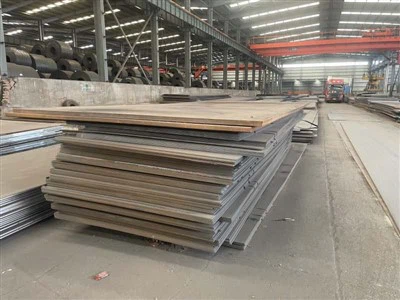
High-strength steel (HSS) is a critical material in numerous industries due to its superior mechanical properties, including high yield strength, tensile strength, and excellent formability. As a high-strength steel supplier, I have witnessed firsthand the dynamic changes and trends in this field. This blog post will explore the current trends in the development of high-strength steel, providing insights for those interested in the industry.
1. Increasing Demand for Higher Strength-to-Weight Ratios
One of the most prominent trends in high-strength steel development is the continuous pursuit of higher strength-to-weight ratios. In industries such as automotive, aerospace, and construction, reducing weight while maintaining or increasing strength is crucial for improving fuel efficiency, performance, and sustainability.
In the automotive industry, lightweighting is a key strategy to meet stringent fuel economy and emissions regulations. High-strength steel allows automakers to reduce the weight of vehicle bodies without sacrificing safety. Advanced high-strength steels (AHSS), such as dual-phase (DP) steels, transformation-induced plasticity (TRIP) steels, and martensitic steels, are being increasingly used in automotive manufacturing. These steels offer high strength and excellent formability, enabling complex part designs. For example, the use of AHSS in car body structures can reduce weight by up to 25% while maintaining crashworthiness [1].
In the aerospace industry, high-strength steel is used in critical components such as landing gear, engine mounts, and structural frames. The demand for lighter and stronger materials is driven by the need to improve aircraft performance and reduce operating costs. Newly developed high-strength steels with enhanced fatigue resistance and corrosion resistance are being explored to meet the strict requirements of the aerospace sector.
2. Advancements in Manufacturing Processes
Another significant trend is the advancement of manufacturing processes for high-strength steel. New techniques are being developed to improve the quality, consistency, and cost-effectiveness of high-strength steel production.
One such advancement is the use of advanced rolling technologies. Traditional rolling processes have limitations in achieving uniform microstructures and properties in high-strength steel. However, modern rolling techniques, such as thermo-mechanical controlled processing (TMCP), allow for precise control of the rolling temperature, deformation rate, and cooling rate. TMCP can produce high-strength steel with fine-grained microstructures, resulting in improved strength, toughness, and formability.
Additive manufacturing, also known as 3D printing, is emerging as a promising technology for high-strength steel production. This technology enables the production of complex geometries that are difficult or impossible to achieve using traditional manufacturing methods. Additive manufacturing can also reduce material waste and lead times. However, challenges such as porosity, residual stresses, and anisotropic properties need to be addressed to fully realize the potential of 3D printing for high-strength steel.
3. Enhanced Corrosion Resistance
Corrosion is a major concern in many applications of high-strength steel, especially in harsh environments such as marine, offshore, and chemical industries. Therefore, enhancing the corrosion resistance of high-strength steel is an important trend in its development.
One approach to improving corrosion resistance is through alloying. Adding elements such as chromium, nickel, and molybdenum to high-strength steel can form a protective oxide layer on the surface, preventing corrosion. For example, stainless high-strength steels offer excellent corrosion resistance in a wide range of environments.
Surface treatment technologies are also being developed to enhance the corrosion resistance of high-strength steel. Coating methods, such as galvanizing, painting, and electroplating, can provide a physical barrier between the steel and the corrosive environment. Additionally, advanced surface treatments, such as laser surface alloying and plasma nitriding, can modify the surface properties of high-strength steel to improve its corrosion resistance.
4. Focus on Sustainability
Sustainability is becoming an increasingly important factor in the development of high-strength steel. The steel industry is one of the largest energy consumers and greenhouse gas emitters globally. Therefore, efforts are being made to reduce the environmental impact of high-strength steel production.
One way to improve sustainability is through the use of recycled materials. Recycling steel not only reduces the demand for virgin iron ore but also saves energy and reduces greenhouse gas emissions. Many high-strength steel producers are increasing the use of recycled steel in their production processes.


Another aspect of sustainability is the development of high-strength steel with longer service lives. By improving the durability and corrosion resistance of high-strength steel, the need for frequent replacements can be reduced, resulting in less material waste and lower environmental impact.
5. Customization and Tailored Solutions
As industries become more specialized, there is a growing demand for customized high-strength steel solutions. Different applications require specific mechanical properties, chemical compositions, and surface finishes. Therefore, high-strength steel suppliers are increasingly offering tailored products to meet the unique needs of their customers.
For example, in the construction industry, different building projects may require high-strength steel with specific yield strengths, ductility, and weldability. Suppliers can work closely with architects and engineers to develop customized high-strength steel products that meet the structural requirements of the project.
In the automotive industry, automakers may need high-strength steel with specific formability and crashworthiness characteristics for different car models. High-strength steel suppliers can develop customized steel grades and processing technologies to meet these requirements.
6. Market Growth and Global Expansion
The market for high-strength steel is expected to continue growing in the coming years. The increasing demand from industries such as automotive, aerospace, construction, and energy is driving the growth of the high-strength steel market.
In addition, the global expansion of high-strength steel suppliers is a notable trend. As emerging economies continue to develop, there is a growing demand for high-strength steel in these regions. High-strength steel suppliers are expanding their production facilities and distribution networks to meet the increasing demand in these markets.
Our High-Strength Steel Products
As a high-strength steel supplier, we offer a wide range of high-strength steel products, including Q390B, Q460D, and Q390D. These products are widely used in various industries due to their excellent mechanical properties and high quality.
Our high-strength steel products are manufactured using advanced production processes and strict quality control measures. We are committed to providing our customers with the best products and services. If you are interested in our high-strength steel products or have any questions, please feel free to contact us for procurement and negotiation.
References
[1] K. Matsumoto, "Advanced High-Strength Steels for Automotive Applications," Journal of Materials Science and Technology, vol. 26, no. 1, pp. 1-8, 2010.