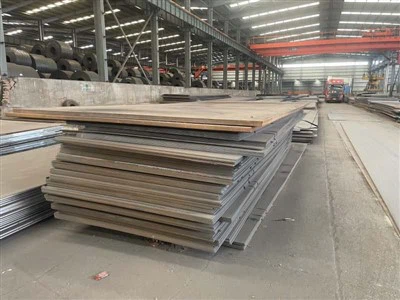
As a supplier of cold rolled steel, I often get asked about various properties of this versatile material. One question that comes up quite frequently is: "What is the coefficient of thermal expansion of cold rolled steel?" In this blog post, I'll delve into this topic in detail, explaining what the coefficient of thermal expansion means, how it applies to cold rolled steel, and why it matters in different applications.


Understanding the Coefficient of Thermal Expansion
The coefficient of thermal expansion (CTE) is a measure of how much a material expands or contracts when its temperature changes. It is defined as the fractional change in length or volume per degree change in temperature. There are two main types of CTE: linear coefficient of thermal expansion (α), which measures the change in length, and volumetric coefficient of thermal expansion (β), which measures the change in volume.
Mathematically, the linear coefficient of thermal expansion is given by the formula:
[ \alpha=\frac{\Delta L}{L_0\Delta T} ]
where (\Delta L) is the change in length, (L_0) is the original length, and (\Delta T) is the change in temperature.
The volumetric coefficient of thermal expansion is related to the linear coefficient by the equation (\beta = 3\alpha) for isotropic materials (materials that have the same properties in all directions).
Coefficient of Thermal Expansion of Cold Rolled Steel
Cold rolled steel is a type of steel that has been processed at room temperature to improve its surface finish, dimensional accuracy, and mechanical properties. The coefficient of thermal expansion of cold rolled steel can vary depending on its composition, but typically, the linear coefficient of thermal expansion for carbon steel (a common type of cold rolled steel) ranges from about (10.8\times10^{-6}) to (12.6\times10^{-6}) per °C.
This means that for every 1°C increase in temperature, a 1-meter long piece of cold rolled steel will expand by approximately (0.0108) to (0.0126) millimeters. While this may seem like a small amount, in applications where precise dimensions are critical, such as in the aerospace or automotive industries, even these small changes can have a significant impact.
Factors Affecting the Coefficient of Thermal Expansion
Several factors can affect the coefficient of thermal expansion of cold rolled steel:
- Composition: The chemical composition of the steel, including the amount of carbon, alloying elements, and impurities, can influence its CTE. For example, adding certain alloying elements like nickel or chromium can reduce the CTE of steel.
- Heat Treatment: Heat treatment processes, such as annealing or quenching, can change the microstructure of the steel, which in turn can affect its CTE. Annealed steel generally has a more stable microstructure and a more predictable CTE compared to quenched steel.
- Temperature Range: The CTE of cold rolled steel is not constant over all temperature ranges. It can vary slightly with temperature, especially at very high or very low temperatures.
Importance of the Coefficient of Thermal Expansion in Applications
The coefficient of thermal expansion is an important property to consider in many applications of cold rolled steel:
- Structural Engineering: In buildings and bridges, the CTE of cold rolled steel must be taken into account to prevent structural damage due to thermal expansion and contraction. Expansion joints are often used to allow for the movement of the steel structure as the temperature changes.
- Manufacturing: In manufacturing processes, such as machining and welding, the CTE of cold rolled steel can affect the dimensional accuracy of the finished product. For example, if a part is machined at a certain temperature and then used in an environment with a different temperature, the part may expand or contract, leading to fit and performance issues.
- Electronics: In electronic devices, cold rolled steel is often used as a structural component. The CTE of the steel must be matched with the CTE of other materials in the device, such as printed circuit boards and semiconductor chips, to prevent thermal stress and cracking.
Applications of Cold Rolled Steel and Thermal Expansion Considerations
Let's take a closer look at some specific applications of cold rolled steel and how thermal expansion is considered:
- Automotive Industry: Cold rolled steel is widely used in the automotive industry for body panels, frames, and other components. The CTE of the steel must be considered during the design and manufacturing process to ensure that the parts fit together properly and do not warp or crack due to temperature changes. For example, in a car engine, the steel components must be able to withstand the high temperatures generated during operation without significant expansion or contraction.
- Aerospace Industry: In the aerospace industry, cold rolled steel is used in the construction of aircraft frames, landing gears, and other critical components. The strict requirements for weight, strength, and dimensional accuracy in aerospace applications make it essential to carefully consider the CTE of the steel. Any thermal expansion or contraction that is not accounted for can lead to structural failure or performance degradation.
- Home Appliances: Cold rolled steel is commonly used in the manufacturing of home appliances such as refrigerators, washing machines, and ovens. The CTE of the steel must be considered to ensure that the appliances maintain their shape and functionality over a wide range of temperatures. For example, in a refrigerator, the steel panels must be able to withstand the low temperatures inside the unit without cracking or warping.
Conclusion
In conclusion, the coefficient of thermal expansion is an important property of cold rolled steel that can have a significant impact on its performance in various applications. As a supplier of Steel Plate Cold Rolled, I understand the importance of providing high-quality cold rolled steel with consistent and predictable thermal expansion properties.
If you are in the market for cold rolled steel and have specific requirements regarding its thermal expansion properties, I encourage you to reach out to me for more information. I can help you select the right type of cold rolled steel for your application and provide you with detailed technical specifications. Whether you are working on a small DIY project or a large-scale industrial application, I am here to assist you in finding the best cold rolled steel solution.
References
- Callister, W. D., & Rethwisch, D. G. (2014). Materials Science and Engineering: An Introduction. Wiley.
- ASM Handbook Committee. (1990). ASM Handbook, Volume 1: Properties and Selection: Irons, Steels, and High-Performance Alloys. ASM International.