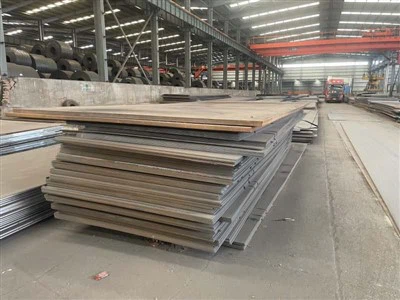
The cold-forming performance of U-Rib steel plates is a critical aspect that significantly influences their application in various industries, especially in bridge construction. As a supplier of U-Rib steel plates, I have witnessed firsthand the importance of understanding and optimizing this performance to meet the diverse needs of our clients.
Understanding Cold-Forming
Cold-forming is a manufacturing process in which metal is shaped at room temperature. Unlike hot-forming, which involves heating the metal to high temperatures, cold-forming relies on mechanical force to reshape the material. This process offers several advantages, including better dimensional accuracy, improved surface finish, and enhanced mechanical properties due to work hardening.
Factors Affecting Cold-Forming Performance of U-Rib Steel Plates
Chemical Composition
The chemical composition of U-Rib steel plates plays a crucial role in their cold-forming performance. Elements such as carbon, manganese, silicon, and alloying elements like nickel, chromium, and molybdenum can significantly affect the strength, ductility, and formability of the steel. For example, a higher carbon content generally increases the strength of the steel but reduces its ductility, making it more difficult to cold-form. On the other hand, alloying elements can enhance the steel's toughness and formability, allowing it to be bent and shaped without cracking.
Microstructure
The microstructure of the U-Rib steel plate also has a profound impact on its cold-forming performance. A fine-grained microstructure typically exhibits better formability compared to a coarse-grained one. This is because fine grains provide more grain boundaries, which can act as barriers to dislocation movement and prevent the formation and propagation of cracks during cold-forming. Heat treatment processes, such as normalizing or annealing, can be used to refine the microstructure and improve the cold-forming properties of the steel.
Thickness and Width
The thickness and width of the U-Rib steel plate are important factors that affect its cold-forming performance. Thicker plates generally require more force to cold-form and are more prone to cracking due to the higher stresses involved. Similarly, wider plates may experience more uneven deformation during cold-forming, leading to issues such as wrinkling or distortion. Therefore, it is essential to carefully select the appropriate thickness and width of the U-Rib steel plate based on the specific cold-forming requirements of the application.
Surface Quality
The surface quality of the U-Rib steel plate can also influence its cold-forming performance. Surface defects, such as scratches, pits, or scale, can act as stress concentrators and initiate cracks during cold-forming. Additionally, a rough surface finish can increase friction between the steel plate and the forming tool, making it more difficult to achieve the desired shape. Therefore, it is important to ensure that the U-Rib steel plate has a smooth and defect-free surface before cold-forming.
Testing and Evaluation of Cold-Forming Performance
To ensure the high-quality cold-forming performance of U-Rib steel plates, various testing and evaluation methods are employed. These methods include:
Bend Testing
Bend testing is a commonly used method to evaluate the cold-forming performance of U-Rib steel plates. In this test, a specimen of the steel plate is bent to a specific angle using a bending die. The specimen is then examined for cracks or other defects. The bend radius and angle are typically specified based on the application requirements.


Tensile Testing
Tensile testing is used to determine the mechanical properties of the U-Rib steel plate, such as its yield strength, ultimate tensile strength, and elongation. These properties are important indicators of the steel's formability and its ability to withstand the stresses involved in cold-forming.
Erichsen Cupping Test
The Erichsen cupping test is a method used to evaluate the deep-drawing performance of the U-Rib steel plate. In this test, a round specimen of the steel plate is clamped between a die and a blank holder, and a punch is used to form a cup-shaped depression in the specimen. The depth of the cup is measured, and the results are used to assess the formability of the steel plate.
Applications of U-Rib Steel Plates with Good Cold-Forming Performance
U-Rib steel plates with excellent cold-forming performance are widely used in various industries, especially in bridge construction. In bridge structures, U-Ribs are used as longitudinal stiffeners to enhance the strength and stiffness of the bridge deck. The ability to cold-form the U-Rib steel plates into complex shapes allows for the efficient construction of bridges with unique designs and geometries. For more information about Bridge U-Shaped Reinforcing Rib, you can visit Bridge U-Shaped Reinforcing Rib.
In addition to bridge construction, U-Rib steel plates are also used in the automotive, shipbuilding, and construction industries. In the automotive industry, U-Ribs are used in the manufacturing of car body frames and chassis components. In the shipbuilding industry, they are used in the construction of ship hulls and decks. In the construction industry, U-Ribs are used in the fabrication of steel structures, such as high-rise buildings and industrial plants.
Our Role as a U-Rib Steel Plate Supplier
As a U-Rib steel plate supplier, we are committed to providing our customers with high-quality products that meet their specific cold-forming requirements. We have a strict quality control system in place to ensure that our U-Rib steel plates have excellent cold-forming performance. Our production process includes advanced manufacturing techniques and state-of-the-art equipment to ensure the consistency and reliability of our products.
We also offer technical support and consulting services to our customers. Our team of experts can provide guidance on the selection of the appropriate U-Rib steel plate, the design of the cold-forming process, and the optimization of the product performance. We work closely with our customers to understand their needs and provide customized solutions that meet their specific requirements.
Contact Us for Procurement and Consultation
If you are interested in purchasing U-Rib steel plates or have any questions about their cold-forming performance, please feel free to contact us. We are eager to engage in discussions with you and provide you with the best products and services. Our experienced sales team is ready to assist you with all your procurement needs.
References
- [1] ASM Handbook Volume 14A: Metalworking: Bulk Forming. ASM International.
- [2] Steel Construction Manual, 15th Edition. American Institute of Steel Construction.
- [3] Bridge Engineering Handbook, Second Edition. Edited by Wei - Fan Chen and Lian Duan.