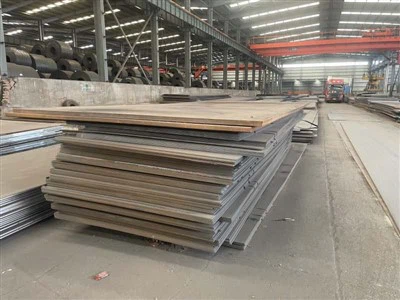
Hey there! As a supplier of Bridge Steel Plate, I often get asked about the cold resistance of these plates. It's a crucial factor, especially for bridges in cold regions. So, let's dive right into what cold resistance of Bridge Steel Plate really means.
Understanding Cold Resistance
Cold resistance in Bridge Steel Plates refers to the ability of the steel to maintain its mechanical properties and structural integrity in low - temperature environments. When the temperature drops, steel can become more brittle, which is a big no - no for bridges. A bridge needs to be strong and reliable, even when it's freezing outside.
One of the main concerns with cold temperatures is the phenomenon called cold brittleness. Steel that is prone to cold brittleness can crack or break under stress at low temperatures. This is a serious safety issue for bridges, as any crack or failure can lead to catastrophic consequences.
Factors Affecting Cold Resistance
Chemical Composition
The chemical makeup of the steel plays a huge role in its cold resistance. Elements like carbon, manganese, nickel, and chromium can have different effects. For example, a lower carbon content generally makes the steel less brittle at low temperatures. Manganese can improve the toughness of the steel, while nickel is known for enhancing the low - temperature impact resistance.
We offer several types of high - strength low - alloy steels for bridge construction. For instance, Q420qC High Strength Low Alloy Steel has a well - balanced chemical composition that gives it good cold resistance. It contains elements that work together to ensure the steel remains tough and ductile even in cold conditions.
Heat Treatment
Heat treatment processes can also significantly affect the cold resistance of Bridge Steel Plates. Processes like quenching and tempering can change the microstructure of the steel, making it more resistant to cold brittleness. By carefully controlling the heating and cooling rates, we can optimize the properties of the steel for different temperature ranges.
Manufacturing Process
The way the steel plate is manufactured also matters. Rolling, for example, can improve the grain structure of the steel. A fine - grained steel structure is generally more resistant to cracking at low temperatures. Our manufacturing facilities use advanced rolling techniques to ensure that our Bridge Steel Plates have a uniform and fine - grained structure, which enhances their cold resistance.
Testing Cold Resistance
To ensure that our Bridge Steel Plates meet the required cold - resistance standards, we conduct a series of tests. One of the most common tests is the Charpy impact test. In this test, a notched specimen of the steel is struck with a pendulum, and the energy absorbed during the fracture is measured. A higher energy absorption indicates better toughness and cold resistance.
We test our steel plates at different low temperatures to simulate real - world conditions. For example, if a bridge is going to be built in a region where the winter temperatures can drop to - 20°C, we'll test the steel at that temperature to make sure it can withstand the stress without cracking.
Real - World Applications
Let's talk about some real - world scenarios where cold resistance of Bridge Steel Plates is crucial. In northern regions where winters are long and cold, bridges need to be made of steel that can handle the frigid temperatures. For example, in Alaska, where temperatures can drop well below freezing for months on end, the bridges are built using high - quality Bridge Steel Plates with excellent cold resistance.
Another example is in high - altitude areas. The temperature at high altitudes is generally lower than at sea level. Bridges in these areas also need to be able to withstand the cold. Our Q355D High Strength Low Alloy Steel and Q345qD High Strength Low Alloy Steel are popular choices for such projects because of their proven cold - resistance properties.
Comparing Different Steel Grades
We have a range of steel grades available, each with its own cold - resistance characteristics. Q420qC is a high - strength option that offers good cold resistance along with high tensile strength. It's suitable for large - scale bridge projects in moderately cold regions.
Q355D is also a great choice. It has a good balance between strength and cold resistance. It's often used in bridges where the temperature doesn't drop to extremely low levels but still requires a certain degree of cold - weather performance.

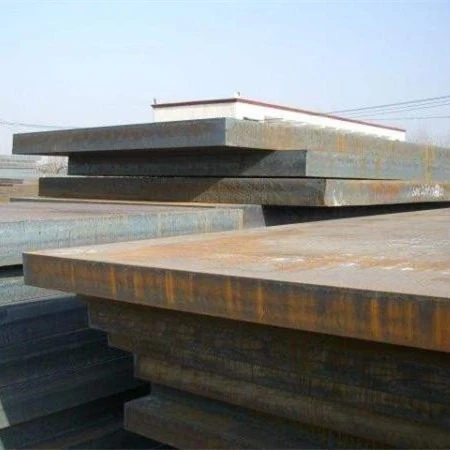
Q345qD is another option. It's a more cost - effective choice while still providing decent cold resistance. It's a good fit for smaller bridge projects or in regions where the cold is not as severe.
Why Choose Our Bridge Steel Plates
As a supplier, we take pride in offering Bridge Steel Plates with top - notch cold resistance. Our plates are manufactured using the latest technology and strict quality - control measures. We ensure that each plate meets or exceeds the industry standards for cold resistance.
We also offer customized solutions. If you have specific requirements for the cold resistance of your Bridge Steel Plates, we can work with you to develop a steel grade that suits your needs. Our team of experts is always available to provide technical support and advice.
Contact Us for Your Bridge Steel Plate Needs
If you're in the market for Bridge Steel Plates with excellent cold resistance, we'd love to hear from you. Whether you're building a small local bridge or a large - scale infrastructure project, we have the right steel for you. Contact us to discuss your project requirements, and let's work together to ensure that your bridge is built to last, even in the coldest of conditions.
References
- ASME Boiler and Pressure Vessel Code, Section VIII, Division 1.
- ASTM International Standards for Steel Plates for Bridge Construction.
- "Steel Structures: Design and Behavior" by S. Timoshenko and J. M. Gere.