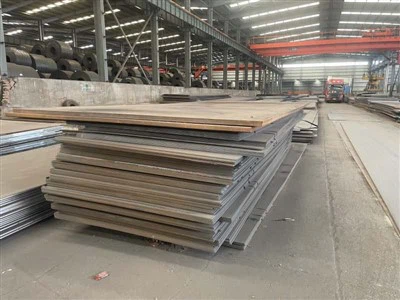
In the world of engineering and construction, high strength steel has emerged as a cornerstone material, offering unparalleled strength - to - weight ratios and durability. As a high strength steel supplier, I am frequently asked about the fatigue life of high strength steel. Understanding the fatigue life is crucial for applications where the steel will be subjected to repeated loading, such as bridges, offshore platforms, and automotive components.
Understanding Fatigue in High Strength Steel
Fatigue is a phenomenon where a material fails under cyclic loading, even when the applied stress is below its ultimate tensile strength. In high strength steel, fatigue occurs due to the initiation and propagation of cracks. Micro - defects, such as inclusions or surface irregularities, act as stress concentration points. When cyclic loading is applied, these points experience higher stress levels, which can lead to the formation of small cracks.
Over time, these cracks grow and eventually cause the material to fail. The fatigue life of high strength steel is the number of loading cycles that the material can withstand before failure occurs. It is influenced by several factors, including the chemical composition of the steel, its microstructure, the magnitude and type of cyclic loading, and the environment in which it operates.
Factors Affecting Fatigue Life
Chemical Composition
The chemical composition of high strength steel plays a vital role in determining its fatigue life. Elements such as carbon, manganese, silicon, and chromium can enhance the strength and hardness of the steel. For example, carbon increases the strength of the steel but can also make it more brittle, potentially reducing its fatigue resistance. On the other hand, elements like nickel and molybdenum can improve the toughness of the steel, which is beneficial for fatigue performance. A well - balanced chemical composition is essential to achieve optimal fatigue life.
Microstructure
The microstructure of high strength steel is another critical factor. Fine - grained microstructures generally offer better fatigue resistance compared to coarse - grained ones. This is because fine grains can impede the propagation of cracks, forcing them to change direction more frequently. Heat treatment processes, such as quenching and tempering, can be used to control the microstructure of high strength steel, thereby improving its fatigue properties.
Cyclic Loading
The magnitude and type of cyclic loading have a significant impact on the fatigue life of high strength steel. Higher stress amplitudes typically result in a shorter fatigue life. The stress ratio, which is the ratio of the minimum stress to the maximum stress during a loading cycle, also affects fatigue performance. For example, a fully reversed loading cycle (stress ratio = - 1) is more damaging than a partially reversed or pulsating loading cycle.
Environment
The environment in which high strength steel operates can accelerate fatigue crack growth. Corrosive environments, such as those containing saltwater or acidic gases, can cause corrosion of the steel surface. Corrosion pits act as stress concentration points, increasing the likelihood of crack initiation. Additionally, the presence of hydrogen in the environment can lead to hydrogen embrittlement, which further reduces the fatigue life of the steel.
Measuring Fatigue Life
To determine the fatigue life of high strength steel, several testing methods are available. One of the most common methods is the rotating - beam fatigue test. In this test, a specimen of the steel is subjected to a fully reversed bending stress while rotating at a constant speed. The number of cycles to failure is recorded for different stress levels, and a fatigue curve (S - N curve) is plotted. The S - N curve shows the relationship between the stress amplitude (S) and the number of cycles to failure (N).
Another method is the axial fatigue test, where the specimen is subjected to cyclic axial loading. This test is more suitable for applications where the steel is subjected to axial stresses, such as in columns or rods. Finite element analysis (FEA) can also be used to predict the fatigue life of high strength steel components. FEA allows engineers to simulate the stress distribution and crack growth in a component under cyclic loading, providing valuable insights into its fatigue performance.


Applications and Fatigue Life Requirements
High strength steel is used in a wide range of applications, each with its own fatigue life requirements.
Bridge Construction
In bridge construction, high strength steel is used for girders, cables, and other structural components. These components are subjected to cyclic loading from traffic, wind, and seismic events. The fatigue life requirements for bridge components are typically very high, as bridges are expected to last for several decades. For example, a long - span suspension bridge may require its steel components to have a fatigue life of millions or even billions of cycles.
Offshore Platforms
Offshore platforms are exposed to harsh environmental conditions, including wave loading, wind, and corrosion. High strength steel is used for the platform's legs, decks, and other structural elements. The fatigue life requirements for offshore platform components are also stringent, as the cost of maintenance and replacement in a marine environment is very high.
Automotive Industry
In the automotive industry, high strength steel is used for body panels, chassis components, and engine parts. These components are subjected to cyclic loading from vehicle vibrations, road irregularities, and engine operation. The fatigue life requirements for automotive components depend on the type of vehicle and its intended use. For example, a high - performance sports car may require its steel components to have a higher fatigue life compared to a standard passenger car.
Our High Strength Steel Offerings
As a high strength steel supplier, we offer a wide range of high quality high strength steel products. Our High Strength Steel A633 Factory Direct Sales are known for their excellent fatigue resistance. A633 steel is a low - alloy high strength steel that is commonly used in structural applications. It has a fine - grained microstructure and a well - balanced chemical composition, which contribute to its good fatigue performance.
We also supply High Quality ASTM A656 High Strength Steel. ASTM A656 steel is designed for applications where high strength and good formability are required. It has been engineered to withstand cyclic loading, making it suitable for automotive and other dynamic applications.
Another product in our portfolio is Q390E. Q390E is a high strength low alloy steel with good toughness and weldability. It is often used in heavy machinery and construction equipment, where it can resist fatigue under harsh operating conditions.
Conclusion
The fatigue life of high strength steel is a complex but crucial aspect of its performance. By understanding the factors that affect fatigue life, such as chemical composition, microstructure, cyclic loading, and environment, engineers can design high strength steel components that meet the specific requirements of different applications.
As a high strength steel supplier, we are committed to providing our customers with high quality products that offer excellent fatigue resistance. If you are in need of high strength steel for your project and want to discuss the fatigue life requirements and our product offerings, we encourage you to contact us for a procurement discussion. We have a team of experts who can help you select the right high strength steel product based on your specific needs and ensure that it meets the necessary fatigue life requirements.
References
- "Metals Handbook: Fatigue and Fracture", ASM International
- "Fatigue of Structures and Materials" by S. Suresh
- "Design and Construction of Steel Bridges" by S. Y. Chui