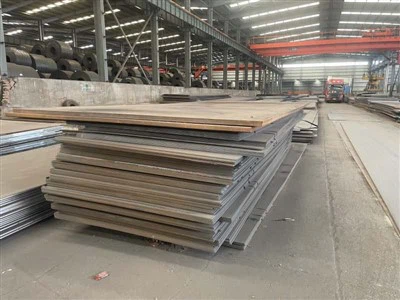
Hey there! As a supplier of carbon steel plates, I often get asked about the thermal conductivity of these plates. So, I thought I'd write this blog to share some insights on the topic.
First off, let's talk about what thermal conductivity actually means. In simple terms, thermal conductivity is a measure of how well a material can conduct heat. A material with high thermal conductivity can transfer heat quickly, while a material with low thermal conductivity is a poor conductor of heat and can act as an insulator.
When it comes to carbon steel plates, their thermal conductivity is influenced by several factors. One of the main factors is the carbon content. Carbon steel is an alloy of iron and carbon, and the amount of carbon present in the steel can have a significant impact on its thermal properties. Generally, as the carbon content increases, the thermal conductivity of the steel decreases. This is because carbon atoms disrupt the regular lattice structure of the iron, making it more difficult for heat to flow through the material.
Another factor that affects the thermal conductivity of carbon steel plates is the presence of other alloying elements. For example, elements like manganese, silicon, and chromium are often added to carbon steel to improve its strength, hardness, and corrosion resistance. However, these alloying elements can also affect the thermal conductivity of the steel. Some elements may increase the thermal conductivity, while others may decrease it.
The microstructure of the carbon steel also plays a role in its thermal conductivity. The way the steel is processed, such as through rolling, forging, or heat treatment, can change its microstructure and, in turn, its thermal properties. For instance, a fine-grained microstructure may have a higher thermal conductivity compared to a coarse-grained one because the smaller grains provide more pathways for heat transfer.
Now, let's look at some typical values of thermal conductivity for carbon steel plates. The thermal conductivity of carbon steel can vary depending on the specific grade and composition, but generally, it falls in the range of about 40 - 50 W/(m·K) at room temperature. To put this into perspective, copper, which is a very good conductor of heat, has a thermal conductivity of around 400 W/(m·K), while air, which is a poor conductor, has a thermal conductivity of about 0.026 W/(m·K).
So, why is the thermal conductivity of carbon steel plates important? Well, it has several practical applications. In the construction industry, carbon steel plates are used in building structures, and understanding their thermal conductivity is crucial for designing energy-efficient buildings. For example, in areas with extreme temperatures, steel plates with lower thermal conductivity can help reduce heat transfer through the building envelope, leading to lower energy consumption for heating and cooling.
In the manufacturing industry, carbon steel plates are used in various heat exchangers, boilers, and furnaces. The thermal conductivity of the steel affects the efficiency of these heat transfer devices. A higher thermal conductivity means that heat can be transferred more quickly, resulting in better performance and energy savings.


If you're in the market for high - quality carbon steel plates, we've got a great range of products to offer. We have Q390C Carbon Steel Round Steel, which is known for its excellent mechanical properties and is suitable for a variety of applications. Our Q345C Carbon Steel Round Steel is another popular choice, offering good strength and weldability. And if you're looking for something different, our Carbon Steel Angle Bar is a versatile option for structural applications.
Whether you're a contractor, a manufacturer, or an engineer, we can provide you with the right carbon steel plates to meet your specific needs. Our team of experts is always ready to assist you in selecting the most suitable product based on your requirements, including the thermal conductivity you need for your project.
If you're interested in learning more about our carbon steel plates or want to discuss a potential purchase, don't hesitate to reach out. We're here to help you make the best decision for your business. Contact us today to start the conversation and let's work together to find the perfect carbon steel solution for you.
References
- ASM Handbook Volume 1: Properties and Selection: Irons, Steels, and High - Performance Alloys
- Callister, W. D., & Rethwisch, D. G. (2010). Materials Science and Engineering: An Introduction. Wiley.