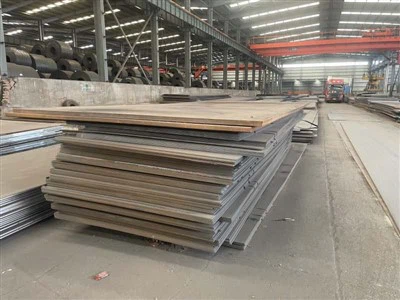
Hey there! As a supplier of carbon steel plates, I often get asked about the weight calculation formula for carbon steel plates. It's a crucial piece of info, especially when you're planning a project, budgeting, or just trying to understand how much your steel plates are gonna weigh. So, let's dive right into it.

First off, why is it important to know the weight of carbon steel plates? Well, for starters, it helps with transportation planning. You need to know if your delivery vehicle can handle the load. It also plays a big role in construction projects. Engineers and architects need to calculate the load-bearing capacity of structures, and knowing the weight of the carbon steel plates is a key part of that. Plus, it's essential for accurate costing. You don't want to overpay or under-budget for your materials.
The basic formula for calculating the weight of a carbon steel plate is pretty straightforward. It's based on the volume of the plate and the density of carbon steel. The formula is:
Weight (kg) = Volume (m³) x Density (kg/m³)
Let's break this down further. To find the volume of the carbon steel plate, you need to know its length, width, and thickness. The formula for volume is:
Volume (m³) = Length (m) x Width (m) x Thickness (m)
Carbon steel typically has a density of around 7850 kg/m³. This value can vary slightly depending on the specific composition of the steel, but 7850 kg/m³ is a commonly used standard.
Let's say you have a carbon steel plate that's 2 meters long, 1 meter wide, and 0.01 meters (or 10 millimeters) thick. First, calculate the volume:
Volume = 2 m x 1 m x 0.01 m = 0.02 m³
Then, use the weight formula:
Weight = 0.02 m³ x 7850 kg/m³ = 157 kg
So, that particular carbon steel plate weighs 157 kilograms.
Now, let's talk about some real-world applications. In the construction industry, carbon steel plates are used for all sorts of things, like building bridges, skyscrapers, and industrial structures. Knowing the weight of these plates helps engineers design structures that can safely support the load. For example, if you're building a bridge, you need to make sure the foundations and support beams can handle the weight of the carbon steel plates used in the bridge deck.
In the manufacturing sector, carbon steel plates are used to make everything from machinery parts to storage tanks. Manufacturers need to know the weight of the plates to ensure proper handling and assembly. They also use the weight calculation to determine the cost of materials and estimate the overall production cost.
If you're in the market for carbon steel plates, you might also be interested in other carbon steel products we offer. We have Round Carbon Steel Bar, which is great for applications that require a round cross-section, like shafts and axles. We also have ASTM A334 GR.1 Pipe Carbon Steel Pipe, which is commonly used in low-temperature applications. And if you need a seamless carbon steel pipe, check out our DIN 2391 ST52 Seamless Carbon Steel Pipe, which is known for its high strength and durability.
It's important to note that while the weight calculation formula is a useful tool, there are some factors that can affect the actual weight of a carbon steel plate. For example, surface treatments like painting or galvanizing can add a small amount of weight. Also, the presence of any holes, cutouts, or irregularities in the plate will reduce its weight.
Another thing to keep in mind is that different grades of carbon steel have slightly different densities. For example, low-carbon steel has a slightly lower density than high-carbon steel. So, if you're working with a specific grade of carbon steel, it's a good idea to check the density value for that grade to get a more accurate weight calculation.
In conclusion, understanding the weight calculation formula for carbon steel plates is essential for anyone working with these materials. Whether you're a construction professional, a manufacturer, or just someone planning a DIY project, knowing how to calculate the weight of carbon steel plates will help you make informed decisions.
If you're interested in purchasing carbon steel plates or any of our other carbon steel products, feel free to reach out. We're here to help you find the right materials for your project and answer any questions you might have.
References
- Basic principles of steel engineering textbooks
- Industry standards for carbon steel materials