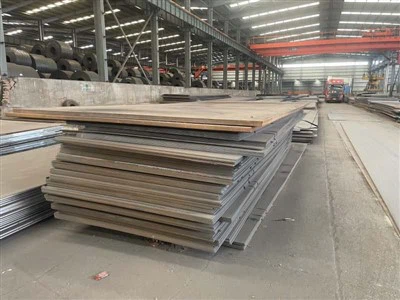
When it comes to the world of steel, the S355jr Low Alloy High Strength Steel Plate stands out for its remarkable properties and wide - ranging applications. As a supplier of this high - quality steel plate, I often encounter the question: "Can S355jr Low Alloy High Strength Steel Plate be cold - rolled?" In this blog post, I will delve into this topic, exploring the characteristics of S355jr, the cold - rolling process, and whether these two can be a good match.

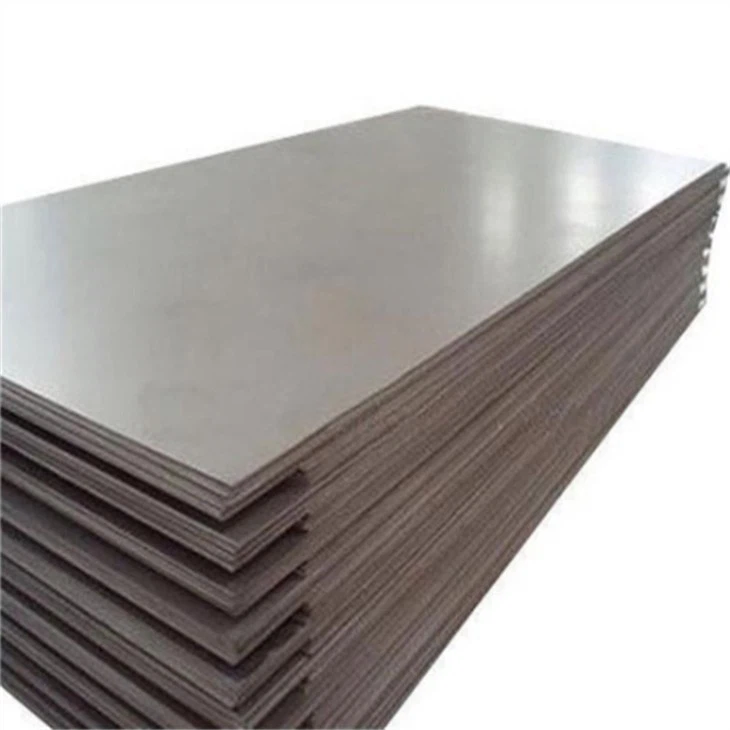
Understanding S355jr Low Alloy High Strength Steel Plate
S355jr is a type of low alloy high strength steel plate. The "S" in its designation stands for "structural," indicating its primary use in structural applications. The number "355" represents the minimum yield strength of the steel in megapascals (MPa), which means that the steel has a yield strength of at least 355 MPa. The "jr" indicates that the steel has a guaranteed impact energy at 20°C, ensuring its toughness in relatively mild cold conditions.
This steel plate is known for its excellent strength - to - weight ratio, good weldability, and high resistance to corrosion. It is widely used in construction, machinery manufacturing, and transportation industries. For example, it can be used in the construction of bridges, buildings, and offshore platforms, where high strength and durability are required. You can find more detailed information about S355jr Low Alloy High Strength Steel Plate on our website.
The Cold - Rolling Process
Cold - rolling is a metalworking process in which metal is deformed at a relatively low temperature, typically below its recrystallization temperature. This process is used to improve the surface finish, dimensional accuracy, and mechanical properties of the metal. During cold - rolling, the metal passes through a pair of rollers, which compress and elongate it, reducing its thickness and increasing its length.
One of the main advantages of cold - rolling is that it can produce steel with a smooth surface finish and tight dimensional tolerances. It also enhances the mechanical properties of the steel, such as its hardness and strength. However, cold - rolling can also introduce residual stresses into the steel, which may cause distortion or cracking if not properly managed.
Can S355jr Low Alloy High Strength Steel Plate be Cold - Rolled?
The answer is yes, S355jr Low Alloy High Strength Steel Plate can be cold - rolled, but it requires careful consideration and proper process control.
Advantages of Cold - Rolling S355jr Steel Plate
- Improved Surface Finish: Cold - rolling can give the S355jr steel plate a smooth and uniform surface finish, which is beneficial for applications where appearance matters. For example, in architectural applications, a smooth - finished steel plate can enhance the aesthetic appeal of the building.
- Enhanced Dimensional Accuracy: Cold - rolling allows for precise control of the thickness and width of the steel plate, ensuring that it meets the exact specifications required by the customer. This is crucial in applications where tight tolerances are necessary, such as in the manufacturing of precision machinery parts.
- Increased Strength: The cold - rolling process can further increase the strength of the S355jr steel plate. As the steel is deformed during cold - rolling, its grain structure is refined, which leads to an improvement in its mechanical properties.
Challenges and Considerations
- Residual Stresses: As mentioned earlier, cold - rolling introduces residual stresses into the steel. In the case of S355jr steel plate, these residual stresses can be particularly problematic due to its relatively high strength. If the residual stresses are not properly relieved, they can cause the steel plate to warp or crack during subsequent processing or in service. To address this issue, stress - relieving heat treatment may be required after cold - rolling.
- Work Hardening: Cold - rolling causes work hardening in the steel, which means that the steel becomes harder and more brittle. This can make it more difficult to perform further forming operations on the cold - rolled S355jr steel plate. Therefore, it is important to carefully plan the cold - rolling process and subsequent forming operations to avoid excessive work hardening.
- Material Ductility: The ductility of the S355jr steel plate may be reduced after cold - rolling. Ductility is an important property, especially in applications where the steel needs to be bent or deformed without cracking. To maintain an acceptable level of ductility, the cold - rolling reduction ratio should be carefully controlled.
Comparison with Other Steel Plates
To better understand the cold - rolling characteristics of S355jr steel plate, it is useful to compare it with other commonly used steel plates.
A572 Grade 50 Steel Plate
A572 Grade 50 Steel Plate is another popular low alloy high strength steel. It has a similar yield strength to S355jr, but its chemical composition and mechanical properties may differ slightly. In general, A572 Grade 50 steel plate also has good cold - rolling properties, but the specific cold - rolling parameters may need to be adjusted based on its unique characteristics.
ASTM A283Grade C(A283GRC) Carbon Steel Plate
ASTM A283Grade C(A283GRC) Carbon Steel Plate has a lower strength compared to S355jr. It is more ductile and easier to cold - roll. However, it may not be suitable for applications that require high strength. When comparing the cold - rolling of these two types of steel plates, it is clear that S355jr requires more attention to process control to achieve the desired results.
A516 Grade 70 Plate
A516 Grade 70 Plate is mainly used in pressure vessel applications. It has good weldability and toughness. Similar to S355jr, it can be cold - rolled, but the cold - rolling process needs to be optimized to ensure that the integrity of the steel plate is maintained, especially for applications where pressure resistance is critical.
A36 Steel
A36 Steel is a commonly used carbon steel. It is relatively easy to cold - roll due to its lower strength and higher ductility. In contrast, S355jr, with its higher strength, requires more advanced cold - rolling techniques and better quality control.
Applications of Cold - Rolled S355jr Steel Plate
Cold - rolled S355jr steel plate has a wide range of applications. In the automotive industry, it can be used to manufacture parts such as chassis components, where high strength and good dimensional accuracy are required. In the furniture industry, its smooth surface finish makes it suitable for the production of high - end furniture frames. In the electrical appliance industry, it can be used to make enclosures and brackets.
Contact for Procurement
If you are interested in purchasing S355jr Low Alloy High Strength Steel Plate, whether you need it in the cold - rolled form or other processing states, please feel free to contact us. We are committed to providing high - quality products and excellent service to meet your needs. Our technical team is also available to provide you with professional advice on steel selection, processing, and application.
References
- "Metallurgy of Steel" by George E. Dieter
- "Steel Structures: Design and Behavior" by Chong S. Lee and James M. Fisher
- Industry standards and technical documents related to S355jr and cold - rolling processes