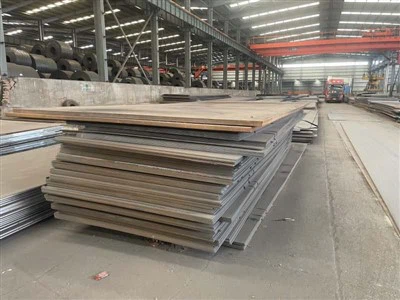
Heat treatment is a crucial process in the manufacturing of steel plates, especially for those used in shipbuilding. As a supplier of AH36, DH36, and EH36 steel plates for shipbuilding, I have witnessed firsthand the significant impact that heat treatment can have on the properties of EH36 steel plates. In this blog, I will delve into the various ways heat treatment affects the properties of EH36 steel plates and why it is essential for shipbuilding applications.
Understanding EH36 Steel Plate
EH36 steel is a high-strength, low-alloy steel commonly used in shipbuilding. It offers excellent toughness, weldability, and corrosion resistance, making it suitable for various marine applications. The "E" in EH36 indicates that the steel is intended for use in extremely cold environments, while the "H" stands for high strength. The number "36" represents the minimum yield strength of the steel, which is 360 MPa.


The Basics of Heat Treatment
Heat treatment involves heating and cooling a material to alter its physical and mechanical properties. There are several types of heat treatment processes, including annealing, normalizing, quenching, and tempering. Each process has a specific purpose and can be used to achieve different properties in the steel.
Annealing
Annealing is a heat treatment process that involves heating the steel to a specific temperature and then slowly cooling it. This process helps to relieve internal stresses, improve ductility, and refine the grain structure of the steel. In the case of EH36 steel plates, annealing can enhance the steel's toughness and reduce its hardness, making it easier to work with during the shipbuilding process.
Normalizing
Normalizing is similar to annealing, but the steel is cooled in air instead of being slowly cooled. This process results in a more uniform grain structure and improved mechanical properties. Normalizing can increase the strength and hardness of EH36 steel plates while maintaining good ductility and toughness.
Quenching
Quenching is a rapid cooling process that involves immersing the heated steel in a quenching medium, such as water or oil. This process significantly increases the hardness and strength of the steel but can also make it more brittle. Quenching is often followed by tempering to reduce the brittleness and improve the toughness of the steel.
Tempering
Tempering is a heat treatment process that involves heating the quenched steel to a specific temperature below its critical point and then cooling it. This process helps to relieve internal stresses, reduce brittleness, and improve the toughness of the steel. Tempering can also adjust the hardness and strength of the steel to meet the specific requirements of the shipbuilding application.
Effects of Heat Treatment on the Properties of EH36 Steel Plate
Strength and Hardness
Heat treatment can significantly increase the strength and hardness of EH36 steel plates. Quenching and tempering, in particular, can result in a substantial improvement in the steel's mechanical properties. By rapidly cooling the steel during quenching, the formation of a hard martensitic structure occurs, which increases the strength and hardness of the steel. Tempering then helps to relieve the internal stresses and reduce the brittleness of the martensitic structure, while still maintaining a high level of strength and hardness.
Toughness
Toughness is an important property for shipbuilding steel plates, as it determines the ability of the steel to withstand impact and fatigue loads. Heat treatment can improve the toughness of EH36 steel plates by refining the grain structure and reducing the brittleness of the steel. Annealing and normalizing can help to achieve a more uniform grain structure, which enhances the steel's toughness. Quenching and tempering can also improve the toughness of the steel by reducing the brittleness of the martensitic structure.
Weldability
Weldability is another critical property for shipbuilding steel plates, as most ships are constructed using welding techniques. Heat treatment can affect the weldability of EH36 steel plates by altering the chemical composition and microstructure of the steel. Annealing and normalizing can improve the weldability of the steel by reducing the internal stresses and improving the ductility of the steel. Quenching and tempering, on the other hand, can reduce the weldability of the steel due to the increased hardness and brittleness of the martensitic structure. However, proper heat treatment and welding procedures can be used to ensure good weldability of EH36 steel plates.
Corrosion Resistance
Corrosion resistance is essential for shipbuilding steel plates, as they are exposed to harsh marine environments. Heat treatment can affect the corrosion resistance of EH36 steel plates by altering the surface properties and microstructure of the steel. Annealing and normalizing can improve the corrosion resistance of the steel by reducing the internal stresses and improving the uniformity of the grain structure. Quenching and tempering, however, can reduce the corrosion resistance of the steel due to the formation of a hard and brittle martensitic structure. To enhance the corrosion resistance of EH36 steel plates, additional surface treatments, such as painting or galvanizing, may be required.
Importance of Heat Treatment in Shipbuilding
Heat treatment plays a crucial role in the shipbuilding industry, as it ensures that the steel plates used in ship construction meet the required mechanical and physical properties. By carefully controlling the heat treatment process, shipbuilders can achieve the desired strength, toughness, weldability, and corrosion resistance of the steel plates. This, in turn, helps to ensure the safety and reliability of the ships.
In addition to improving the properties of the steel plates, heat treatment can also reduce the weight of the ships. By using high-strength steel plates that have been heat-treated, shipbuilders can reduce the thickness of the steel plates without sacrificing strength or safety. This can result in significant weight savings, which can improve the fuel efficiency and performance of the ships.
Other Shipbuilding Steel Plates
As a supplier of shipbuilding steel plates, we also offer a range of other steel plates, including EH40 Ship Steel Plate, CCS A Shipbuilding Steel Plate, DH40 Shipbuilding Steel Plate, CCS Shipbuilding Plate, and Grade D Shipbuilding Steel Plate. These steel plates are also heat-treated to ensure optimal performance and meet the specific requirements of the shipbuilding industry.
Conclusion
Heat treatment is a critical process in the manufacturing of EH36 steel plates for shipbuilding. It can significantly affect the strength, hardness, toughness, weldability, and corrosion resistance of the steel plates. By carefully controlling the heat treatment process, shipbuilders can ensure that the steel plates used in ship construction meet the required mechanical and physical properties. This, in turn, helps to ensure the safety and reliability of the ships.
If you are in the market for high-quality AH36, DH36, or EH36 steel plates for shipbuilding, please feel free to contact us for more information. We are committed to providing our customers with the best products and services at competitive prices.
References
- ASM Handbook, Volume 4: Heat Treating. ASM International, 1991.
- Shipbuilding Steel: Properties, Processing, and Applications. Elsevier, 2015.
- Heat Treatment of Steel: Principles and Processes. CRC Press, 2018.