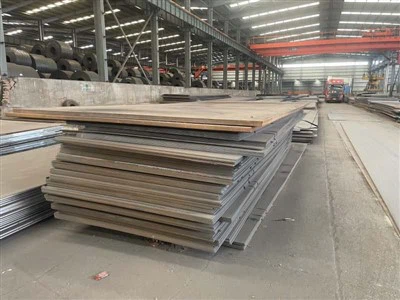
Yo, what's up! I'm a supplier of Bridge Steel Plate, and today I wanna chat about how temperature affects the performance of these bad boys. Bridge steel plates are super important in the construction of bridges. They need to be tough and reliable, no matter what the weather throws at them. But temperature can play a huge role in how well they perform.
Let's start with the basics. When the temperature drops, steel can become more brittle. This is a big deal for bridge steel plates because bridges are constantly exposed to the elements. In cold weather, the molecules in the steel slow down and become more rigid. This makes the steel less able to bend and absorb energy, which can lead to cracks and fractures.
For example, in regions with extremely cold winters, like parts of Canada or Russia, the low temperatures can cause the bridge steel plates to lose some of their ductility. Ductility is the ability of a material to deform under stress without breaking. When the ductility of the steel plate decreases, it's more likely to fail under heavy loads, such as the weight of traffic on the bridge.
On the other hand, high temperatures can also have a significant impact on bridge steel plates. When it gets really hot, the steel can expand. If the bridge isn't designed to accommodate this expansion, it can lead to structural problems. The expansion can cause the plates to warp or buckle, which can compromise the integrity of the entire bridge.
In areas with hot summers, like the deserts in the southwestern United States, the high temperatures can cause the bridge steel plates to reach their thermal limits. This can lead to a reduction in the strength of the steel. The heat can also accelerate the corrosion process, which further weakens the plates over time.
Now, let's talk about some of the specific types of bridge steel plates we offer. We have the Q345qD High Strength Low Alloy Steel. This steel is known for its good strength and toughness at different temperatures. It has a relatively low carbon content, which helps to improve its weldability and ductility. Even in cold weather, it can maintain a certain level of performance, but of course, extreme cold can still pose challenges.
Another great option is the Q420qD High Strength Low Alloy Steel. This steel has a higher strength compared to Q345qD. It's designed to handle heavier loads, which is crucial for large - scale bridges. However, like all steels, its performance can be affected by temperature. In high - temperature environments, its strength might start to decline slightly, but it still offers better performance than some other steels.
We also have the Q355D High Strength Low Alloy Steel. This steel is a popular choice for many bridge construction projects. It has a good balance of strength and ductility, making it suitable for a wide range of temperature conditions. But again, temperature changes can still have an impact on its long - term performance.
To mitigate the effects of temperature on bridge steel plates, engineers use a variety of techniques. One common method is to use thermal insulation. By insulating the steel plates, they can reduce the rate of temperature change and minimize the expansion and contraction. This helps to prevent warping and cracking.
Another approach is to design the bridge with expansion joints. These joints allow the bridge to expand and contract freely with temperature changes, without putting excessive stress on the steel plates. Additionally, using corrosion - resistant coatings can protect the steel from the damaging effects of high temperatures and humidity.


As a supplier, we understand the importance of providing high - quality bridge steel plates that can withstand different temperature conditions. We work closely with our customers to ensure that they get the right type of steel for their specific project. Whether it's a bridge in a cold climate or a hot and humid area, we have the expertise to recommend the most suitable steel.
If you're in the market for bridge steel plates, don't hesitate to reach out. We're here to help you find the best solution for your bridge construction needs. Whether you have questions about the performance of our steel plates in different temperatures or need advice on which type of steel to choose, we're just a message away.
In conclusion, temperature has a significant impact on the performance of bridge steel plates. Cold temperatures can make the steel brittle, while high temperatures can cause expansion and corrosion. But with the right type of steel and proper design techniques, we can minimize these effects and ensure the long - term durability of bridges. So, if you're planning a bridge construction project, make sure to consider the temperature conditions of the area and choose the appropriate bridge steel plates.
References
- "Steel Structures: Design and Behavior" by S. S. Chen and L. L. Lui
- "Bridge Engineering Handbook" edited by Wei - Kang Chen
- Industry reports on the performance of high - strength low - alloy steels in different temperature environments.