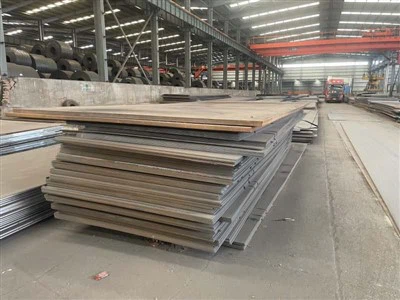
As a supplier of ASTM Pressure Vessel Steel Plate, I've witnessed firsthand the crucial role that rolling direction plays in determining the properties of these plates. In this blog, we'll explore how the rolling direction affects the various properties of ASTM Pressure Vessel Steel Plate, providing valuable insights for engineers, manufacturers, and anyone involved in the pressure vessel industry.
Understanding the Rolling Process
Before delving into the impact of rolling direction, it's essential to understand the rolling process itself. During the manufacturing of ASTM Pressure Vessel Steel Plate, the steel is heated and passed through a series of rolling mills. The rolling process reduces the thickness of the steel and elongates it in the direction of rolling. This process not only shapes the steel into the desired thickness and dimensions but also influences its microstructure and mechanical properties.
Anisotropy in Steel Plates
One of the primary effects of rolling direction on ASTM Pressure Vessel Steel Plate is the development of anisotropy. Anisotropy refers to the difference in material properties depending on the direction of measurement. In rolled steel plates, the mechanical properties such as strength, ductility, and toughness can vary significantly between the rolling direction (longitudinal) and the transverse direction (perpendicular to the rolling direction).
Strength
The strength of ASTM Pressure Vessel Steel Plate is typically higher in the rolling direction compared to the transverse direction. This is because the rolling process aligns the grains of the steel in the direction of rolling, resulting in a more ordered and continuous microstructure. As a result, the steel can withstand higher stresses in the rolling direction before yielding or fracturing.
For example, in SA 516 Gr 70n Means, the longitudinal tensile strength is often greater than the transverse tensile strength. This difference in strength must be considered when designing pressure vessels to ensure that the vessel can withstand the expected loads in all directions.
Ductility
Ductility, which is the ability of a material to deform plastically before fracturing, is also affected by the rolling direction. In general, the ductility of ASTM Pressure Vessel Steel Plate is higher in the rolling direction. The aligned grain structure in the rolling direction allows for more uniform deformation, reducing the likelihood of cracking or brittle failure.
In contrast, the transverse direction may exhibit lower ductility due to the presence of grain boundaries and other microstructural features that can impede the flow of dislocations. This difference in ductility can have significant implications for the fabrication and performance of pressure vessels, as it affects the ability of the steel to withstand deformation during forming and welding processes.
Toughness
Toughness is a measure of a material's ability to absorb energy and resist fracture. Similar to strength and ductility, the toughness of ASTM Pressure Vessel Steel Plate can vary depending on the rolling direction. The rolling process can introduce residual stresses and microstructural inhomogeneities that can affect the toughness of the steel.
In some cases, the toughness may be higher in the rolling direction due to the more favorable grain orientation and reduced presence of defects. However, in other cases, the transverse direction may exhibit higher toughness, especially if the steel has been subjected to specific heat treatments or processing steps to improve its toughness in that direction.
Impact on Weldability
The rolling direction can also have a significant impact on the weldability of ASTM Pressure Vessel Steel Plate. Welding is a critical process in the fabrication of pressure vessels, and the quality of the welds can directly affect the performance and safety of the vessel.
The anisotropy in the mechanical properties of the steel can lead to differences in the stress distribution and deformation behavior during welding. For example, the higher strength and lower ductility in the transverse direction may result in higher residual stresses and a greater likelihood of cracking in the weld zone.
To ensure good weldability, it's important to consider the rolling direction when designing the welding process. This may involve adjusting the welding parameters, such as the welding speed, current, and voltage, to minimize the impact of anisotropy on the weld quality. Additionally, proper preheating and post-weld heat treatment can help to reduce residual stresses and improve the toughness of the welds.
Considerations for Pressure Vessel Design
When designing pressure vessels using ASTM Pressure Vessel Steel Plate, engineers must take into account the effect of rolling direction on the material properties. This involves carefully selecting the appropriate steel grade and thickness based on the expected operating conditions and loads.
In addition, the orientation of the steel plate in the pressure vessel must be considered to ensure that the vessel can withstand the loads in all directions. For example, if the vessel is subjected to high-pressure loads in a particular direction, it may be beneficial to orient the steel plate so that the rolling direction is aligned with the direction of the highest stress.
Furthermore, the design of the pressure vessel should take into account the potential for anisotropy in the material properties. This may involve using additional reinforcement or support structures to compensate for the differences in strength and ductility between the rolling and transverse directions.
Real-World Applications
The impact of rolling direction on the properties of ASTM Pressure Vessel Steel Plate is evident in various real-world applications. For example, in the oil and gas industry, pressure vessels are used to store and transport high-pressure fluids. The anisotropy in the material properties of the steel plate can affect the performance and safety of these vessels, especially in harsh operating environments.
In the power generation industry, pressure vessels are used in boilers and other equipment to generate steam and produce electricity. The rolling direction can influence the strength and durability of these vessels, as well as their ability to withstand thermal cycling and other operating conditions.
Conclusion
In conclusion, the rolling direction has a significant impact on the properties of ASTM Pressure Vessel Steel Plate. The development of anisotropy in the mechanical properties, such as strength, ductility, and toughness, can affect the performance and safety of pressure vessels. Engineers and manufacturers must carefully consider the rolling direction when designing and fabricating pressure vessels to ensure that they can withstand the expected loads and operating conditions.
If you're in the market for high-quality ASTM Pressure Vessel Steel Plate, we're here to help. Our team of experts can provide you with the technical support and guidance you need to select the right steel grade and thickness for your application. Contact us today to discuss your requirements and start a procurement negotiation.


References
- ASME Boiler and Pressure Vessel Code
- ASTM International Standards for Pressure Vessel Steel Plate
- Handbook of Pressure Vessel Design and Fabrication