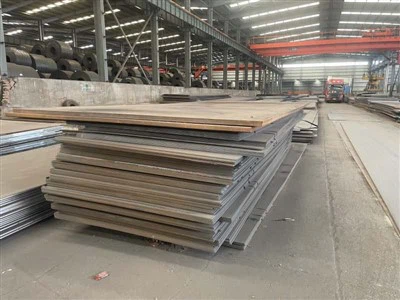
Hey there! I'm a supplier of angle steel plates, and one question I get asked a lot is, "How long does an angle steel plate last?" Well, it's not a one - size - fits - all answer, and in this blog, I'll break down the factors that affect the lifespan of angle steel plates and give you a better idea of what to expect.
First off, let's talk about the material of the angle steel plate. There are different grades and types of steel used to make these plates. For example, the Q335B Angle Steel Plate is a popular choice. Q335B steel has good mechanical properties and is suitable for a variety of applications. Generally speaking, higher - quality steel with better corrosion resistance and strength will last longer. Steel that contains more alloying elements, like chromium, nickel, or molybdenum, can form a protective layer on the surface, which slows down the corrosion process.
The environment where the angle steel plate is used plays a huge role in its lifespan. If it's installed in a dry, indoor environment, it'll likely last a long time. There's no exposure to rain, humidity, or harsh chemicals. In such a setting, an angle steel plate can last for decades, maybe even up to 50 years or more. But things get a lot more complicated when it's used outdoors.
Outdoor environments can be pretty tough on angle steel plates. If it's in a coastal area, the salt in the air can cause corrosion at a much faster rate. Saltwater is highly corrosive, and it can eat away at the steel over time. In this kind of environment, without proper protection, an angle steel plate might start to show signs of rust within a few years. And if the rust isn't addressed, it can lead to structural damage and reduce the lifespan of the plate significantly.
Industrial environments also pose challenges. Factories that produce chemicals or have high levels of pollution can expose the angle steel plates to corrosive gases and substances. For instance, in a chemical plant, the fumes from acids or alkalis can react with the steel, causing it to deteriorate. In these cases, the lifespan of the angle steel plate could be as short as 5 - 10 years if there's no proper protection.
Another factor is the load and stress the angle steel plate has to bear. If it's used in a structure where it has to support heavy weights or endure constant vibrations, it'll experience more wear and tear. For example, in a bridge or a high - rise building, the angle steel plates are under a lot of stress. Over time, this stress can cause cracks to form in the steel. Once a crack starts, it can propagate and weaken the structure, reducing the lifespan of the plate.
Now, let's talk about protection methods. There are several ways to extend the lifespan of angle steel plates. One of the most common methods is painting. A good quality paint can act as a barrier between the steel and the environment, preventing moisture and oxygen from reaching the surface and causing corrosion. Galvanizing is another popular option. In the galvanizing process, a layer of zinc is applied to the steel. Zinc is more reactive than steel, so it corrodes first, protecting the underlying steel.
Regular maintenance is also crucial. Inspecting the angle steel plates periodically can help detect any signs of damage or corrosion early on. If you notice a small area of rust, you can treat it before it spreads. This could involve sanding off the rust and repainting the area.
In terms of specific numbers, if an angle steel plate is well - protected and used in a relatively mild environment with low stress, it can last 30 - 50 years. But in a harsh environment with heavy loads and no protection, its lifespan might be less than 10 years.
So, as a supplier, I always recommend choosing the right type of angle steel plate for your application. If you're in a coastal area, you might want to go for a more corrosion - resistant grade or make sure to use proper protection methods. And if it's for a high - stress application, you need to ensure that the plate has the right strength and thickness.
If you're thinking about purchasing angle steel plates, whether it's the Q335B Angle Steel Plate or other types, I'm here to help. I can provide you with detailed information about the products, their properties, and how to best use them to ensure a long lifespan. Feel free to reach out to me to discuss your requirements and start the procurement process.
References


- "Steel Structures: Design and Behavior" by S. A. Salmon and J. E. Johnson
- "Corrosion of Metals" by H. H. Uhlig and R. W. Revie