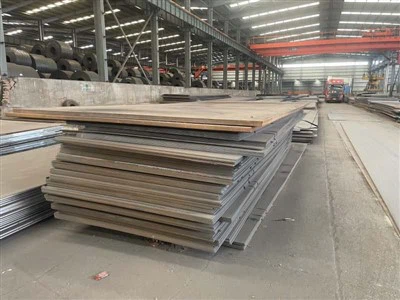
As a supplier of pressure vessel steel plates, I've witnessed firsthand the intricate and demanding nature of their production. Pressure vessel steel plates are crucial components in various industries, including oil and gas, chemical processing, and power generation. These plates must withstand extreme pressure, temperature, and corrosion, making their production a complex and challenging task. In this blog post, I'll explore some of the key challenges we face in producing high-quality pressure vessel steel plates.
Material Selection and Quality Control
One of the primary challenges in pressure vessel steel plate production is selecting the right materials and ensuring their quality. The choice of material depends on the specific requirements of the pressure vessel, such as the operating temperature, pressure, and corrosive environment. Common materials used for pressure vessel steel plates include carbon steel, alloy steel, and stainless steel.
Each material has its own unique properties and characteristics, and selecting the wrong material can lead to serious safety issues. For example, if a pressure vessel is designed to operate in a high-temperature environment, using a material with poor heat resistance can cause the vessel to fail prematurely. Therefore, it's essential to have a thorough understanding of the material properties and to conduct rigorous testing to ensure that the selected material meets the required standards.
In addition to material selection, quality control is another critical aspect of pressure vessel steel plate production. We must implement strict quality control measures at every stage of the production process, from raw material inspection to final product testing. This includes conducting chemical analysis, mechanical testing, and non-destructive testing to detect any defects or inconsistencies in the steel plates.
For instance, we offer a range of high-quality pressure vessel steel plates, such as the A516GR70 Pressure Vessel Steel Plate, ASTM A387 Grade 12 Class1(A387GR12CL1) Pressure Vessel And Boiler Steel Plate, A516GR70N Steel Plate, SPV490Q Pressure Vessel Steel, and A516 GR70 High strength Steel Plate. These plates are manufactured using the latest technology and strict quality control measures to ensure their reliability and performance.
Manufacturing Processes
The manufacturing processes involved in producing pressure vessel steel plates are also complex and challenging. These processes include melting, casting, rolling, heat treatment, and finishing. Each step requires careful control and precision to ensure that the steel plates meet the required specifications.
Melting and casting are the initial steps in the production process. The steel is melted in a furnace and then cast into ingots or slabs. The quality of the molten steel and the casting process can have a significant impact on the final properties of the steel plates. For example, any impurities or defects in the molten steel can lead to cracks or other flaws in the finished plates.
Rolling is the process of reducing the thickness of the steel ingots or slabs to the desired thickness. This is done by passing the steel through a series of rolling mills. The rolling process must be carefully controlled to ensure that the steel plates have the correct dimensions, shape, and mechanical properties.
Heat treatment is another crucial step in the production process. Heat treatment is used to improve the mechanical properties of the steel plates, such as strength, hardness, and toughness. The heat treatment process involves heating the steel plates to a specific temperature and then cooling them at a controlled rate. The type and duration of the heat treatment depend on the specific requirements of the steel plates.
Finishing is the final step in the production process. Finishing involves removing any surface defects or impurities from the steel plates and applying a protective coating to prevent corrosion. The finishing process must be carefully controlled to ensure that the steel plates have a smooth and uniform surface finish.
Meeting Industry Standards and Regulations
Pressure vessel steel plates are subject to strict industry standards and regulations to ensure their safety and reliability. These standards and regulations are established by organizations such as the American Society of Mechanical Engineers (ASME), the International Organization for Standardization (ISO), and the European Committee for Standardization (CEN).
As a supplier of pressure vessel steel plates, we must ensure that our products meet all relevant industry standards and regulations. This requires us to have a thorough understanding of the standards and regulations and to implement strict quality control measures to ensure compliance.
For example, the ASME Boiler and Pressure Vessel Code is a widely recognized standard for the design, fabrication, and inspection of pressure vessels. The code specifies the minimum requirements for the materials, design, construction, and testing of pressure vessels. We must ensure that our pressure vessel steel plates meet the requirements of the ASME code to ensure their acceptance in the market.


Technological Advancements and Innovation
The pressure vessel steel plate industry is constantly evolving, and new technologies and innovations are emerging all the time. These advancements are driving improvements in the quality, performance, and efficiency of pressure vessel steel plates.
As a supplier, we must stay up-to-date with the latest technological advancements and innovations in the industry to remain competitive. This requires us to invest in research and development and to collaborate with other industry players to develop new and improved products.
For example, the development of new steel grades with improved strength, toughness, and corrosion resistance is allowing for the design and construction of more efficient and reliable pressure vessels. In addition, the use of advanced manufacturing technologies, such as laser cutting and welding, is improving the accuracy and efficiency of the production process.
Conclusion
In conclusion, producing high-quality pressure vessel steel plates is a complex and challenging task that requires careful material selection, strict quality control, precise manufacturing processes, compliance with industry standards and regulations, and a commitment to technological advancements and innovation. As a supplier, we are constantly working to overcome these challenges and to provide our customers with the best possible products and services.
If you're in the market for high-quality pressure vessel steel plates, we invite you to contact us to discuss your specific requirements. Our team of experts will be happy to assist you in selecting the right materials and products for your application and to provide you with a competitive quote.
References
- American Society of Mechanical Engineers (ASME). Boiler and Pressure Vessel Code.
- International Organization for Standardization (ISO). Pressure Vessel Standards.
- European Committee for Standardization (CEN). Pressure Equipment Directive.