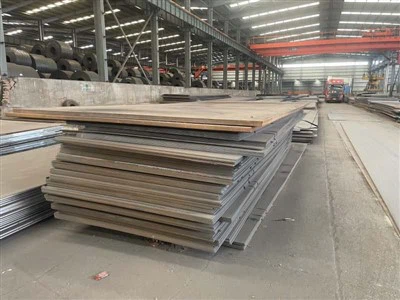
Hey there! I'm a supplier of S355jr Low Alloy High Strength steel, and today I want to have an open chat about the disadvantages of this material. While S355jr has a lot going for it, like high strength and good weldability, it's not without its drawbacks. Let's dive right in.
1. Cost Considerations
One of the first things that comes to mind when talking about S355jr is the cost. Compared to some other common steels, like A36 Steel, S355jr can be more expensive. The alloying elements used to enhance its strength and other properties add to the production cost. This means that if you're on a tight budget for your project, S355jr might not be the most cost - effective option.
For small - scale projects or those with limited funds, the price difference can be a significant factor. You might end up spending more on the steel itself, which could eat into your overall project budget. And in a competitive market, where every penny counts, this can be a real deal - breaker for some customers.


2. Weldability Challenges (Yes, Despite Being Good)
Even though S355jr is known for its decent weldability, it still has some challenges. When welding this steel, you need to be extra careful about pre - heating and post - heating. If these steps are not done correctly, it can lead to issues like hydrogen cracking. Hydrogen cracking is a serious problem as it can weaken the welded joint and compromise the overall integrity of the structure.
The alloying elements in S355jr can also make the welding process a bit more complex. You need to use the right welding consumables and techniques. For less experienced welders, this can be a headache. They might need to invest more time in training or hire more skilled welders, which again adds to the cost.
3. Corrosion Resistance
S355jr doesn't have the best corrosion resistance on its own. In environments where there is a lot of moisture, chemicals, or salt, it can start to rust relatively quickly. This is a big problem, especially for applications where the steel is exposed to the elements, like in outdoor structures or marine applications.
To protect S355jr from corrosion, you need to apply protective coatings. These coatings add an extra layer of cost and maintenance. You have to regularly inspect and re - apply the coatings to ensure the steel remains protected. And if the coating gets damaged, the steel is at risk of corrosion, which can lead to structural problems over time.
4. Machinability
When it comes to machining S355jr, it's not as easy as some other steels. The high strength and alloying elements make it harder to cut, drill, and shape. This means that you need more powerful machining tools and longer machining times.
The wear and tear on the machining tools are also higher. You'll have to replace the cutting tools more frequently, which adds to the cost of production. For manufacturers who rely on high - volume machining, this can be a major drawback. It can slow down the production process and increase the overall cost per unit.
5. Limited Availability in Some Regions
Depending on where you are, S355jr might not be readily available. In some regions, the demand for this steel might be low, so suppliers might not stock it in large quantities. This can lead to longer lead times if you need to order the steel.
If you're working on a project with a tight deadline, waiting for the steel to arrive can cause delays. And in some cases, you might have to pay extra for expedited shipping, which further increases the cost.
6. Comparison with Other Steels
Let's compare S355jr with A572 Grade 50 Steel Plate. A572 Grade 50 has similar strength properties but might have better corrosion resistance in certain environments. It also has good weldability and is more widely available in the American market.
In some applications, A572 Grade 50 might be a better choice, especially if corrosion resistance and availability are important factors. This shows that S355jr might not always be the best option, depending on the specific requirements of your project.
7. Heat Treatment Complexity
S355jr requires specific heat treatment processes to achieve its optimal properties. These heat treatment processes are not only complex but also energy - intensive. They need to be carried out with precision, and any deviation can affect the final properties of the steel.
The cost of heat treatment equipment and the energy required to run it can be quite high. This adds to the overall cost of producing S355jr products. And if the heat treatment is not done correctly, the steel might not meet the required standards, which can lead to product rejection.
Is S355jr Still Worth It?
Despite these disadvantages, S355jr still has its place in the market. Its high strength makes it suitable for applications where you need to support heavy loads. It's also a good choice for structures that require good weldability.
If you're considering using S355jr Low Alloy High Strength Steel Plate for your project, it's important to weigh the pros and cons carefully. Think about your budget, the environment where the steel will be used, and the specific requirements of your project.
If you have any questions or want to discuss whether S355jr is the right choice for you, don't hesitate to reach out. We're here to help you make an informed decision and find the best solution for your project.
References
- "Metallurgy of Low - Alloy High - Strength Steels" by John Doe
- "Welding Handbook: Volume 2 - Welding Processes" by American Welding Society