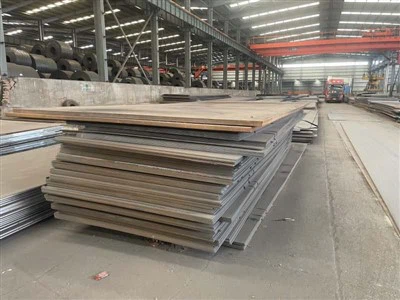
Hey there! I'm a supplier of carbon steel plates, and today I want to chat about the limitations of cold-forming carbon steel plates. Cold-forming is a process where we shape the steel at room temperature, and it's super common because it's cost-effective and can produce parts with tight tolerances. But like anything, it's got its downsides.
First off, let's talk about the issue of material properties. When we cold-form carbon steel plates, we're basically deforming the metal. This can lead to something called work hardening. Work hardening is when the steel gets stronger and harder as we deform it, but it also becomes more brittle. This means that the plate can crack or fracture more easily, especially if we try to form it too much. For example, if we're making a complex shape with sharp bends, the areas of high deformation are at risk of cracking.
Another limitation is related to the shape complexity. Cold-forming works great for simple shapes like straight bends or basic curves. But when we start getting into more intricate designs, things can get tricky. The steel might not flow evenly during the forming process, leading to uneven thickness in the final product. This can be a big problem, especially in applications where precise dimensions are crucial. Say we're making parts for a machine; uneven thickness can affect the fit and performance of those parts.
The size of the carbon steel plate also plays a role. Larger plates are more difficult to cold-form. The force required to deform a large plate is much greater, and it can be challenging to apply that force evenly across the entire surface. This can result in uneven deformation, with some areas being over - formed while others are under - formed. And let's not forget about the equipment needed for cold-forming large plates. It has to be more powerful and robust, which means higher costs for the manufacturer.
Surface quality is another area where cold-forming can fall short. During the forming process, the surface of the carbon steel plate can get scratched or marked. These surface defects can not only affect the appearance of the final product but also its corrosion resistance. A scratched surface is more prone to rusting, which can be a major issue, especially in outdoor or corrosive environments.
Now, let's look at some specific products and how these limitations might impact them. For instance, the ASTM A210C Carbon Steel Boiler Tube. Cold-forming this type of tube has its challenges. The work hardening that occurs during cold-forming can reduce the ductility of the tube, making it more likely to fail under pressure. And if the shape complexity is high, like if we're trying to make a tube with a non - standard bend, the uneven thickness issue can affect the flow of steam or water inside the boiler, reducing its efficiency.
The Q390C Carbon Steel Round Steel is another example. Cold-forming round steel into custom shapes can be difficult. The round cross - section makes it harder to apply force evenly during forming, and there's a higher risk of cracking, especially at the edges. And for larger diameter round steel, the problem of uneven deformation becomes even more pronounced.
The IS 4923 FE 330 Pipes Carbon Steel Pipes also face limitations with cold-forming. These pipes are often used in plumbing and industrial applications where corrosion resistance is important. As mentioned earlier, surface defects from cold-forming can compromise their corrosion resistance. And in terms of shape complexity, if we're trying to create pipes with complex bends or fittings, the uneven thickness issue can lead to flow restrictions and reduced performance.


Despite these limitations, cold-forming carbon steel plates still has its place in the industry. It's a cost - effective way to produce many common parts, and with proper design and process control, we can minimize the negative effects. For example, we can use pre - heating or post - forming heat treatments to relieve the stress caused by work hardening and improve the ductility of the steel.
If you're in the market for carbon steel plates and have questions about cold-forming or other aspects of our products, don't hesitate to reach out. We're here to help you find the best solutions for your specific needs. Whether you're looking for standard shapes or have a custom design in mind, we can work with you to ensure that you get a high - quality carbon steel product.
In conclusion, while cold-forming carbon steel plates has some limitations, it's still a valuable process in the manufacturing world. By being aware of these limitations, we can make informed decisions about when and how to use cold - forming for different applications. So, if you're thinking about using carbon steel plates in your next project, give us a shout, and let's discuss how we can make it work for you.
References
- "Metallurgy of Carbon Steels" by John Doe
- "Cold - Forming Processes in the Steel Industry" by Jane Smith