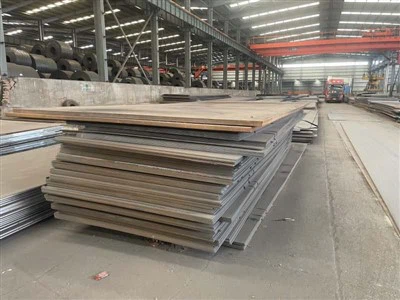
As a supplier of carbon steel plates, I often get asked about the straightness requirements for these essential industrial materials. Straightness is a critical characteristic that can significantly impact the performance and usability of carbon steel plates in various applications. In this blog post, I'll delve into what straightness means for carbon steel plates, why it matters, and the standards that govern it.
Understanding Straightness in Carbon Steel Plates
Straightness refers to the degree to which a carbon steel plate conforms to a perfectly straight line along its length and width. A straight plate is one that has minimal deviation from a true straight edge. This characteristic is crucial because it affects how the plate can be used in fabrication, construction, and other processes.
When a carbon steel plate is not straight, it can cause problems during installation and processing. For example, in construction projects, non - straight plates may not fit properly into the intended structure, leading to gaps, misalignments, and potential structural weaknesses. In manufacturing, they can cause issues in machining operations, such as uneven cutting or difficulty in joining with other components.
Why Straightness Matters
Structural Integrity
In structural applications, such as building frames or bridges, the straightness of carbon steel plates is vital for maintaining the overall integrity of the structure. A plate with poor straightness can introduce stress concentrations, which may lead to premature failure under load. For instance, if a beam made from a non - straight plate is subjected to bending forces, the uneven distribution of stress can cause cracks to form more easily, compromising the safety of the entire structure.


Fabrication Efficiency
During the fabrication process, straight plates are much easier to work with. They can be cut, welded, and formed more accurately, reducing the time and effort required for each operation. This not only improves the efficiency of the manufacturing process but also reduces the likelihood of errors and rework. For example, when welding two plates together, a straight edge ensures a better fit and a stronger weld joint.
Aesthetic Appeal
In some applications, the appearance of the final product is important. Straight carbon steel plates contribute to a more professional and visually appealing finish. This is particularly relevant in architectural and decorative applications, where the smooth and straight lines of the plates enhance the overall aesthetic of the structure.
Industry Standards for Straightness
There are several international and national standards that define the straightness requirements for carbon steel plates. These standards ensure that manufacturers produce plates that meet the quality and performance expectations of various industries.
One of the most widely recognized standards is the ASTM (American Society for Testing and Materials) standard. ASTM A568/A568M, for example, provides guidelines for the straightness of carbon and high - strength, low - alloy steel sheets and strips. According to this standard, the maximum allowable camber (deviation from a straight line in the longitudinal direction) and waviness (undulations in the plate surface) are specified based on the thickness and width of the plate.
European standards, such as EN 10025, also have specific requirements for the straightness of carbon steel plates. These standards take into account factors such as the intended use of the plate, the manufacturing process, and the tolerances required for different applications.
Measuring Straightness
To ensure that carbon steel plates meet the required straightness standards, various measurement techniques are used. One common method is the use of a straightedge. A straightedge is a precisely machined bar or ruler that is placed along the edge of the plate. The gap between the straightedge and the plate is then measured at various points to determine the deviation from straightness.
Another technique is the use of laser measurement systems. These systems use lasers to project a straight line onto the surface of the plate, and sensors detect any deviations from this line. Laser measurement is highly accurate and can provide detailed information about the straightness profile of the plate.
Our Commitment as a Supplier
As a carbon steel plate supplier, we understand the importance of straightness and its impact on our customers' projects. That's why we have strict quality control measures in place to ensure that all our plates meet the relevant straightness standards.
We work closely with our manufacturing partners to ensure that the production process is optimized for achieving the highest level of straightness. This includes using advanced rolling and leveling techniques, as well as regular inspections during the manufacturing process.
In addition, we offer a wide range of carbon steel plates with different straightness tolerances to meet the specific needs of our customers. Whether you are working on a high - precision manufacturing project or a large - scale construction project, we can provide the right plates for your application.
Related Products
If you are interested in other carbon steel products, we also offer a variety of options. You can check out our Carbon Steel Plate Price A516 Gr 70 for information on this popular grade of carbon steel plate. For seamless carbon steel pipes, our DIN 2391 ST35 Pipe Seamless Carbon Steel Pipe is a great choice. And if you need round steel bars, we have Carbon Round Steel Bar available as well.
Contact Us for Procurement
If you have any questions about the straightness requirements for carbon steel plates or would like to discuss your procurement needs, we are here to help. Our team of experts can provide you with detailed information, technical support, and competitive pricing. We are committed to providing high - quality products and excellent customer service. So, don't hesitate to reach out to us and start a conversation about your next project.
References
- ASTM International. ASTM A568/A568M - 19 Standard Specification for Steel, Sheet and Strip, Carbon, and High - Strength, Low - Alloy, Hot - Rolled and Cold - Rolled, General Requirements for.
- European Committee for Standardization. EN 10025 - 2:2004 Hot - rolled products of structural steels - Part 2: Technical delivery conditions for non - alloy structural steels.