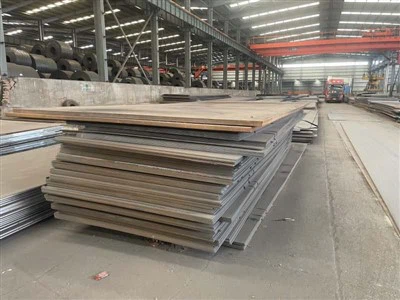
Hey there! I'm a supplier of boiler steel plates, and today I wanna talk about how temperature can have a big impact on the properties of these plates.
First off, let's get into why temperature matters so much. Boiler steel plates are used in all sorts of high - pressure and high - temperature environments. Think about boilers in power plants or industrial facilities. They have to withstand some seriously extreme conditions.
At low temperatures, boiler steel plates can become a lot more brittle. You know how some materials seem fine when it's warm but turn kind of stiff and break easily when it gets cold? That's what happens to these plates. The atoms in the steel are moving around less at low temperatures. This means that the material doesn't have as much flexibility to absorb energy when it's under stress. For example, if there's a sudden shock or a load on the plate in cold conditions, it might crack instead of bending.
On the flip side, high temperatures bring their own set of challenges. As the temperature goes up, the strength of the boiler steel plate starts to decrease. The heat causes the atoms in the steel to vibrate more vigorously. This disrupts the crystal structure of the steel, which is what gives it its strength. So, a plate that can hold a huge amount of weight at room temperature might not be able to handle as much when it's heated up.
Another important property affected by temperature is the thermal expansion of the boiler steel plate. When the temperature rises, the plate expands. This might not seem like a big deal at first, but in a boiler system, where everything has to fit together precisely, even a small amount of expansion can cause problems. If the expansion isn't accounted for properly, it can lead to leaks, misalignments, or even structural damage.
Let's talk about how temperature affects the corrosion resistance of boiler steel plates. At high temperatures, the rate of corrosion can increase significantly. The heat can speed up the chemical reactions between the steel and any corrosive substances in the environment, like water or certain gases. This means that the plate will start to rust or corrode faster, which can weaken it over time.
Now, different types of boiler steel plates react differently to temperature changes. For instance, some special - alloyed plates are designed to be more resistant to high - temperature effects. These alloys contain elements like chromium, nickel, and molybdenum, which can help improve the strength and corrosion resistance of the steel at elevated temperatures.
If you're in the market for high - quality boiler steel plates, you might also be interested in some other related products. We offer P20 Tool Steel, which is known for its excellent machinability and toughness. It can be a great option for certain industrial applications where temperature stability is crucial.


Another product that might catch your eye is the ASTM B861 Gr.3 Titanium Alloy Steel Pipe. Titanium alloy pipes are lightweight and have high strength, making them suitable for use in high - temperature and high - pressure systems.
And if you're looking for a different kind of steel product, our Stainless Steel Pattern Plate 310 is a great choice. It offers good corrosion resistance and a unique pattern, which can be useful in various construction and industrial settings.
So, when you're choosing a boiler steel plate, it's super important to consider the temperature conditions it'll be exposed to. You need to make sure the plate can handle the heat or cold without losing its important properties. Whether it's strength, flexibility, or corrosion resistance, temperature can really make or break the performance of the plate.
If you've got any questions about our boiler steel plates or want to discuss your specific needs, don't hesitate to reach out. We're here to help you find the perfect solution for your project. Whether you're building a small - scale boiler or a large industrial facility, we've got the products and expertise to support you.
In conclusion, temperature has a profound effect on the properties of boiler steel plates. From brittleness at low temperatures to strength loss at high temperatures, every aspect of the plate's performance is influenced by the heat. By understanding these effects, you can make a more informed decision when it comes to purchasing boiler steel plates. So, if you're in the market for top - notch boiler steel plates, give us a shout, and let's start the conversation about your project.
References
- "Materials Science and Engineering: An Introduction" by William D. Callister Jr. and David G. Rethwisch
- "Boiler Technology and Engineering" by various industry experts